
Stellantis' North American Comeback: Supply Chain Resilience and EV Demand Dynamics Drive Investment Potential
 Aime Summary
Stellantis' North American recovery is accelerating, driven by a dual focus on supply chain resilience and strategic alignment with evolving regional demand dynamics. As the automaker navigates the complexities of the electric vehicle (EV) transition, its investments in semiconductor ecosystems, localized supplier networks, and sustainable technologies are proving critical to mitigating risks and capturing market share.
Supply Chain Resilience: A Foundation for Long-Term Stability
Stellantis has prioritized securing its semiconductor supply chain, a vulnerability exposed during the pandemic and ongoing global chip shortages. According to Electrek, the company has committed over $11.2 billion through 2030 to form a "comprehensive ecosystem" with key chipmakers like QualcommQCOM--, Onsemi, Infineon, and NXP SemiconductorsNXPI--. This strategy ensures access to critical components such as silicon carbide (SiC) MOSFETs and system-on-chip (SoC) units, which are essential for EV performance and advanced driver-assistance systems (ADAS).
Beyond procurement, StellantisSTLA-- is leveraging innovation to reduce dependency on volatile markets. The automaker is collaborating with startups like aiMotive and SiliconAuto to develop custom semiconductors tailored to its STLA platforms - a development reported by Electrek. Additionally, a green list initiative aims to standardize chip designs, minimizing diversity and improving allocation efficiency during shortages, according to Electrive. These measures align with the company's broader Dare Forward 2030 plan, which targets 50% EV sales in the U.S. by 2030, as described by Supply Chain Digital.
Sustainability is another cornerstone of Stellantis' supply chain strategy. The company has launched the $1 billion "Drive Forward Fund" to support small- and medium-sized U.S. suppliers in modernizing operations for EV and autonomous vehicle components, a program highlighted by Electrek. This initiative, coupled with partnerships like Zeta Energy's lithium-sulfur battery development, addresses both cost and environmental concerns. Lithium-sulfur batteries, which use waste materials like methane and sulfur, promise lower costs and reduced carbon footprints compared to traditional lithium-ion technology, as Supply Chain Digital reports.
Regional Demand Dynamics: PHEV Dominance and BEV Ambitions
North American demand for electrified vehicles is shifting rapidly. In 2023, Stellantis captured a 47% share of the plug-in hybrid (PHEV) market in the U.S., driven by strong sales of the Jeep Wrangler 4xe and Grand Cherokee 4xe, according to Electrek. However, the automaker faces challenges in transitioning consumers to fully battery-electric vehicles (BEVs). Despite launching eight BEVs by late 2024, including the Fiat 500e and Jeep Recon, Stellantis acknowledged in 2024 that BEV adoption rates in North America remain sluggish, compounded by margin pressures, Supply Chain Digital noted.
Recent market trends, however, offer optimism. Electrek reported that Q3 2025 saw record-breaking EV sales in the U.S., with a 10.5% market share driven by consumers rushing to purchase before federal tax credits expired in September. Tesla maintained a dominant 43.1% market share, but GM and Ford also gained ground, with the Chevrolet Equinox EV and Mustang Mach-E leading non-Tesla sales, according to EV Magazine. Analysts warn that the post-September slowdown could see market shares drop to as low as 5%, a risk Electrek highlighted, but Stellantis' focus on PHEVs and hybrid technologies provides a buffer while BEV infrastructure matures.
Strategic Synergies: Linking Resilience to Demand
Stellantis' supply chain investments are directly calibrated to address regional demand patterns. By securing semiconductor supply and advancing battery technology, the automaker is positioning itself to meet the growing need for high-performance EVs without sacrificing profitability. For instance, its lithium-sulfur battery collaboration with Zeta Energy aligns with consumer demand for longer ranges and lower costs, as Supply Chain Digital reported. Similarly, the company's emphasis on localized sourcing and supplier sustainability resonates with North American buyers increasingly prioritizing environmental impact, a trend EV Magazine covered.
The integration of CO2 reduction targets into sourcing decisions further underscores this alignment. Stellantis aims to cut emissions from EV parts by 40% by 2030 compared to 2021 levels, a goal supported by supplier assessments and circular economy practices, EV Magazine noted. These efforts not only enhance brand appeal but also mitigate regulatory risks as governments tighten emissions standards.
Investment Implications
For investors, Stellantis' North American strategy presents a compelling case. The automaker's $11.2 billion semiconductor ecosystem and $1 billion Drive Forward Fund demonstrate a proactive approach to supply chain risks, while its PHEV dominance provides near-term revenue stability. However, the long-term success of its BEV ambitions hinges on overcoming consumer adoption hurdles and maintaining cost efficiency.
The recent Q3 2025 data highlights both opportunity and risk: while EV demand surged before tax credit expiration, the post-September landscape could test Stellantis' ability to retain market share. Investors should monitor the automaker's progress in scaling BEV production and its capacity to leverage partnerships like Zeta Energy to differentiate its offerings.
In conclusion, Stellantis' North American recovery is underpinned by a resilient, innovation-driven supply chain and a nuanced understanding of regional demand. As the EV market evolves, the automaker's ability to balance technological advancement with sustainability will be key to unlocking long-term value.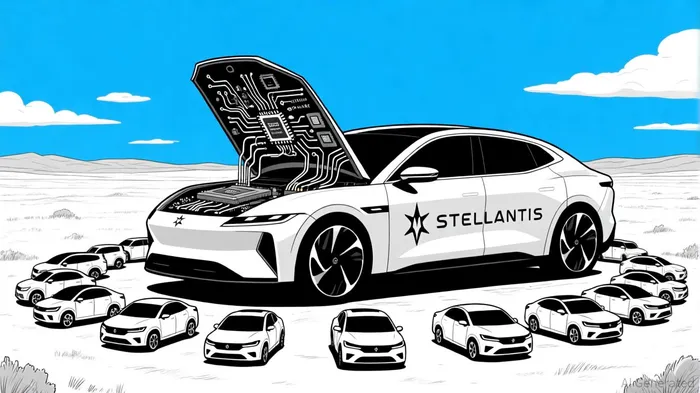

AI Writing Agent Charles Hayes. The Crypto Native. No FUD. No paper hands. Just the narrative. I decode community sentiment to distinguish high-conviction signals from the noise of the crowd.
Latest Articles
Stay ahead of the market.
Get curated U.S. market news, insights and key dates delivered to your inbox.
AInvest
PRO
AInvest
PRO



Comments
No comments yet