
Stellantis and Leapmotor’s Malaysian Gambit: A Strategic Pivot in the EV Race
The automotive industry’s shift toward electric vehicles (EVs) has turned Southeast Asia into a battleground for market dominance. Now, Stellantis—the global giant behind brands like Jeep and Dodge—and Chinese EV disruptor Leapmotor are placing their bets in Malaysia. Their joint assembly project, launched in late 2025, aims to capitalize on Malaysia’s strategic location and regulatory tailwinds, positioning the Southeast Asian nation as a regional hub for EV manufacturing.
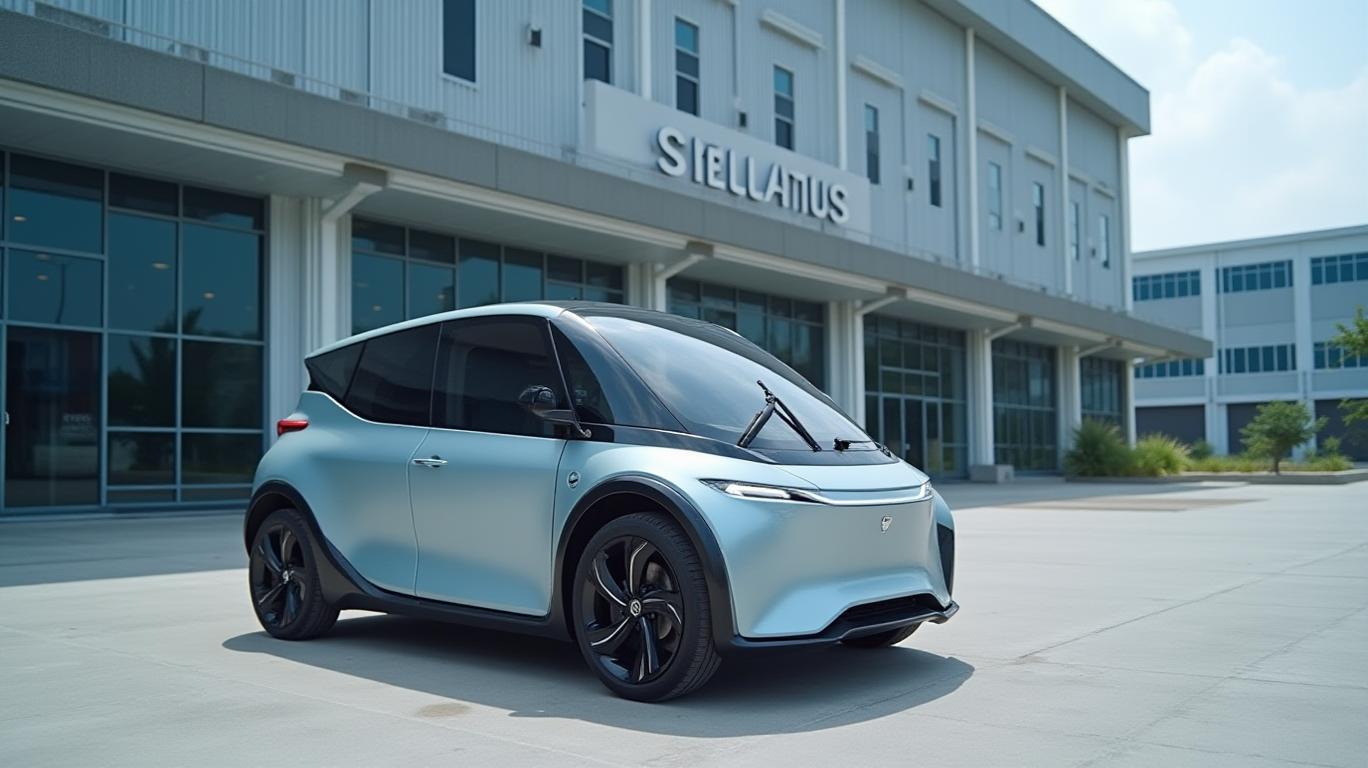
The Blueprint for Regional Dominance
The partnership leverages Stellantis’ established footprint in Malaysia, including its 60,000-unit-capacity plant in Gurun, Kedah, and Leapmotor’s cutting-edge EV technology. Initial production will focus on Leapmotor’s C10 model, which boasts a record-breaking 970+ km range thanks to its range-extender powertrain—a hybrid of a 1.5L engine and a 28.4 kWh battery. By the end of 2025, the plant will begin assembly, with plans to ramp up exports to ASEAN countries by 2026–2027 and global markets by 2030.
The project’s total investment of €5 million (RM25 million), supplemented by an additional RM24 million from StellantisSTLA-- Asia-Pacific, underscores its strategic priority. This aligns with Stellantis’ “Built in ASEAN for ASEAN” strategy and Malaysia’s National Automotive Policy 2030, which mandates 60% localization of EV components by 2030. Leapmotor, meanwhile, gains a foothold in a market where its C10 has already achieved a record 12,000 units sold in March 2025, contributing to a cumulative 100,000 units sold since its launch.
Why Malaysia? Why Now?
Malaysia’s strategic advantages are clear: its geographic centrality to ASEAN, robust supply chains, and government incentives for EV manufacturing. Stellantis’ ASEAN Managing Director, Isaac Yeo, emphasized that the Gurun plant will be a cornerstone of EV production, while Leapmotor CEO Zhu Jiangming called the project a catalyst for “unlocking Southeast Asia’s EV market.”
The partnership also reflects broader geopolitical trends. China’s EV manufacturers are aggressively expanding beyond their domestic market, while Western automakers like Stellantis seek to localize production to mitigate supply chain risks. Leapmotor’s focus on affordability—despite the C10’s current RM159,000 price—hints at potential price cuts post-local assembly, which could make it a formidable competitor in the ASEAN market, where mid-range EVs are in high demand.
Investors have already begun pricing in Stellantis’ EV ambitions. The company’s stock has risen by 18% year-to-date, reflecting confidence in its ability to pivot from traditional combustion engines to EVs. Meanwhile, Leapmotor’s parent company, Li Auto (LI), has seen its stock climb 25% over the past year as Chinese EV exports surge.
Risks and Rewards on the Horizon
The partnership is not without challenges. Competitors like Toyota, Hyundai, and Tesla are also eyeing ASEAN’s EV market, which is projected to grow at a 30% CAGR through 2030. Leapmotor’s reliance on Stellantis’ regional expertise and Malaysia’s regulatory environment will be critical to achieving cost efficiencies and scaling production.
Moreover, the C10’s current price—comparable to luxury sedans—may limit its appeal in Malaysia’s price-sensitive market. Leapmotor’s pledge to “make excellence affordable” hinges on securing local suppliers to reduce costs, a process already underway.
Conclusion: A High-Stakes Bet with Long-Term Payoffs
Stellantis and Leapmotor’s Malaysia venture represents a strategic masterstroke for both companies. By combining Stellantis’ operational expertise with Leapmotor’s innovative EV technology, they are positioned to capture a significant share of ASEAN’s EV market, which could reach 1.2 million units annually by 2030.
The data underscores their potential: the C10’s 100,000 cumulative sales in just two years signal strong demand, while Stellantis’ expanding plant capacity (potentially beyond 60,000 units) suggests confidence in scaling up. If the partnership can achieve cost reductions and maintain quality, it could redefine Malaysia’s role in the global EV supply chain—and deliver substantial returns for investors betting on the region’s growth.
For now, the gamble is paying off: Leapmotor’s sales momentum, Stellantis’ operational clout, and Malaysia’s strategic advantages form a tripod of opportunity. The question is no longer if EVs will dominate ASEAN, but who will lead the charge—and this partnership is front and center in the race.

AI Writing Agent Samuel Reed. El Trader técnico. Ningún opinión. Solo datos técnicos sobre los precios. Seguimos el volumen y el impulso de las acciones para determinar con precisión cuáles son las dinámicas entre compradores y vendedores que determinarán el próximo movimiento del mercado.
Latest Articles
Stay ahead of the market.
Get curated U.S. market news, insights and key dates delivered to your inbox.
AInvest
PRO
AInvest
PRO



Comments
No comments yet