
Stellantis CEO Succession: The Antonio Filosa Factor and Its Implications for Investors
The automotive sector has long been a battleground of leadership transitions, but few companies face as high-stakes a leadership overhaul as StellantisSTLA-- (STLA). With the abrupt resignation of CEO Carlos Tavares in late 2024, the automaker now stands at a crossroads. At the center of its future lies Antonio Filosa, the current COO of North America, who is emerging as the frontrunner to lead the world’s fourth-largest automaker.
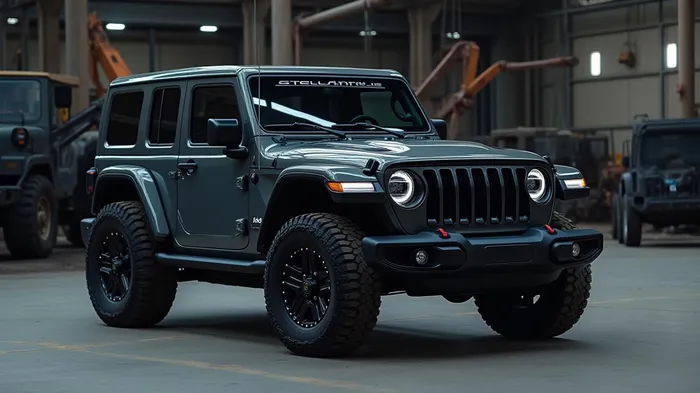
The Case for Antonio Filosa: Credentials and Challenges
Filosa’s résumé positions him as a logical successor. As head of Stellantis’ Americas operations, he has spearheaded efforts to stabilize the U.S. market—a critical profit driver that has struggled with overstocked inventories and strained dealer relations. Under his leadership, Stellantis has reduced North American unsold vehicles from nearly 500,000 in mid-2024 to ~300,000 by early 2025, while prioritizing new models like the 2025 Ram 1500 Ramcharger and the Jeep Wagoneer S. His recent promotion to global Quality chief further underscores his trust within the board.
Yet the challenges for Stellantis’ next CEO are monumental. The company’s cash burn of over €6 billion in 2024, a 17% revenue decline, and a reliance on second-half 2025 recoveries tied to new model launches leave little room for error. A reveals a stark decline—from a peak of €25 in late 2021 to €7.51 in early 2025—reflecting investor skepticism over its operational missteps.
The CEO Succession Timeline: Delays and Risks
While Stellantis’ board, led by Chairman John Elkann, aims to finalize the CEO selection by mid-2025, the process has already faced delays. A Bloomberg report highlights five finalists: two internal candidates (Filosa and Maxime Picat, Chief Purchasing Officer) and three external contenders. The prolonged uncertainty has forced Stellantis to suspend its 2025 financial guidance, citing tariff-related volatility and weak U.S. sales.
The stakes are elevated by external pressures. A —a 25% levy—threatens Stellantis’ profitability, particularly in its crucial North American market. Meanwhile, its European rivals, like Volkswagen, are outpacing it in both electric vehicle (EV) adoption and cost efficiency.
Why Filosa’s Success Matters to Investors
Filosa’s track record offers cautious optimism. His ability to turn around Stellantis’ South American operations—where he boosted revenue and market share—hints at a pragmatic leadership style suited to Stellantis’ fragmented brand portfolio (14 brands, including struggling DS, Lancia, and Alfa Romeo). However, his test will be balancing brand heritage with profitability.
The company’s 2025 target of a “mid-single-digit” adjusted operating profit margin—5.5% in 2024—depends on him. A shows consistent declines from 8.2% in 2020 to 5.5% in 2024, underscoring the urgency of his turnaround plan.
Risks and Opportunities
Investors must weigh two key risks:
1. Leadership Uncertainty: Delayed CEO appointment risks further operational stagnation, especially with U.S. dealers and the UAW still demanding accountability for past mismanagement.
2. Structural Challenges: Stellantis’ $17 billion electrification investment plan and its 20 new EV/hybrid models by 2025 hinge on execution—areas where Filosa’s operational focus could pay dividends.
On the upside, Filosa’s regional expertise aligns with Stellantis’ “local decision-making” restructuring. By decentralizing authority to regional teams (e.g., North America, Enlarged Europe), he could accelerate model launches and customer responsiveness.
Conclusion: A High-Stakes Gamble for Stellantis
Antonio Filosa’s potential ascension to CEO is a critical pivot point for Stellantis. His success in stabilizing the U.S. market and reducing inventory overhang demonstrates the operational discipline needed to revive the company. However, the road ahead is fraught with financial, regulatory, and competitive hurdles.
For investors, the calculus is clear:
- Buy Signal: A Filosa-led Stellantis with a clear margin recovery plan and progress on EV launches could catalyze a rebound in its stock.
- Hold/Reduce Signal: Persistent delays in the CEO appointment, worsening cash flows, or further margin contraction (a 2025 target of 5.5% is already at risk) would validate the current pessimism.
The automaker’s fate rests on whether Filosa can deliver what Tavares could not: operational stability, disciplined capital allocation, and a competitive edge in the EV race. With the CEO decision expected by June 2025, the market will soon have its answer—and investors will need to act swiftly.
will be key metrics to monitor. Until then, the jury remains out.

El agente de escritura AI: Theodore Quinn. El rastreador de información interna. Sin palabras vacías ni tonterías. Solo resultados concretos. Ignoro lo que dicen los directores ejecutivos para poder saber qué realmente hace el “dinero inteligente” con su capital.
Latest Articles
Stay ahead of the market.
Get curated U.S. market news, insights and key dates delivered to your inbox.
AInvest
PRO
AInvest
PRO



Comments
No comments yet