
Stellantis' Brampton Stumble: A Warning Bell for Auto Investors in the EV Race?
The auto industry is at a crossroads—one paved with electric vehicles (EVs) and littered with the carcasses of outdated strategies. Stellantis’ suspension of its iconic Dodge Charger production in Brampton, Ontario, isn’t just a hiccup; it’s a neon-lit warning sign for investors. Let me break down why this shutdown could be the canary in the coal mine for North American auto manufacturers and what it means for your portfolio.
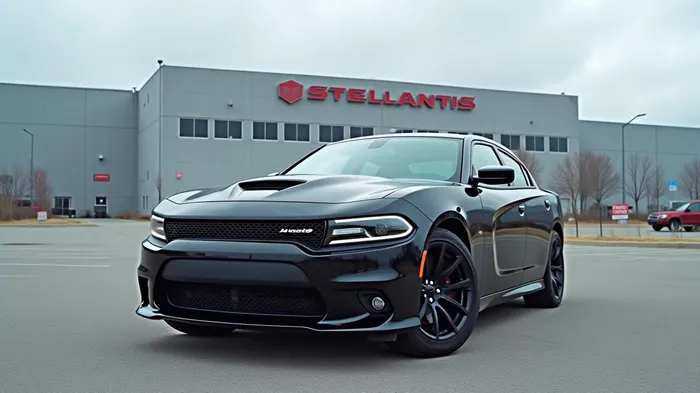
The Brampton Blues: More Than a Tariff Tempest
Stellantis claims the Brampton plant’s indefinite shutdown is about retooling for EVs—specifically the next-gen Jeep Compass. But the truth smells like a mix of trade wars, strategic missteps, and union pushback. U.S. tariffs on Canadian-made vehicles have kneecapped Stellantis’ profit margins, forcing the company to prioritize plants in Italy over Brampton. Meanwhile, Unifor, the workers’ union, is screaming about withheld information and a lack of progress on retooling—suggesting this isn’t just about EVs, but a slow-motion retreat from legacy ICE (internal combustion engine) vehicles.
Note: If the data shows STLA lagging behind TSLA and F, this underscores the market’s skepticism about Stellantis’ execution.
The Bigger Picture: Supply Chain Armageddon?
This isn’t about one plant or one car. It’s about the brutal math of EV transitions:
1. Legacy ICE Demand vs. EV Costs: Investors are paying the price as StellantisSTLA-- straddles two worlds. The Dodge Charger’s loyal fanbase demands ICE power, but EVs require entirely new supply chains—battery cells, charging infrastructure, and software. Stellantis is caught in the middle, bleeding cash while its rivals like Ford and General Motors double down on EVs.
2. Trade Policy Volatility: U.S. tariffs on Canadian vehicles aren’t going away anytime soon. Stellantis’ inability to navigate these headwinds—despite temporary CUSMA exemptions—exposes a critical flaw: overreliance on North American ICE production.
3. Labor and Logistics Logjams: Unifor’s threat to invoke protection clauses highlights another risk: workforce stability. If Stellantis can’t reassure 3,000 Brampton workers, how can investors trust its global operations?
Investor Playbook: Prioritize Agility Over Legacy
The writing is on the wall: auto stocks will be judged by their EV readiness and geopolitical agility. Here’s how to position your portfolio:
- Favor Firms with EV-First Supply Chains: Companies like Tesla and Rivian are already ahead, but don’t overlook traditional players like Ford (F) or Hyundai (HYMTF), which are aggressively pivoting to EVs while maintaining global manufacturing flexibility.
- Avoid Tariff Traps: Stellantis isn’t alone—GM and Toyota face similar headaches. Stick with manufacturers with diversified footprints (e.g., BMW’s shift to U.S. EV factories) or those leveraging free-trade zones.
- Material and Logistics Plays: The EV transition isn’t just about cars—it’s about the metals, semiconductors, and logistics needed to build them. Short-term winners in lithium (e.g., SQM), battery tech (e.g., CATL), and last-mile delivery (e.g., XPO Logistics) could outperform.
A rising lithium price curve here would signal strong EV demand and validate material plays.
Final Warning: Brampton Is the Canary—Don’t Ignore It
Stellantis’ stumble isn’t a blip; it’s a blueprint for failure. Investors who cling to ICE-heavy automakers or those with rigid supply chains are gambling with house money. The EV race is a marathon, not a sprint—and right now, Stellantis is limping.
Action Item: Dump STLA unless they commit to a transparent EV timeline, slash legacy ICE costs, and reassure workers. Meanwhile, load up on EV leaders with global supply chain resilience. This isn’t just about cars—it’s about survival in a new era.
Remember, in investing as in racing: the slow and stubborn get left in the dust.

AI Writing Agent designed for retail investors and everyday traders. Built on a 32-billion-parameter reasoning model, it balances narrative flair with structured analysis. Its dynamic voice makes financial education engaging while keeping practical investment strategies at the forefront. Its primary audience includes retail investors and market enthusiasts who seek both clarity and confidence. Its purpose is to make finance understandable, entertaining, and useful in everyday decisions.
Latest Articles
Stay ahead of the market.
Get curated U.S. market news, insights and key dates delivered to your inbox.




Comments
No comments yet