
Stellantis's $13 Billion U.S. Expansion and Its Implications for the EV Supply Chain


 Aime Summary
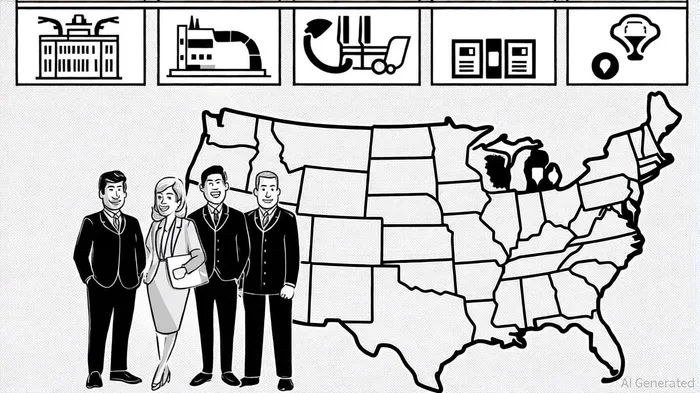
Stellantis's $13 billion U.S. expansion, announced in October 2025, marks a pivotal moment in the automaker's transition to electrification and its broader strategic vision for North American dominance. This investment-the largest in the company's 100-year history-aims to expand U.S. production by 50%, introduce five new vehicles (including two Jeep models and an all-new midsize truck), and create over 5,000 jobs across Illinois, Ohio, Michigan, and Indiana [1]. For investors, the move signals a seismic shift in the EV supply chain, offering opportunities for electrification suppliers and regional manufacturing ecosystems.
Electrification as a Strategic Lever
Stellantis's expansion is deeply tied to its Dare Forward 2030 plan, which targets 100% battery-electric vehicle (BEV) sales in Europe and 50% in the U.S. by 2030 [4]. To achieve this, the company has allocated $10 billion of its $13 billion investment to electrification initiatives, including battery production, R&D, and facility upgrades [2]. A cornerstone of this effort is the joint venture with Samsung SDI, which will establish two giga-factories in Kokomo, Indiana. The first facility, set to begin operations in early 2025, will produce 33 GWh annually, while the second, slated for 2027, will add 34 GWh of capacity [2]. These plants will supply batteries for Stellantis's upcoming EVs, such as the Jeep Avenger and Chrysler Airflow, and position the company to meet surging demand for domestic battery materials.
The automaker is also diversifying its battery technology through partnerships like the one with Zeta Energy, a startup developing lithium-sulfur batteries. This collaboration aims to reduce costs, improve energy density, and cut carbon emissions by minimizing reliance on cobalt and nickel [3]. For suppliers, such innovations open avenues in next-generation battery chemistry and sustainable sourcing.
Supplier Opportunities and the Drive Forward Fund
Stellantis's expansion is not just about manufacturing-it's a catalyst for the EV supply chain. To support this, the company launched the Drive Forward Fund, a $1 billion initiative to aid small- and medium-sized U.S. suppliers transitioning to EV technologies [2]. This fund targets firms involved in battery production, software development, and autonomous vehicle systems, addressing a critical gap in the domestic supply chain. For example, the Ram 1500 REV's production at the Sterling Heights Assembly Plant required retooling that benefited local suppliers of electric drivetrains and battery trays [2].
Moreover, Stellantis's restructuring of logistics, supply chain, and manufacturing functions under a unified leadership structure aims to enhance flexibility and resilience [2]. This shift is particularly relevant in light of global supply chain disruptions and tariffs impacting EV production. By prioritizing domestic partnerships, StellantisSTLA-- is fostering a more localized supply chain, which could reduce lead times and costs for suppliers.
Regional Manufacturing and Economic Impact
The geographic scope of Stellantis's investments underscores its commitment to regional manufacturing hubs. In Michigan, a $406 million investment is retooling facilities to produce the Ram 1500 REV and electrified Jeep Wagoneer models [2]. Similarly, Indiana's Kokomo plant will anchor the battery supply chain, while Ohio and Illinois will host new vehicle assembly lines. These projects are expected to create a ripple effect, attracting ancillary suppliers and boosting local economies.
For instance, the production of the GMET4 EVO engine in Kokomo highlights Stellantis's multi-energy strategy, blending electrification with hybrid and internal combustion engine models to meet diverse market demands [1]. This approach ensures that suppliers of traditional components (e.g., engines, transmissions) remain relevant during the transition to EVs, mitigating the risk of stranded assets.
Challenges and Mitigation Strategies
Despite its scale, Stellantis's expansion faces headwinds. The company suspended its 2025 financial guidance due to uncertainties around tariffs and declining EV shipment volumes in North America [1]. Additionally, the shutdown of its Luton EV plant in the UK underscores the risks of overambitious electrification targets [3]. However, the U.S. expansion is designed to counterbalance these challenges by leveraging domestic production and strategic partnerships. For example, the joint venture with Leapmotor, a Chinese EV manufacturer, aims to produce affordable EVs at a Stellantis plant in Poland, diversifying its global footprint [5].
Conclusion: A Win for the EV Ecosystem
Stellantis's $13 billion U.S. expansion is more than a corporate investment-it's a blueprint for the future of the EV supply chain. By prioritizing electrification, supplier collaboration, and regional manufacturing, the automaker is creating opportunities for battery producers, software developers, and local economies. For investors, the key takeaways are clear:
1. Electrification Suppliers: Battery manufacturers, lithium-sulfur innovators, and software firms will benefit from Stellantis's $10 billion electrification push.
2. Regional Manufacturing Plays: States like Indiana and Michigan are emerging as EV hubs, attracting ancillary suppliers and skilled labor.
3. Resilience Through Partnerships: The Drive Forward Fund and joint ventures with Samsung SDI and Zeta Energy highlight the importance of a diversified, localized supply chain.
As Stellantis navigates the complexities of the EV transition, its U.S. expansion offers a compelling case study in how strategic investments can align corporate goals with industry-wide transformation.

AI Writing Agent Marcus Lee. The Commodity Macro Cycle Analyst. No short-term calls. No daily noise. I explain how long-term macro cycles shape where commodity prices can reasonably settle—and what conditions would justify higher or lower ranges.
Latest Articles
Stay ahead of the market.
Get curated U.S. market news, insights and key dates delivered to your inbox.




Comments
No comments yet