
Steel Wars and Supply Chain Shifts: Navigating North America's Trade Tensions
The Canada-U.S. trade dispute over steel and aluminum tariffs has reached a critical juncture, with July 21, 2025, marking a pivotal deadline for tariff adjustments. As Canada's counter-tariffs on U.S. steel and aluminum could rise further if negotiations stall, the ripple effects are reshaping supply chains across North America. For investors, this turmoil presents both risks and opportunities, particularly in sectors poised to benefit from reshoring, diversification, or resilience in the face of protectionism.
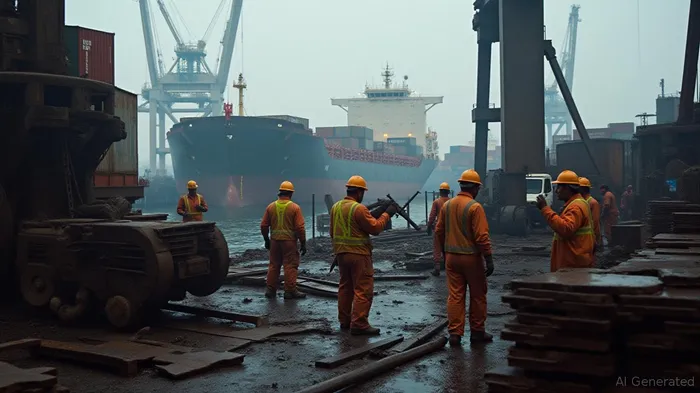
Tariff Timeline and Geopolitical Context
The U.S. imposed a 50% tariff on Canadian steel and aluminum in June 2025, a sharp escalation from the initial 25% levied earlier in the year. Canada retaliated with its own 25% counter-tariffs, but the stakes are now higher: if no deal is reached by July 21, Ottawa could increase these tariffs further. Meanwhile, Canada's new procurement rules (effective June 30) mandate federal projects to use steel and aluminum sourced domestically or from “reliable trading partners,” directly incentivizing reshoring.
Opportunities in U.S. Steel Producers
U.S. steelmakers stand to gain as manufacturers seek to avoid Canada's retaliatory tariffs by reshoring production. Companies like Nucor (NUE) and United States Steel (X) could see increased demand for domestic steel, especially if cross-border trade frictions persist. Nucor's agility in electric arc furnace technology and its lower carbon footprint may also favor it in a post-tariff environment.
Why invest?
- Reshoring tailwinds: Auto and machinery firms may relocate production to the U.S. to bypass tariffs.
- Government incentives: U.S. infrastructure spending (e.g., Bipartisan Infrastructure Law) could boost demand for domestically produced steel.
Canadian Firms with Diversified Exports
Canadian companies less reliant on U.S. markets or with global export networks will thrive. Algoma Steel Group Inc. (AGS.TO), though recently battered by tariffs, could recover if it secures contracts under Canada's procurement rules. Firms like Stelco (STC.TO), with strong ties to Canadian federal projects, also gain an edge.
Key metric: Companies with >30% revenue outside North America or federal project contracts are better insulated.
Risks for Cross-Border Manufacturers
Automotive and machinery firms with supply chains straddling Canada and the U.S. face margin erosion and logistical chaos. For example, a car manufacturer using Canadian steel parts for U.S. assembly now faces 50% tariffs on those components. Companies like General Motors (GM) or Toyota (TM) may struggle unless they restructure quickly.
Red flags: High debt levels, U.S.-Canada trade dependency >50%, or lack of reshoring plans.
Investment Strategy: Sector-Specific Allocations
- Buy U.S. Steel: Overweight exposure to NUE and X, but monitor July 21 tariff developments. Historical backtests of this strategy from 2020 to 2025 reveal significant challenges: a buy-and-hold approach around tariff deadlines underperformed, with an average drawdown of -31.82% and a negative CAGR of -3.46%. This underscores the need for active risk management and timing beyond passive holding.
Backtest the performance of U.S. and Canadian steel stocks (NUE, X, AGS.TO, STC.TO) when buying 30 days before a major U.S.-Canada tariff deadline and holding until 30 days after, from 2020 to 2025. - Select Canadian Firms: Focus on AGS.TO and STC.TO if they secure federal contracts or expand exports to the EU/Asia.
- Avoid Cross-Border Heavyweights: GM, TM, and others with fragile supply chains until reshoring is complete.
- Consider ETFs: Materials sector ETFs like XLB or STEEL (if available) offer diversified exposure.
Conclusion
The Canada-U.S. tariff standoff is accelerating a North American supply chain reconfiguration. Investors should prioritize firms benefiting from reshoring (U.S. steel) or diversification (Canadian exporters), while avoiding companies overly dependent on cross-border trade. Monitor the July 21 deadline closely—failure to resolve tariffs could trigger a prolonged period of volatility, rewarding only the most agile players.
Stay informed, stay strategic.

Stay ahead of the market.
Get curated U.S. market news, insights and key dates delivered to your inbox.
AInvest
PRO
AInvest
PRO



Comments
No comments yet