
U.S. Steel: Navigating Geopolitical Tides with Strategic Partnerships
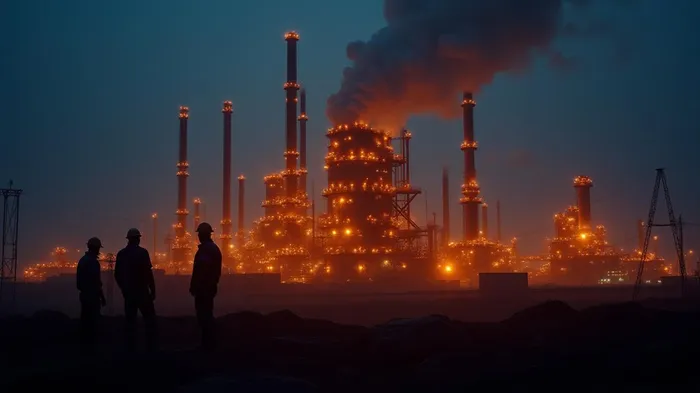
The U.S. Steel CorporationX-- (X) stands at the intersection of global trade wars, environmental innovation, and geopolitical power plays. As protectionism and climate regulations reshape the steel industry, U.S. Steel's strategic partnerships and adaptive business model position it to capitalize on this era of upheaval. Here's why investors should take notice.
Geopolitical Shifts: A Shield Against Global Chaos
The Biden administration's 2024 decision to block Nippon Steel's (5283.T) $14.9 billion acquisition of U.S. Steel—later upheld under Trump's 2025 re-election—signaled a hardening stance on economic nationalism. While this blocked foreign ownership, it also reinforced U.S. Steel's role as a strategic asset.
The move underscores a broader trend: tariffs, trade barriers, and resource nationalism are here to stay. U.S. Steel's reliance on domestic scrap-based electric arc furnace (EAF) production—a process that uses 90% recycled content—buffers it from volatile global iron ore markets. This model aligns with U.S. Section 232 tariffs, which now include 34% duties on Chinese steel, 32% on Taiwanese, and 24% on Japanese imports. These barriers create a moat for domestic producers like U.S. Steel.
Strategic Partnerships: Betting on Sustainability
U.S. Steel's partnership with the University of Michigan's Solar Car Team, announced in 2025, is no mere PR stunt. It's a masterstroke to position the company at the heart of the clean energy transition. The team's use of U.S. Steel's XG3® high-strength steel and verdeX®—a product with 70-80% lower CO2 emissions—demonstrates its commitment to low-carbon innovation.
This aligns perfectly with the EU's Carbon Border Adjustment Mechanism (CBAM), which will penalize high-carbon imports starting in 2026. By 2034, EU tariffs could add 56% to Indian steel costs and 49% to Chinese steel—giving U.S. Steel a cost advantage in a critical market.
High-Grade Iron Ore: The New Geopolitical Battleground
The race for high-grade iron ore (≥67% purity) is intensifying. This ore is essential for green steel production via hydrogen-based direct reduced iron (DRI). U.S. Steel's partnerships with global miners—like Vale (VALE) in Brazil and projects in Guinea—are strategic moves to secure supply.
China's dominance here is a double-edged sword. Its investments in Guinea's Simandou project (120 million tons/year by 2025) could disrupt global pricing, but also create opportunities for U.S. Steel to leverage its scrap-based model. Meanwhile, Iran's rise as a low-cost producer threatens Asian markets—a risk U.S. Steel mitigates by focusing on high-margin, low-carbon products.
The Investment Case: Resilience in a Volatile World
U.S. Steel's stock (X) has underperformed peers like Nucor (NUE) over the past year, but this presents an entry point. Key catalysts include:
- Regulatory Tailwinds: U.S. tariffs and CBAM will disproportionately hurt foreign competitors.
- Sustainability Premium: verdeX® and EAF production give it a green edge.
- Strategic Acquisitions: The Nippon Steel deal, if cleared, would bring $2.7 billion in Brazilian iron ore assets.
Risks to Consider
- Regulatory Delays: The Nippon Steel merger faces U.S. antitrust reviews.
- Iron Ore Volatility: Despite EAF's advantages, input costs remain tied to global markets.
Conclusion: Buy Now, or Miss the Steel Renaissance
U.S. Steel is not just a legacy industrial firm—it's a beneficiary of a seismic shift toward protectionism and sustainability. With geopolitical winds favoring domestic champions and green steel demand surging, X is primed to outperform.
Investors seeking exposure to a sector reshaped by climate policy and trade wars should act now. The steel industry's next chapter is being written—and U.S. Steel is holding the pen.
Act now before the geopolitical tides lift this stock beyond reach.

Delivering real-time insights and analysis on emerging financial trends and market movements.
Latest Articles
Stay ahead of the market.
Get curated U.S. market news, insights and key dates delivered to your inbox.




Comments
No comments yet