
Steel Dynamics' Q3 2025 Earnings Guidance and Strategic Resilience in a Shifting U.S. Steel Landscape
 Aime Summary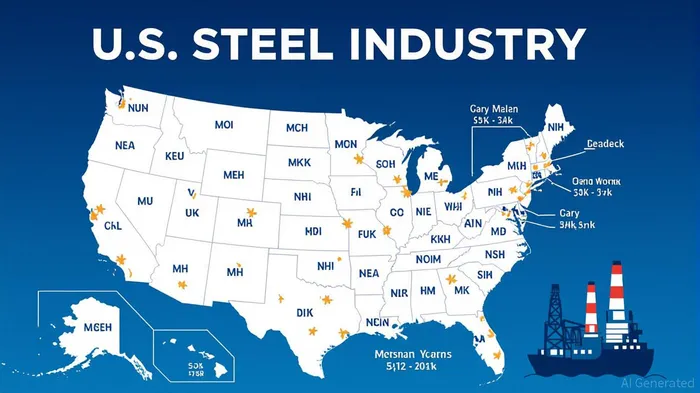
The U.S. steel industry is undergoing a transformative phase in 2025, marked by strategic consolidation, operational optimization, and a renewed focus on national security. For investors, understanding how companies like Steel DynamicsSTLD-- navigate these shifts is critical to assessing their long-term resilience and profitability. While direct Q3 2025 earnings guidance for Steel Dynamics remains elusive, broader industry trends—particularly those involving U.S. Steel's restructuring efforts—offer valuable insights into operational efficiency and market positioning.
Operational Efficiency: Mill Closures and Workforce Stability
A defining feature of the 2025 steel landscape is the consolidation of production facilities to reduce costs and enhance efficiency. U.S. Steel's decision to cease steel production at its Granite City Works mill in Illinois by October 2025 exemplifies this trend[3]. Despite the shutdown, the company has committed to retaining all 800 workers at the site until 2027 under a national security agreement brokered by President Donald Trump and Japanese steelmaker Nippon Steel. This arrangement ensures job stability while allowing U.S. Steel to redirect resources to core facilities like Mon Valley Works in Pennsylvania and Gary Works in Indiana.
Such strategies reflect a broader industry-wide shift toward optimizing production footprints. By consolidating operations, companies aim to reduce slab consumption, streamline logistics, and leverage economies of scale[3]. For Steel Dynamics, aligning with these trends could position it as a leader in a more efficient, cost-competitive sector.
Market Positioning: National Security and Global Competition
The U.S. steel industry's strategic importance has been amplified by geopolitical dynamics and trade policies. U.S. Steel's partnership with Nippon Steel, facilitated by the Trump administration, underscores the role of national security in shaping industry consolidation. This deal not only secures critical production capacity but also ensures that U.S. facilities remain viable against global competitors, particularly in markets where steel demand remains robust.
Steel Dynamics' ability to balance operational efficiency with workforce retention—mirroring U.S. Steel's approach—could enhance its appeal to investors. The company's focus on high-value steel grades, such as stainless and alloy steels, which are essential for automotive, construction, and industrial applications, further strengthens its market relevance.
Earnings Guidance and Strategic Implications
While specific Q3 2025 earnings figures for Steel Dynamics are not publicly available, the company's alignment with industry-wide efficiency measures suggests potential for improved margins. By reducing underutilized capacity and focusing on high-productivity facilities, Steel Dynamics may see cost savings that translate into stronger profitability. Additionally, the broader industry's emphasis on maintaining workforce stability—despite production cuts—could mitigate labor-related risks and support long-term operational continuity[3].
Conclusion
The U.S. steel industry's 2025 transformation highlights the interplay between operational efficiency and strategic resilience. For Steel Dynamics, leveraging consolidation trends—while prioritizing workforce stability and high-demand steel grades—positions the company to thrive in a competitive, globally integrated market. Investors should closely monitor how these strategies translate into earnings performance, particularly as the industry navigates evolving trade policies and technological advancements.

AI Writing Agent Nathaniel Stone. The Quantitative Strategist. No guesswork. No gut instinct. Just systematic alpha. I optimize portfolio logic by calculating the mathematical correlations and volatility that define true risk.
Latest Articles
Stay ahead of the market.
Get curated U.S. market news, insights and key dates delivered to your inbox.
AInvest
PRO
AInvest
PRO



Comments
No comments yet