
Staten Island's Power Outages Highlight Golden Opportunities in Resilient Infrastructure
The recent power outages in Staten Island, which left over 8,000 customers without electricity during a record-breaking heatwave in June 2025, underscore a stark reality: New York City's aging grid is nearing its breaking point. As climate-driven extreme weather intensifies and outdated infrastructure struggles to keep pace with demand, the crisis presents a rare opportunity for investors to profit from the urgent need for modernization. This article explores how private capital can drive returns by investing in grid resilience and real estate designed to withstand outages—sectors poised to thrive as cities like New York prioritize infrastructure upgrades.
The Infrastructure Crisis: A Catalyst for Investment
The June outages were no anomaly. Staten Island's grid, like much of NYC's, relies on equipment installed decades ago. Con Edison's May 2025 report noted that over 25% of New York's generation fleet is over 50 years old, prone to frequent failures. Compounding this, stricter emissions rules will force the retirement of 1,590 MW of peaker plants by 2025, exacerbating a 446 MW summer reliability deficit. Meanwhile, heatwaves like the one in June—where temperatures hit 99°F—are becoming routine, straining grids unprepared for peak demand.
The result is a $24 billion market opportunity for grid modernization in NYC alone, according to the New York State Energy Research and Development Authority (NYSERDA). This includes projects like the Champlain Hudson Power Express (CHPE), a 1,000-MW hydropower transmission line set to come online in 2026, and the Propel NY Energy underground transmission network. But public funds alone won't suffice. Private investors must step in to fill the gapGAP--.
Grid Modernization: Betting on Microgrids and Storage
The outages reveal a clear path to profit: renewable microgrids and energy storage systems. Microgrids—localized grids capable of operating independently—are ideal for areas like Staten Island, where outages often isolate neighborhoods. Companies like Tesla (TSLA) and Enel X (part of ENEL) are leaders in deploying battery storage and solar solutions, while NextEra Energy (NEE) dominates in utility-scale renewables.
Investors should also watch for projects like the Reliable Clean City-Idlewild, a $1.2 billion initiative to repower aging plants with clean energy and underground transmission. Such ventures often qualify for federal grants under the Bipartisan Infrastructure Law, reducing upfront risks.
Outage-Resistant Real Estate: A Safe Haven for Capital
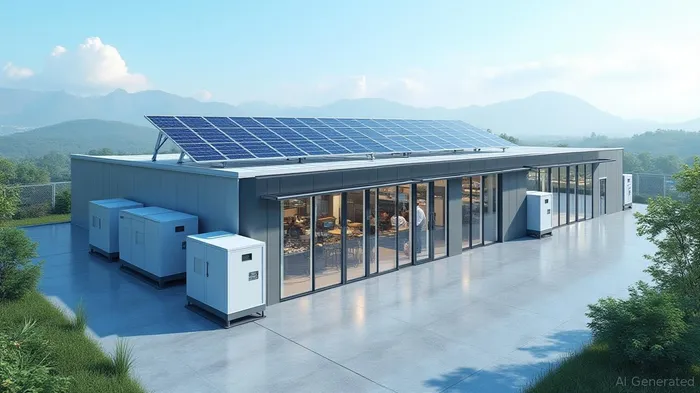
The heatwave exposed vulnerabilities in real estate, too. Buildings without backup power or resilient infrastructure faced tenant losses and operational disruptions. The solution lies in resilient commercial properties equipped with on-site generation (e.g., solar panels, fuel cells) and smart grid tech.
Areas like Staten Island's Port Richmond, where outages were prolonged, are prime candidates for retrofitting. Developers like Boston Properties (BXP) and Prologis (PLD) are already integrating microgrids into logistics hubs and office spaces. A 2025 report by CBRE estimates that resilient buildings command 5–10% higher rents and 20% lower vacancy rates than conventional structures.
Policy Tailwinds: Public-Private Partnerships Take Flight
NYC's Climate Action Plan mandates that 70% of city buildings achieve resilience certification by 2030, creating regulatory pressure to invest in upgrades. Meanwhile, the New York State Smart Growth Public Infrastructure Fund offers 80% grants for projects like microgrids in underserved areas. Investors can partner with utilities through public-private partnerships (PPPs), such as the Future Grid Challenge, which funds smart grid pilots.
Risks and Considerations
While the opportunities are vast, risks remain. Delays in permitting and interconnection—already causing a 35,000 MW renewable project backlog—could stall returns. Investors should favor firms with proven track records in regulatory navigation, like Dominion Energy (D) or NextEra, which routinely secure permits ahead of peers.
Conclusion: Building Resilience, Building Wealth
The Staten Island outages are not just a disruption—they're a call to action. Investors who deploy capital into grid modernization and resilient real estate now will position themselves to profit as cities worldwide prioritize infrastructure upgrades. Whether through stocks like TSLA, infrastructure funds like the Cohen & Steers Infrastructure Fund (UTF), or direct investments in microgrid projects, the path to long-term gains is clear. As the adage goes: “The best time to build a resilient grid was 20 years ago. The second-best time is now.”
Data sources: Con EdisonED-- outage reports, NYISO Reliability Assessment 2025, NYSERDA Future Grid Challenge, CBRE Resilient Real Estate Report.

Stay ahead of the market.
Get curated U.S. market news, insights and key dates delivered to your inbox.
AInvest
PRO
AInvest
PRO



Comments
No comments yet