
State Tax Reforms: How Property And Digital Levies Impact Investors
 Aime Summary
Investors are navigating an increasingly complex tax environment as state and municipal governments pivot to new revenue streams to fund operations and reduce budget deficits. The push toward levying taxes on digital transactions and reassessing property values is altering the cost of capital and the bottom line for numerous industries. From the blockchain sector to residential construction, these fiscal shifts are forcing companies to re-evaluate their compliance frameworks and strategic planning models.
How Will Illinois Digital Asset Tax Affect Crypto Investors?
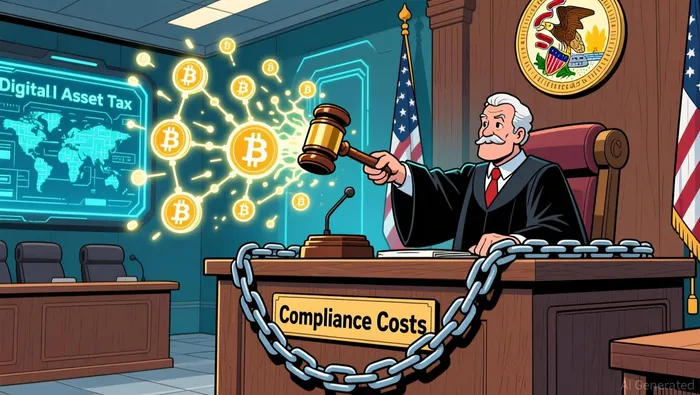
Illinois has become the latest battleground for digital asset regulation, enacting 0.2% transaction tax on cryptocurrency that is scheduled to take effect on January 1, 2027. The legislation, classified as a privilege tax, requires users to pay based on transaction volume rather than income, making it first state to target crypto. Major industry organizations, including the Blockchain Association and the Crypto Council for Innovation, have filed for a preliminary injunction in the Sangamon County Circuit Court to halt the tax before it is implemented .
The legal challenge is grounded in multiple arguments, primarily asserting that the tax discriminates against digital assets by treating them differently than comparable financial activities such as money and precious metals, which remain exempt from similar transaction taxes in Illinois . Furthermore, the groups contend that the levy conflicts with the federal Internet Tax Freedom Act, which prohibits discriminatory taxes on electronic commerce. They also raise constitutional objections regarding due process and the improper taxation of intangible property .
Compliance costs represent a significant portion of the industry's concern. Industry leaders highlight that the tax structure is highly ambiguous, potentially allowing a single transaction sequence involving an exchange, transfer, and storage to be taxed up to three times . Out-of-state brokers face stringent registration requirements upon receiving just $100,000 in gross receipts from Illinois, creating a massive administrative burden . The groups argue that delaying enforcement causes little harm to the state’s projected $60 million in annual revenue but prevents substantial, unrecoverable costs for crypto businesses .
The outcome of this lawsuit could set a critical precedent for other states considering similar digital asset levies. If the law stands, it may encourage other jurisdictions to follow Illinois' lead, potentially fragmenting the digital asset landscape and imposing heavy compliance costs on businesses operating across multiple states .
Are Property Taxes Rising Across The United States?
While digital assets are facing new scrutiny, traditional property taxes are experiencing a dramatic surge nationwide, driven largely by rising home values and aggressive local reassessments . Over the past five years, national property taxes have climbed nearly 25%, with the average property tax payment reaching $4,300 in 2024 . This increase occurs even as effective tax rates remain stable or slightly decline, because the underlying market value of homes continues to rise .
Tennessee has emerged as the state with the most pronounced increase in property taxes, with owners paying up to 75% more in 2025 compared to 2019 . This surge is largely attributed to significant reassessments; in Davidson County, which includes Nashville, assessed values rose by an average of 45% in 2025 . Unlike states with income taxes, Tennessee relies heavily on property levies, making these reassessments a primary source of revenue for local governments .
New Jersey remains the state with the highest overall tax burden, with typical homeowners paying approximately $10,134 annually, representing an effective rate of 1.56% . In contrast, states like Hawaii, Alabama, and Utah report some of the lowest loads, with effective rates under 0.5% . New York presents a complex internal disparity, where the state average effective rate is 1.28%, but the burden varies significantly by region, with Nassau and Westchester counties exceeding 2.0% to 2.5% .
For investors and homeowners, these increases often translate to higher monthly mortgage payments through escrow accounts . Homeowners facing unjustified spikes are advised to verify assessed values for errors, gather comparable sales data, and file appeals within the specific windows set by their county, typically between February and June . However, legal avenues generally only allow appealing the assessed value, not the tax rate itself .
What Tax Reforms Are Proposed For Canadian Housing?
Beyond the United States, significant tax reform proposals are emerging in Canada, where the residential construction sector is facing severe headwinds . The Residential Construction Council of Ontario (RESCON) has submitted a pre-budget proposal urging federal, provincial, and municipal governments to implement permanent structural changes to address the downturn in the new home building sector . The organization identifies stifling taxation, rising material and labor costs, and cumbersome planning approvals as primary drivers of the industry's dramatic contraction .
RESCON's core recommendations include the permanent elimination of the Harmonized Sales Tax (HST) on new home purchases, significant reductions in development charges, and the modernization of municipal infrastructure funding models . Additionally, the council advocates for the digitization of planning and review processes to accelerate approvals, a move intended to remove regulatory barriers that currently hamper industry efficiency . While acknowledging recent interim measures such as time-limited HST rebates and temporary caps on development charges, RESCON insists these must become permanent to provide market stability .
The council aims to restore the cost of a home to four times a household’s income through a rebalancing of the housing supply system . By lowering the cost of building and speeding up the development process, RESCON argues that the industry can be returned to a sustainable trajectory, benefiting both the construction sector and the broader economy .
This push for structural tax changes highlights the growing recognition that high taxation and regulatory bottlenecks are major impediments to housing affordability and economic growth. The ongoing debate over how to balance revenue generation with industry sustainability will likely influence policy decisions across North America in the coming fiscal years.
: Tennessee Leads Property Tax Surge with 75% Increase Since 2019 : Crypto Industry Groups Sue Illinois to Block 0.2% Transaction Tax

Stay ahead of the market.
Get curated U.S. market news, insights and key dates delivered to your inbox.


AInvest
PRO
AInvest
PRO




Comments
No comments yet