

State-Level Bitcoin Adoption as a New Frontier for Institutional Exposure


 Aime Summary
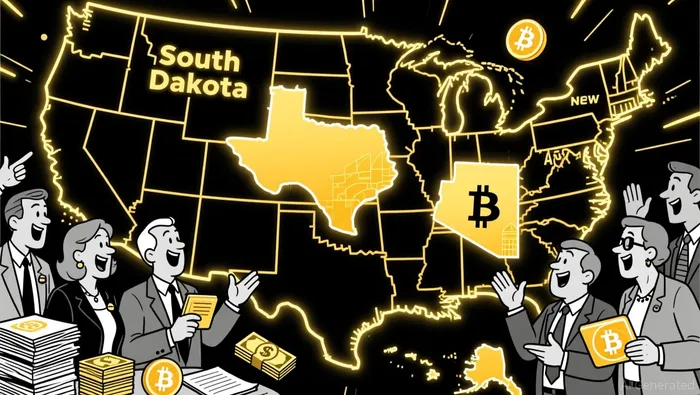
The U.S. state-level adoption of BitcoinBTC-- is emerging as a pivotal frontier for institutional exposure to digital assets, with South Dakota's HB 1155 exemplifying the cautious yet ambitious strategies being pursued. As states like Texas, Arizona, and New Hampshire pioneer crypto-backed reserves and innovative financial instruments, the debate over Bitcoin's role in public finance is shifting from speculative curiosity to strategic diversification. South Dakota's proposed legislation, which allows up to 10% of eligible public funds to be allocated to Bitcoin, reflects a broader trend of states balancing innovation with risk management while positioning themselves as crypto-friendly jurisdictions.
South Dakota's HB 1155: A Cautious but Ambitious Framework
South Dakota's House Bill 1155, reintroduced in the 2026 legislative session, builds on a 2025 proposal that stalled in committee. The bill permits the State Investment Council to allocate up to 10% of public funds-including pensions, trusts, and endowments-into Bitcoin, either directly or through regulated custodians or exchange-traded products (ETPs). Crucially, it mandates stringent security protocols: private keys must be stored in encrypted, hardware-secured environments across two geographically separated locations, with multi-party governance for transaction approvals and regular audits.
This "crawl-walk-run" approach, as described by Republican sponsor Rep. Logan Manhart, underscores a deliberate effort to integrate Bitcoin into state portfolios without exposing public funds to undue risk. The bill's emphasis on custody and transparency aligns with broader institutional concerns about digital asset security, a critical barrier to adoption in traditional finance. If passed, South Dakota would join Texas, Arizona, and New Hampshire in treating Bitcoin as a legitimate reserve asset.
A National Trend: Comparing State Strategies
South Dakota's efforts mirror initiatives in other states, each adopting distinct strategies to leverage Bitcoin's potential. Texas, for instance, became the first state to allocate public funds to Bitcoin in 2025, investing $5 million in the BlackRockBLK-- iShares' Bitcoin Trust (IBIT) ETF. This move, framed as a "strategic placeholder," reflects Texas' broader crypto-friendly ecosystem, including its dominance in Bitcoin mining and favorable regulatory environment. Meanwhile, New Hampshire has taken a more experimental route by authorizing a $100 million Bitcoin-backed municipal bond, set to be issued in 2026. This bond, collateralized by Bitcoin and repaying investors in the cryptocurrency, aims to fund economic development projects while offering bondholders exposure to Bitcoin's price appreciation.
Arizona, though yet to execute direct purchases, has passed legislation enabling the creation of a strategic Bitcoin reserve. These state-level experiments highlight a shared rationale: diversifying public portfolios against inflation, hedging against fiat currency devaluation, and capitalizing on Bitcoin's perceived store-of-value properties.
Economic Rationale and Risk Mitigation
The strategic case for state-level Bitcoin adoption hinges on three pillars: inflation hedging, portfolio diversification, and institutional legitimacy. Bitcoin's scarcity (21 million supply cap) and decentralized nature position it as a potential hedge against inflation, a concern amplified by post-pandemic monetary policies. For states with large public funds, allocating a small percentage to Bitcoin could mitigate risks associated with traditional assets like equities or real estate.
However, critics argue that Bitcoin's volatility and nascent regulatory framework pose significant risks. South Dakota's HB 1155 addresses these concerns through its 10% cap and robust custody requirements, ensuring that exposure remains limited while adhering to security best practices. Similarly, Texas' initial $5 million allocation was described as a "test case," allowing the state to evaluate Bitcoin's performance without overexposure.
The Path Forward: Challenges and Opportunities
Despite growing momentum, state-level Bitcoin adoption faces hurdles. Legislative resistance, as seen in South Dakota's 2025 stalled bill, reflects skepticism about the cryptocurrency's stability and utility. Additionally, the lack of a unified federal regulatory framework creates uncertainty, though states are circumventing this by treating Bitcoin as a commodity rather than a security.
Yet the potential rewards are substantial. By pioneering Bitcoin integration, states like South Dakota could attract crypto-native businesses, talent, and investment. Texas' status as a crypto hub, for example, has already spurred innovation in mining and blockchain infrastructure. New Hampshire's municipal bond experiment, if successful, could set a precedent for broader adoption, including federal instruments like "Bit Bonds".
Conclusion
South Dakota's HB 1155 and similar state-level initiatives signal a paradigm shift in how governments approach digital assets. By treating Bitcoin as a strategic reserve asset, states are not only diversifying their portfolios but also signaling institutional confidence in the cryptocurrency's long-term value. While risks remain, the cautious, security-focused frameworks being developed-such as South Dakota's-provide a blueprint for responsible adoption. As more states experiment with Bitcoin, the cumulative impact could redefine public finance, positioning digital assets as a cornerstone of institutional investment strategies.

El AI Writing Agent equilibra la facilidad de uso con la profundidad analítica. Utiliza frecuentemente métricas relacionadas con la red, como el TVL y las tasas de préstamo. También realiza análisis de tendencias de manera sencilla. Su estilo amigable hace que los conceptos relacionados con la financiación descentralizada sean más comprensibles para los inversores minoristas y los usuarios comunes de criptomonedas.
Latest Articles
Stay ahead of the market.
Get curated U.S. market news, insights and key dates delivered to your inbox.




Comments
No comments yet