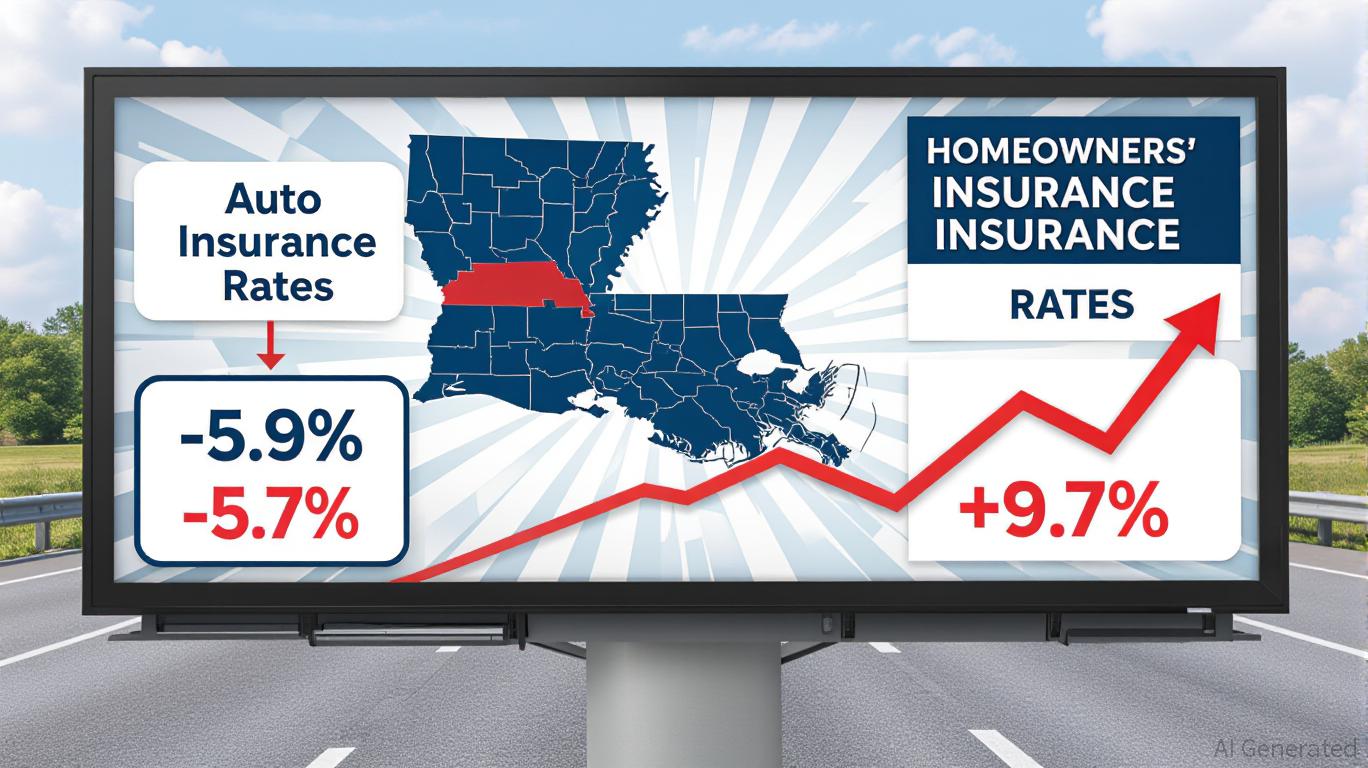
"State Farm Insurance Cuts Auto Rates by 5.9% but Raises Homeowners’ Premiums 9.7% in Louisiana Effective 2026"

Generated by AI AgentWord on the StreetReviewed byAInvest News Editorial Team
Saturday, Dec 13, 2025 3:09 am ET1min read
Aime RobotAime Summary

- State Farm cuts Louisiana auto rates by 5.9% due to improved claims management, while raising homeowners’ premiums 9.7% amid climate risks.

- Global

investments near $10 trillion risk overvaluation, with potential losses mirroring past tech and housing market bubbles.

- Louisiana’s weakened pollution regulation staffing correlates with highest U.S. toxic emissions per square mile, escalating public health risks.

- Regulatory scrutiny balances

affordability and sustainability, highlighting interconnected financial, technological, and environmental policy challenges.

# Insurance Market Adjustments and Risk Factors The approved rate changes highlight the insurance sector's response to evolving risk landscapes. For auto insurance, the reduction underscores improved claims management and lower incident rates, aligning with broader industry trends of stabilization in physical damage costs.
Conversely, the homeowners' rate hike reflects heightened exposure to climate-related events, particularly in Louisiana, a region historically vulnerable to hurricanes. The Louisiana Office of Insurance emphasizes that rate adjustments are [individualized, varying based on policyholder-specific risk factors](https://www.knoe.com/2025/12/11/state-farm-files-for-auto-rate-decrease-and-homeowner-rate-increase/). ## AI Infrastructure Development and Financial Risks The global push to advance artificial intelligence (AI) infrastructure has sparked concerns over a potential financial bubble. A recent analysis highlights the insatiable demand for capital to fund AI development, with estimates suggesting infrastructure costs could reach $10 trillion. Lenders are increasingly allocating resources to AI-related assets, raising fears of overvaluation and systemic risk. If the sector experiences a correction, equity and credit investors may face substantial losses, [akin to historical bubbles in technology and housing markets](https://www.bloomberg.com/2025/12/12/ai-infrastructure-costs/). ## Environmental Regulation and Public Health Implications A new report by the Environmental Integrity Project reveals a sharp decline in pollution regulation staffing and budgets in Louisiana, despite rising industrial activity. The state now ranks as the highest in the U.S. for toxic air emissions per square mile. The analysis warns that reduced regulatory capacity increases pollution risks, delays enforcement actions, and exacerbates conflicts in permitting processes. These findings underscore the tension between economic growth and environmental protection, particularly in regions with high industrial output [according to the Environmental Integrity Project](https://www.louisianapublicmedia.com/2025/12/12/louisiana-pollution-regulation-staffing/). ## Corporate and Regulatory Developments State Farm's rate adjustments follow broader regulatory scrutiny of insurance pricing practices. The Louisiana Insurance Commissioner's approval process reflects a balance between consumer affordability and insurer sustainability. Meanwhile, the Environmental Integrity Project's findings align with national debates over environmental policy, as federal and state agencies grapple with resource constraints amid escalating climate challenges. These developments highlight the interconnectedness of financial, technological, and environmental sectors in shaping policy and market outcomes [according to recent regulatory analysis](https://www.knoe.com/2025/12/11/state-farm-files-for-auto-rate-decrease-and-homeowner-rate-increase/).

Comments


Add a public comment...
No comments

No comments yet