
State Farm Insurance Is Changing — Here's What the Numbers Show


 Aime Summary
In the fast-moving world of insurance, State Farm Insurance has become a focal point for both investors and consumers. Recent data shows that the company is adapting to shifting market dynamics, evolving underwriting strategies, and growing competition. From rate adjustments in specific states to significant investments in technology and AI, State Farm is making moves that could shape its position in the property and casualty (P&C) market. For investors, these developments offer a window into how the company is navigating both near-term risks and long-term opportunities.
Insurance, as a sector, has seen heightened volatility in 2025, driven by broader macroeconomic pressures and climate-related claims. The S&P 500, for example, recently pulled back from record highs after a 0.3% drop, highlighting the fragility of investor sentiment ahead of key Federal Reserve decisions. The insurance segment, meanwhile, is feeling the heat from rising costs and shifting consumer behavior. In this context, State Farm's recent actions offer a compelling case study.
Recent Market and Insurance Industry Trends
The insurance sector has been on edge due to a mix of economic and environmental factors. The Federal Reserve's upcoming rate decision, for instance, has caused investors to hesitate. While the S&P 500 and Nasdaq saw minor gains in recent days, the market remains cautious. At the same time, climate-related risks are pushing insurers to rethink underwriting models. 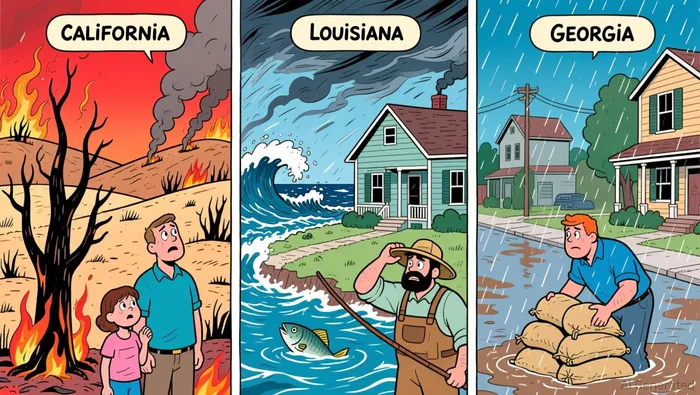 Fire damage in California alone has cost , prompting a request for significant rate hikes.
For P&C insurers, the balance between premium growth and claims management is critical. In Louisiana, for example, State Farm plans to reduce , . These moves underscore the complex trade-offs insurers face as they adjust to regional risks and regulatory scrutiny.
State Farm's Financial and Strategic Developments
State Farm isn't just adjusting pricing — it's investing heavily in the future. Since 2019, into auto-tech startups, . These investments signal a clear commitment to innovation, particularly in AI and autonomous vehicle technologies. . P&C insurers in AI patent activity, applying machine learning to improve claims automation and vehicle analysis.
The company's financial performance also tells an interesting story. In November 2025, AM Best downgraded State Farm's credit ratings, citing a narrowing of underwriting losses and a swing to $5.3 billion in net income. While the downgrade may raise eyebrows, it also reflects strong underwriting discipline and cost management. Meanwhile, the State Farm Growth Fund (STFGX) has shown robust performance, with a 5-year annualized total return of 15.13% and a 3-year return of 17.49%. The fund's relatively low volatility — as measured by a beta of 0.95 — makes it an attractive option for investors seeking growth without excessive risk.
What These Changes Mean for Investors and Consumers
For retail investors, State Farm's strategic investments and strong underwriting results highlight a company that is adapting to the challenges of 2025. While rate hikes in some states may raise concerns, they also indicate a willingness to align premiums with risk levels — a necessary step in a climate-driven insurance landscape. At the same time, rate cuts in other regions, like Georgia, where a 3% reduction will lower annual premiums by over $400,000, suggest a more competitive and customer-focused approach.
For consumers, the company's push into AI and telematics offers long-term benefits. Personalized pricing, improved claims handling, and accident forgiveness features are just some of the ways State Farm is leveraging technology to enhance customer experience. These innovations could help the company retain market share in a highly competitive landscape. In fact, both State Farm and Progressive have increased their auto insurance market share in recent years, while GEICO has struggled to keep up.
Still, challenges remain. The broader home insurance market is expected to grow from $276.65 billion in 2024 to $524.32 billion by 2032, driven by rising property values and climate risks. For State Farm, this means both an opportunity and a challenge — how to maintain profitability while managing the growing costs of claims.
Looking Ahead: Key Trends and Takeaways
As 2025 winds down, State Farm's trajectory reflects the larger shifts in the insurance industry. From rate adjustments to tech investments, the company is navigating a complex landscape of regulatory, economic, and environmental pressures. For investors, the key takeaway is that State Farm is not standing still — it's investing in the future while balancing the realities of today.
Meanwhile, the broader industry is seeing a shift in market dynamics. Allstate, for example, recently highlighted its strategy to expand its protection offerings and increase its Property-Liability market share, with a current personal auto share of 10.2%. This suggests that the market is not only competitive but also in a period of strategic repositioning.
In the coming months, the Federal Reserve's rate decisions, the outcome of State Farm's rate hearings in California, and the continued rollout of AI-powered services will all shape the company's path. For now, the message is clear: State Farm is evolving — and in doing so, it's setting the stage for what could be a pivotal chapter in the insurance sector.

Delivering real-time insights and analysis on emerging financial trends and market movements.
Latest Articles
Stay ahead of the market.
Get curated U.S. market news, insights and key dates delivered to your inbox.




Comments
No comments yet