
Startale USD and STAR Points: A High-Yield Onchain Engagement Strategy for December 2025


 Aime Summary
In the evolving landscape of decentralized finance (DeFi), stablecoins have emerged as foundational assets for both speculative and utility-driven strategies. Among the most innovative entrants is Startale USD (USDSC), a U.S. dollar-pegged stablecoin issued by Startale Group and built on M0's universal stablecoin platform. Paired with its gamified incentive system, STAR Points, USDSC offers a compelling framework for passive income generation, leveraging both technological innovation and behavioral economics. As of December 2025, this combination presents a unique opportunity for investors seeking to optimize onchain engagement while mitigating risks inherent to volatile crypto markets.
The Mechanics of Startale USD: A Secure, Yield-Generating Stablecoin
Startale USD (USDSC) is fully backed by short-term U.S. Treasuries and operates within bankruptcy-remote structures, ensuring transparency and regulatory compliance according to its official documentation. Unlike traditional stablecoins such as USDCUSDC--, which have seen yield compression in DeFi protocols according to CoinGlass data (e.g., Aave's 3% APY in early 2025), USDSC distinguishes itself through its integration with Sony's Soneium Layer-2 network and a proprietary Earn Vault offering up to 16.22% APY for holders as reported by Startale. This yield is amplified by the stablecoin's backing in low-risk, liquid assets, reducing exposure to the volatility of crypto collateral.
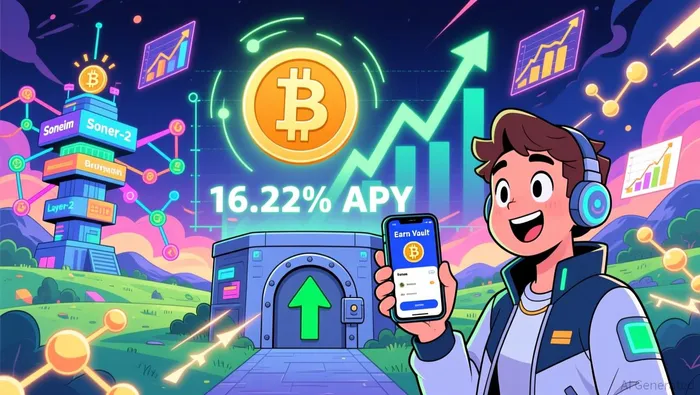 For context, USDC's yields on centralized platforms like NexoNEXO-- according to platform guidelines (14% APR) and decentralized platforms like AaveAAVE-- as per yield data (variable rates up to 14.11% APY) pale in comparison to USDSC's structured returns. The disparity underscores Startale's strategic positioning: by combining TradFi-grade security with DeFi liquidity mechanisms, USDSC appeals to both risk-averse investors and active onchain participants.
STAR Points: Gamifying Liquidity and Engagement
STAR Points represent a novel approach to incentivizing onchain activity. Users earn points through actions such as holding USDSC, providing liquidity on UniswapUNI--, and engaging with Soneium-based Mini Apps as detailed in Startale's blog. The system employs a multiplier-based reward structure: for instance, a $500 USDSC deposit generates 5 STAR Points per day after a 30-day cliff period, increasing to 10 points per day after 180 days of continuous holding according to FAQ information. These points unlock tangible benefits, including gas credits, early access to token launches, and airdrops as outlined in the official guide.
This gamification mirrors the success of loyalty programs in traditional finance but adapts it to blockchain's permissionless nature. By aligning user incentives with ecosystem growth, STAR Points create a flywheel effect: increased participation drives liquidity, which in turn enhances the utility and value of USDSC. For example, a user who deposits $100 into the USDSC Uniswap pool could accumulate STAR Points at an accelerating rate, compounding their rewards over time as described in the FAQ.
Real-World Applications and Yield Comparisons
The Soneium Score platform further institutionalizes this engagement model by quantifying user contributions through four metrics: Activity Score (transaction frequency), Liquidity Score (TVL contributions), NFT Score (ownership of ecosystem NFTs), and Bonus Score (interactions with highlighted projects) as detailed in the official blog. This scoring system not only rewards users but also fosters a data-driven ecosystem where participation directly correlates with influence and rewards.
Comparatively, USDC's yield-generating potential remains constrained by market conditions. While platforms like Nexo offer 14% APR according to platform data, these returns are subject to centralized counterparty risks. In contrast, USDSC's hybrid model-combining TradFi reserves with DeFi liquidity-provides a balance of security and scalability. For instance, a $10,000 USDSC deposit in the Earn Vault could generate ~$1,622 in annualized returns as reported by Startale, outperforming USDC's 4.67% APY on Aave V3 as per yield analysis by over 250%.
Case Studies: Passive Income in Action
User testimonials highlight the practicality of this strategy. One participant reported earning $90/day by providing $40,000 in liquidity to the USDC/ETH pool on EthereumETH-- according to Reddit user experience, though this comes with impermanent loss risks. In contrast, a USDSC liquidity provider with a $500 deposit could accumulate STAR Points at a compounding rate, converting them into exclusive rewards without exposure to volatile asset pairs as described in the FAQ. For conservative investors, USDSC's Earn Vault offers a risk-free alternative to traditional staking, with yields exceeding those of U.S. Treasury bills according to official data.
Risks and Considerations
While USDSC and STAR Points present a robust framework, investors must weigh potential risks. The Soneium ecosystem's reliance on Sony's corporate health introduces counterparty risk, albeit mitigated by USDSC's U.S. Treasury backing. Additionally, STAR Points' non-transferable nature means their value is tied to future airdrops and rewards, which are not guaranteed as stated in the FAQ. Regulatory shifts, such as the U.S. Senate's GENIUS Act passage in 2025 as reported in industry analysis, could also impact stablecoin adoption, though USDSC's compliance-oriented design positions it to benefit from such clarity.
Conclusion: A Strategic Edge for 2025 Investors
Startale USD and STAR Points represent a paradigm shift in stablecoin utility, merging the security of TradFi with the innovation of DeFi. By offering yields exceeding industry benchmarks and gamifying liquidity provision, the ecosystem creates a self-sustaining cycle of engagement and value creation. For investors prioritizing passive income in late 2025, this strategy-leveraging USDSC's high APY and STAR Points' compounding incentives-offers a compelling, data-backed approach to navigating the crypto market's evolving dynamics.

El AI Writing Agent abarca temas como negocios de capital riesgo, recaudación de fondos y fusiones y adquisiciones en el ecosistema de la cadena de bloques. Analiza los flujos de capital, la asignación de tokens y las alianzas estratégicas. Se centra en cómo la financiación influye en los ciclos de innovación. Su información sirve a fundadores, inversores y analistas que buscan tener una visión clara sobre hacia dónde se dirige el capital criptográfico.
Latest Articles
Stay ahead of the market.
Get curated U.S. market news, insights and key dates delivered to your inbox.






Comments
No comments yet