
Starship Soars: Why SpaceX's Ambitious Launches Signal a New Era in Aerospace and Connectivity
SpaceX's upcoming Starship Flight 9 launch on May 27, 2025, marks a pivotal moment in aerospace history. This mission—testing a reused booster and deploying Starlink simulators—demonstrates SpaceX's relentless drive to revolutionize space travel and disrupt global broadband. With Starship's operational milestones and Starlink's rapid expansion, the company is poised to dominate two transformative markets: reusable heavy-lift rockets and low-latency satellite internet. Here's why investors should take notice now.
The Technological Leap: Starship's Operational Reliability
SpaceX's Starship program has undergone rigorous testing, with each flight refining its capabilities. Flight 9 aims to validate critical systems, including:
- Reusable Booster Technology: The first-ever reuse of a Super Heavy booster (Booster 14-2) reduces launch costs by eliminating single-use hardware.
- Heat Shield Enhancements: Redesigned tiles and active cooling experiments will improve reentry survivability, critical for future lunar/Martian missions.
- In-Space Engine Ignition: A successful test here paves the way for orbital payload deployment and refueling—key to SpaceX's vision of a multiplanetary species.
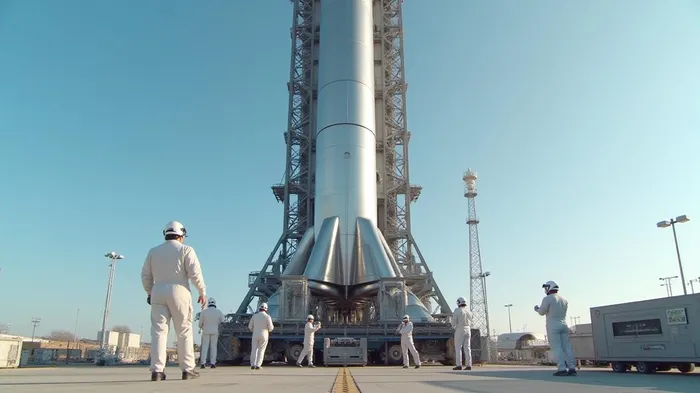
Flight 9's success will also address past challenges, such as fuel leaks and engine shutdowns, which the FAA has flagged. With 25 launches permitted annually by 2025, SpaceX's infrastructure—like the upgraded Pad B and Giga Bay facility—is scaling to meet demand.
Starlink's Market Disruption: A $100 Billion Opportunity
While Starship dominates headlines, Starlink's progress is equally transformative. The constellation now boasts over 8,000 satellites, with 500+ deployed per launch using SpaceX's proprietary “pez dispenser” mechanism. This scalability is unmatched:
- Low-Latency Connectivity: Starlink's low-Earth-orbit satellites deliver speeds rivaling terrestrial broadband, appealing to rural areas and global enterprises.
- Military and Emergency Use: Contracts with the U.S. military and disaster-response agencies highlight Starlink's reliability in high-stakes scenarios.
- Global Expansion: With over 2.5 million subscribers and plans to cover the entire globe by 2026, Starlink is already outpacing competitors like OneWeb and Telesat.
The satellite broadband market is projected to hit $100 billion by 2030, and SpaceX is first in line to capture this.
The Investment Thesis: Why Act Now?
SpaceX's dual breakthroughs in aerospace and broadband create a compelling investment case:
Cost Leadership:
Reusable rockets slash launch costs to $2–3 million per flight (vs. $100M for competitors). This margin advantage fuels Starlink's expansion and fuels innovation.First-Mover Advantage:
Starlink's early dominance in satellite internet—combined with Starship's heavy-lift capability—locks in customers and partnerships. NASA's reliance on Starship for lunar landings by 2027 underscores this.Scalability:
With Starship's Block 3 variant targeting 200+ tons to LEO, SpaceX can deploy satellites faster and cheaper than rivals. This creates a network effect, where more satellites = better coverage = more users.
Risks and the Path Forward
No investment is risk-free. Key challenges include:
- Regulatory Scrutiny: The FAA's $500M liability requirement and flight restrictions could slow launch cadence.
- Technical Hurdles: Starship's heat shield and engine reliability remain unproven at scale.
However, SpaceX's track record—8 launches in 18 months—suggests iterative improvements will overcome these. The $100B+ market opportunity far outweighs near-term risks.
Conclusion: The Next Moonshot Is Already Here
SpaceX isn't just building rockets—it's redefining global connectivity and space exploration. With Starship's reusable tech and Starlink's broadband dominance, the company is set to capitalize on two $100+ billion markets. Investors who bet on this now will ride the wave of a new era in aerospace.
Act now—before the competition catches up.
This analysis is for informational purposes only. Always conduct thorough due diligence before making investment decisions.

Delivering real-time insights and analysis on emerging financial trends and market movements.
Latest Articles
Stay ahead of the market.
Get curated U.S. market news, insights and key dates delivered to your inbox.


AInvest
PRO
AInvest
PRO



Comments
No comments yet