
Starship's Explosive Setback: Testing the Resilience of Commercial Space Investment
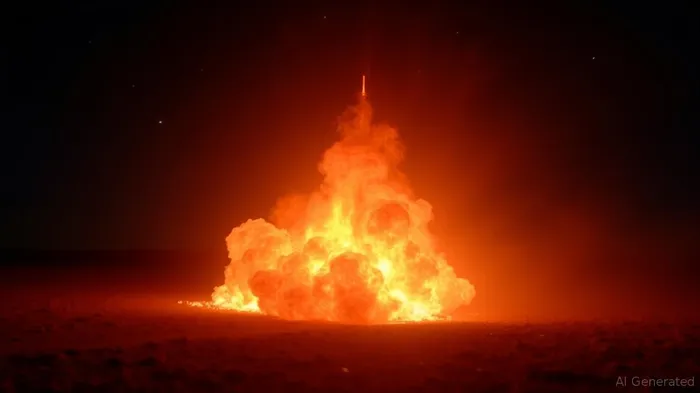
The June 18, 2025, explosion of SpaceX's Starship during a routine propellant test marks a pivotal moment in the commercial space race. While no lives were lost, the destruction of Ship 36 and the damaged infrastructure at Starbase underscore the inherent risks of rapid innovation. For investors, this incident amplifies questions about the balance between the transformative potential of space infrastructure and the volatility of its execution.
The Incident: A Catalyst for Critical Analysis
The explosion's cause—a failure of a nitrogen Composite Overwrapped Pressure Vessel (COPV)—reveals a vulnerability in Starship's design, despite its proven ability to recover from prior setbacks. This marks the fourth such incident in 2025 alone, with previous failures tied to engine malfunctions and reentry instability. The immediate impact is clear: SpaceX's timeline for NASA's Artemis program, already strained, now faces further delays. The $4 billion Human Landing System (HLS) contract hinges on demonstrating Starship's reliability for crewed lunar missions by 2027—a deadline now in jeopardy.
Investor Confidence: Testing the WatersWAT-- of Volatility
SpaceX's valuation, estimated at $137 billion as of 2024, relies heavily on its promise of Mars colonization and lunar infrastructure. The Starship explosion, however, may test investor patience. While the company's iterative approach—“fail fast, iterate faster”—has historically paid off, repeated setbacks could deter capital inflows. Competitors like Blue Origin and traditional aerospace firms (e.g., Lockheed Martin) may see renewed interest, especially if investors seek safer bets amid regulatory uncertainty.
Yet SpaceX's history is one of resilience. Each failure has spurred design improvements, such as the shift to stainless steel and methane propulsion. For long-term investors, the question is whether the company can maintain its breakneck pace of innovation while addressing systemic risks. The stock price of SpaceX's orbital rival, Rocket Lab (RKLB), has already shown sensitivity to space-related risks, falling 15% in 2025 amid regulatory delays. Investors may need to weigh such volatility against SpaceX's first-mover advantage.
Regulatory Scrutiny: The FAA's New Role as a Brake
The incident elevates scrutiny over SpaceX's regulatory compliance. The FAA's approval of Starship's flight tests in 2023 now faces renewed questions, particularly regarding environmental impact assessments. The explosion's aftermath—flaming debris and uncontrolled fires—raises concerns about safety protocols near coastal ecosystems. A would reveal whether penalties are deterring risky practices or merely procedural. For investors in space infrastructure, regulatory hurdles could increase costs and timelines, favoring firms with robust compliance frameworks.
Opportunities in the Ashes: Propulsion Tech and Risk Mitigation
The Starship explosion creates niches for specialized players. Propulsion technology firms, such as Aerojet Rocketdyne (AJRD), may benefit from demand for COPV alternatives or methane engine improvements. Similarly, risk mitigation services—including space insurance providers like XL Group (XL) and safety tech companies—could see growth as investors demand safeguards against systemic risks. The global space insurance market, projected to reach $1.5 billion by 2030, could accelerate if high-profile failures spur demand for coverage.
Balancing Risk and Reward: The Investment Thesis
The commercial space race is a high-stakes game. While SpaceX's vision of Mars colonization and lunar bases is compelling, its execution remains fraught with technical and financial risks. For investors, diversification is key:
- Avoid overexposure to single entities: Bet on ecosystems, not monopolies.
- Prioritize firms with defensive moats: Firms like Maxar Technologies (MAXR), which builds satellite components, offer stability amid mission delays.
- Monitor regulatory tailwinds: Firms compliant with evolving FAA rules (e.g., Northrop Grumman's reusable systems) may outperform.
The Starship explosion is a reminder that space is unforgiving. Yet, as Martin Wolf often emphasized, transformative industries thrive on iterative failure. For investors willing to endure volatility, the long-term payoff—dominion over a $1.1 trillion space economy by 2040—may justify the risk.
Final Take: The commercial space sector is not for the faint-hearted. Investors should focus on resilient, diversified portfolios, favoring companies that mitigate risks while capitalizing on SpaceX's disruptive momentum. The stars may still align, but the path there will be littered with debris—and opportunities.

Delivering real-time insights and analysis on emerging financial trends and market movements.
Latest Articles
Stay ahead of the market.
Get curated U.S. market news, insights and key dates delivered to your inbox.






Comments
No comments yet