
Starship Explosion: A Crossroads for Risk and Reward in the Commercial Space Race
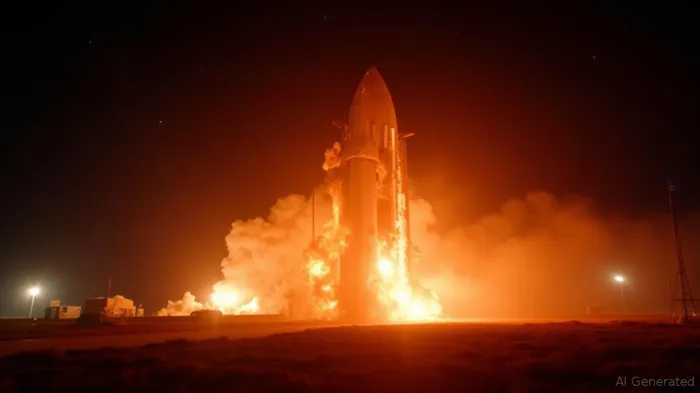
The June 18, 2025 explosion of SpaceX's Starship during a static fire test marks another critical juncture for the commercial space industry. While no injuries were reported, the incident underscores the high-stakes gamble of developing revolutionary space technologies—and the need for investors to balance ambition with rigorous risk management. For those seeking opportunities in space infrastructure, the fallout from this setback offers both cautionary lessons and a roadmap for capitalizing on the sector's long-term potential.
The Risk Management Paradox: Speed vs. Safety
SpaceX's iterative, fast-fail approach to rocket development has been its hallmark. The Starship program's repeated explosions—now numbering at least five since 2020—are not merely setbacks but data points in a learning process. Yet this model carries profound risks. The June incident, suspected to stem from a nitrogen composite overwrapped pressure vessel (COPV) failure during fueling, highlights vulnerabilities in cryogenic systems and rapid prototyping.
For investors, the question is whether SpaceX's “fail fast, iterate faster” strategy will ultimately pay off or prove too risky. Traditional aerospace giants like Boeing (BA) and Lockheed Martin (LMT) have taken decades to develop systems like the Space Launch System (SLS), prioritizing exhaustive testing to avoid catastrophic failures. The data shows their method: . While SpaceX's valuation has skyrocketed on hype, Boeing and Lockheed's slower growth reflects a more predictable—but less revolutionary—trajectory.
Implications for the Artemis Program and Space Infrastructure
The Starship explosion delays NASA's Artemis timeline, which relies on SpaceX's Human Landing System (HLS) to return astronauts to the Moon by 2027. The $4 billion HLS contract is a lifeline for SpaceX, but delays could force NASA to explore alternatives, such as Blue Origin's Blue Moon lander or a hybrid approach. For investors, this creates a dual opportunity:
1. SpaceX's Suppliers: Companies like Aerojet Rocketdyne (AJRD), which manufactures rocket engines, or Ball Aerospace (BLL), a NASA contractor, may see increased demand if SpaceX accelerates its supply chain to meet deadlines.
2. Competitor Plays: Blue Origin's parent company, Amazon (AMZN), or Northrop Grumman (NOC), which builds lunar habitats, could benefit if NASA diversifies its partnerships.
The explosion also spotlights the need for robust space infrastructure beyond propulsion. Ground-based launch facilities, satellite networks for navigation, and orbital refueling systems are critical to long-term success. Here, companies like Maxar Technologies (MAXR), which builds communications satellites, or Viasat (VSAT), a leader in space-based internet, offer defensive positions in the sector.
Investment Opportunities in a High-Risk Landscape
The commercial space industry's growth hinges on solving technical challenges while managing investor expectations. The Starship incident may cool speculative bets on SpaceX's near-term milestones, but it doesn't negate the sector's long-term promise. Consider these strategies:
- Diversify: Allocate capital across space infrastructure segments—launch services, satellite constellations, and ground systems—to mitigate reliance on any single company's success.
- Focus on Scalability: Companies with recurring revenue models, such as satellite operators (e.g., Iridium (IRDM)) or space logistics firms (e.g., Sierra Nevada Corporation), are less exposed to single-project risks.
- Monitor Regulatory Shifts: The explosion could spur stricter safety regulations, favoring firms with existing compliance expertise, such as Boeing or Raytheon (RTX).
The shows the sector's volatility. Yet its 24% annualized return since 2020 (vs. 9% for the S&P 500) suggests that patient investors who navigate risk wisely can outperform.
Conclusion: A New Era of Pragmatic Optimism
The Starship explosion is a reminder that commercial space is still in its adolescence. Investors must weigh the allure of breakthroughs—such as reusable rockets or lunar missions—against the harsh reality of technical failures. While SpaceX's setbacks create short-term uncertainty, they also clarify the path forward: the industry's winners will be those that blend innovation with disciplined risk management. For now, the best opportunities lie in infrastructure firms with diversified revenue streams and a proven ability to adapt—a lesson even the boldest rocketeers can learn from.

Stay ahead of the market.
Get curated U.S. market news, insights and key dates delivered to your inbox.


AInvest
PRO
AInvest
PRO



Comments
No comments yet