
Starship's Blaze: Navigating Risk and Reward in the Commercial Space Race
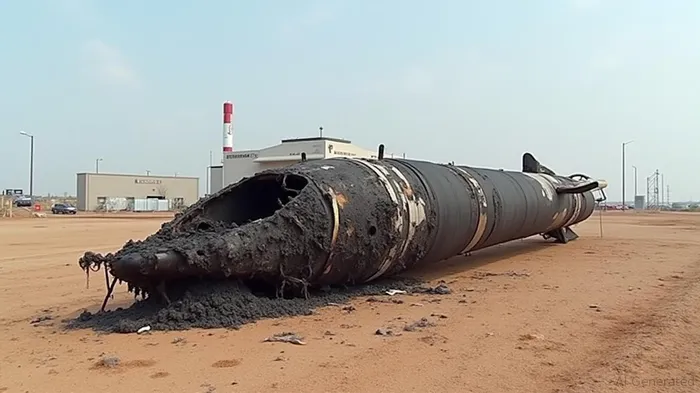
The June 18, 2025 explosion of SpaceX's Starship Ship 36 during a static fire test in Texas marked a pivotal moment for the commercial space industry. The incident, attributed to a failure in a nitrogen Composite Overwrapped Pressure Vessel (COPV) in the payload bay, reignited debates about the risks and opportunities inherent in aerospace innovation. For investors, this event underscores the fragility of rapid technological advancement and the need for a diversified approach to capitalize on long-term space infrastructure growth while mitigating short-term volatility.
The Musk Effect and Investor Confidence
The explosion's immediate fallout extended far beyond the launchpad. Tesla's stock price dropped 2.3% the following day, a stark illustration of the "Musk Effect"—the interconnected fate of TeslaTSLA--, SpaceX, and other Musk ventures. Investors remain wary of shared risks: Musk's allocation of over 40% of his time to SpaceX, Tesla's operational challenges (e.g., battery shortages, Austin plant delays), and the $5 billion Robotaxi launch's uncertain timeline.
However, the incident also exposed systemic vulnerabilities. SpaceX's $4 billion NASA Human Landing System (HLS) contract hinges on Starship's reliability for the 2027 Artemis III lunar mission. A Federal Aviation Administration (FAA) suspension of test approvals—potentially delaying the next Integrated Flight Test (IFT-10)—adds pressure to an already ambitious timeline. For investors, this creates a paradox: Musk's ventures are both engines of innovation and vessels of risk.
Technical Hurdles: Iteration vs. Reliability
SpaceX's iterative "fail fast, learn faster" approach has historically driven breakthroughs, such as Falcon 9's reusable rocket technology. Yet Starship's repeated failures—four major incidents in 2025—highlight the steep learning curve for next-gen systems. The COPV failure, while novel, points to unresolved design challenges in materials science and propulsion systems.
The path to profitability remains fraught. Each Starship test costs $50–100 million, and persistent setbacks could force SpaceX to seek additional funding, diluting existing stakeholder value. Yet bulls argue that these hurdles are par for the course in pioneering fields: SpaceX's AI-driven systems and Tesla's xAI synergy could accelerate problem-solving, turning setbacks into stepping stones.
Competitive Landscape: Blue Origin and the Rise of Alternatives
The explosion has galvanized competitors like Blue Origin and Lockheed Martin, which had long lobbied for a backup lunar lander. NASA's reliance on SpaceX as the sole provider for Artemis III now faces scrutiny, creating opportunities for rivals. Blue Origin's New Glenn rocket and partnerships with NASA's Lunar Gateway project position it as a credible alternative. Meanwhile, satellite manufacturers (e.g., Maxar Technologies) and materials science firms (e.g., Dow Chemical for composites) benefit from the broader push for space infrastructure.
Long-Term Growth: Mars Ambitions and Synergies
Despite the risks, the commercial space race is accelerating. SpaceX's Mars colonization goals and NASA's lunar ambitions align with a $1.1 trillion global space economy forecast by 2040. Musk's vision—spanning reusable rockets, satellite broadband (Starlink), and Mars habitats—could redefine interplanetary exploration. Synergies between SpaceX's AI and Tesla's xAI initiatives suggest cross-pollination of breakthroughs, from autonomous navigation to energy storage systems.
Investment Strategy: Diversify, Monitor, and Hedge
The Starship explosion demands a balanced approach:
1. Hold Tesla with Caution: Long-term investors may retain Tesla exposure for its xAI and Robotaxi potential, but monitor milestones like Q3 production data and regulatory approvals for the Robotaxi. Historically, a strategy of buying Tesla on earnings announcement dates and holding for 30 days from 2020 to 2025 yielded a compound annual growth rate (CAGR) of 12.56%, though with significant volatility—marked by a maximum drawdown of 54.06%, an excess return of -19.70%, and a Sharpe ratio of 0.27. This underscores the importance of risk management, such as using options strategies to hedge against downside.
- Diversify into Competitors: Allocate portions of portfolios to Blue Origin-backed ventures (e.g., Amazon's space investments), Lockheed Martin, or materials suppliers critical to aerospace innovation.
- Hedge Against Volatility: Use options strategies, such as put spreads on TSLA, to mitigate downside risk while maintaining upside exposure.
- Track Technical Milestones: The COPV redesign and IFT-10 outcome will be critical. Success could restore investor confidence; failure may force SpaceX to pivot or seek external funding.
Conclusion: The Calculus of Cosmic Ambition
The Starship explosion is a reminder that space exploration is a high-stakes gamble. For investors, the path forward requires acknowledging the duality of Musk's ventures—pioneering yet precarious—and embracing a diversified strategy. While the "Musk Effect" ties Tesla's fate to SpaceX's progress, the broader space economy offers opportunities beyond any single company. The next decade will separate the visionaries from the vaporware, but for those willing to navigate carefully, the final frontier remains a realm of extraordinary potential.
Final Recommendation: Maintain a selective stake in SpaceX's ecosystem while diversifying into complementary technologies and competitors. Monitor SpaceX's COPV redesign and IFT-10 results closely—these will define whether the "blaze" becomes a spark for progress or a smokescreen for setbacks.

Delivering real-time insights and analysis on emerging financial trends and market movements.
Latest Articles
Stay ahead of the market.
Get curated U.S. market news, insights and key dates delivered to your inbox.


AInvest
PRO
AInvest
PRO



Comments
No comments yet