
Starship's Blaze: Navigating Risk and Resilience in the New Space Economy
The June 18, 2025 explosion of SpaceX's Starship rocketRCKT-- during a static fire test marks the fourth such incident this year, underscoring both the inherent risks of cutting-edge aerospace ventures and the resilience required to navigate them. While the cause—a malfunction in a nitrogen gas storage unit—points to a new technical hurdle, the broader implications for investors demand scrutiny of SpaceX's operational model, regulatory pressures, and the shifting landscape of commercial space investment.
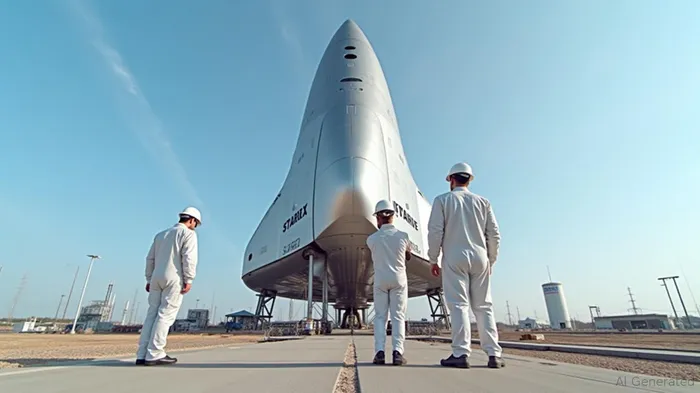
The Incident and Its Immediate Fallout
The explosion, attributed to a composite overwrapped pressure vessel (COPV) failure, occurred during preparations for a flight test at Starbase, Texas. Though no personnel were harmed, the incident added to a string of setbacks in 2025, including prior explosions in January, March, and May. These recurring failures have raised questions about SpaceX's ability to balance rapid iteration with safety protocols. Elon Musk's characterization of the event as “just a scratch” reflects SpaceX's long-standing ethos of “fail fast, learn faster.” However, the frequency of these incidents—now four in six months—tests investor patience and underscores the high stakes of pushing technological frontiers.
Investor Sentiment: Caution or Confidence?
The market's response has been divided. While SpaceX's iterative approach has historically been accepted as part of innovation, the cumulative toll of these failures has spurred concerns. would likely show dips after each incident, though long-term contracts (e.g., NASA's $2.89 billion Artemis program) provide a floor of stability. Some investors worry about rising development costs and delays to milestones like the planned 2027 lunar landing. Others, however, see these setbacks as par for the course in high-risk, high-reward sectors. For instance, the stock price volatility of traditional aerospace giants like Boeing or Lockheed Martin during similar technical hurdles could serve as a comparative benchmark.
Regulatory Scrutiny and Public Perception
The Federal Aviation Administration (FAA) is now likely to tighten safety protocols, potentially delaying future Starship tests. Such regulatory headwinds could strain SpaceX's timeline, particularly for NASA, which depends on Starship's reliability for Artemis. Public perception is another critical factor. While SpaceX's track record of recovery from past failures (e.g., early Falcon 9 explosions) has bolstered its reputation, repeated Starship setbacks may erode trust. A could reveal whether these incidents are seen as isolated risks or systemic flaws.
Resilience in the Face of Adversity
SpaceX's history suggests that setbacks are often catalysts for breakthroughs. The company's rapid prototyping and reuse of hardware have slashed launch costs, a model now being emulated by rivals. The COPV issue, while novel, aligns with SpaceX's approach to identifying design flaws early—a process that could ultimately strengthen Starship's reliability. Comparatively, traditional aerospace ventures (e.g., Boeing's Starliner) have faced fewer explosions but slower progress, highlighting a trade-off between speed and stability. For investors, the question becomes: Can SpaceX's iterative resilience outweigh the risks?
Investment Considerations
The Starship explosion presents a fork in the road for investors. On one hand, SpaceX's dominance in the space economy—bolstered by NASA contracts and private missions—positions it for long-term growth. On the other, the financial and reputational costs of repeated failures could deter capital. For risk-tolerant investors, the dips following incidents may present entry points, especially if SpaceX demonstrates tangible progress in COPV redesigns. However, those prioritizing stability may prefer safer bets, such as infrastructure plays (e.g., satellite manufacturers) or diversified aerospace ETFs.
Final Analysis
SpaceX's Starship program embodies the duality of cutting-edge innovation: it is both a symbol of progress and a reminder of the fragility of human engineering. While the June explosion introduces near-term risks, SpaceX's ability to learn from failure—and its unparalleled market position—suggests resilience. Investors should weigh their tolerance for volatility against the sector's transformative potential. For now, the stars remain SpaceX's to conquer, but the path to them is paved with uncertainty—and opportunity.
Recommendation:
- Aggressive investors: Use dips in SpaceX's valuation as buy opportunities, focusing on long-term contracts like Artemis.
- Conservative investors: Diversify into space infrastructure or regulatory-compliant competitors while monitoring FAA outcomes.
- All investors: Monitor SpaceX's COPV redesign timeline and regulatory updates for signs of stabilization.
The cosmos is a risky frontier, but for those willing to ride the turbulence, the rewards may yet be astronomical.

Delivering real-time insights and analysis on emerging financial trends and market movements.
Latest Articles
Stay ahead of the market.
Get curated U.S. market news, insights and key dates delivered to your inbox.






Comments
No comments yet