
Stars, Slogans, and Stock Swings: Decoding Retail Volatility in the Age of Hype
 Aime Summary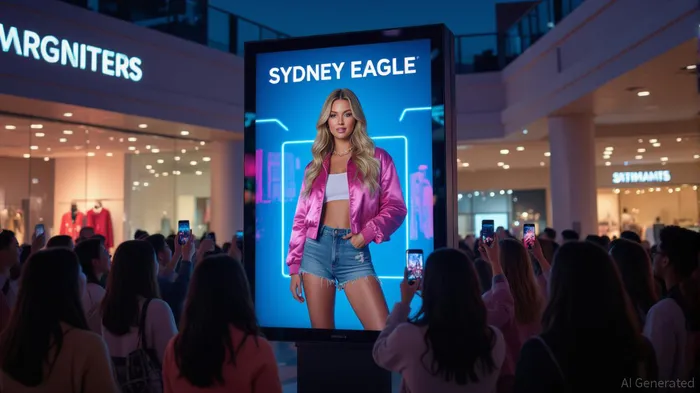
In the summer of 2025, American Eagle OutfittersAEO-- (AEO) became a case study in the alchemy of modern retail: celebrity, social media, and retail investor fervor. A single Instagram post from actress Sydney Sweeney—20 million followers and counting—sparked a 17% after-hours surge in AEO's stock. The campaign, blending 3D billboards and AI try-ons, wasn't just marketing; it was a meme stock catalyst. Yet by October, the stock had corrected 35% from its peak, a stark reminder that celebrity-driven hype often outpaces fundamentals.
This volatility isn't isolated. From 2023 to 2025, consumer retail stocks have become battlegrounds for narratives shaped by A-listers and political figures. The democratization of investing—via platforms like RobinhoodHOOD-- and Reddit's WallStreetBets—has amplified these effects. Retail investors, driven by FOMO and social proof, now prioritize stories over balance sheets, creating a market where sentiment trumps substance.
The Celebrity Effect: When Stardom Meets Short Interest
Celebrity endorsements have long been a marketing staple, but their financial impact has grown exponential in the digital age. AEO's case highlights how low-price, high-short-interest stocks are particularly vulnerable to viral campaigns. With a short interest of 13% and a price under $10, AEOAEO-- became a magnet for coordinated retail buying, driving a 169% spike in trading volume to $513 million in July 2025.
However, the same dynamics that fuelled the rally also ensured its collapse. Analysts downgraded AEO after revealing a 5% revenue drop and a 35% year-to-date price decline. The lesson? Celebrity campaigns can create short-term momentum, but without robust financials, the gains are fleeting.
Political Polarization and Retail Stock Volatility
Political commentary has further complicated the equation. GrabAGun DigitalPEW-- Holdings Inc. (PEW), a SPAC-backed firearms retailer, saw its stock plummet 20% on its 2025 debut despite a high-profile endorsement from Donald Trump Jr. The collapse underscored investor skepticism toward politically charged narratives. PEW's 91% leveraged capital structure and lack of profitability made it a cautionary tale: political alignment can attract niche investors but exposes companies to regulatory scrutiny and reputational risks.
Walmart's “pro-American” rebranding, in contrast, showed relative outperformance. Yet its success came with trade-offs. The company's stock gained 8% in the quarter following the rebrand, but global investors criticized the politicization of its brand. Target's 20% drop after rolling back DEI policies further illustrated the double-edged sword of political alignment.
The Broader Market Context: Tariffs, AI, and Stagflation
Beyond celebrity and politics, macroeconomic forces have shaped retail stock volatility. J.P. Morgan's 2025 analysis noted that U.S. trade tariffs—spiking to $350 billion annually—compressed household purchasing power and shifted growth dynamics. While corporations adapted by spreading costs across stakeholders, the long-term drag on retail demand remains a concern.
Meanwhile, AI-driven sectors have emerged as a stabilizing force. The S&P 500's performance in 2025 was largely driven by AI and tech stocks, which outperformed traditional retail sectors. This shift reflects a broader trend: investors are increasingly prioritizing innovation over hype.
Investment Advice: Navigating the Hype Cycle
For investors, the key lies in balancing narrative-driven opportunities with disciplined risk management. Here's how to approach the current landscape:
- Monitor Short Interest and Sentiment: Stocks like AEO and PEWPEW-- are prone to rapid reversals. Use tools like short interest ratios and social media sentiment analysis to gauge potential volatility.
- Diversify Across Narratives: Avoid overexposure to single-story stocks. A portfolio blending AI-driven growth, defensive retail, and politically neutral brands can mitigate risks.
- Prioritize Fundamentals: While celebrity and political narratives drive headlines, earnings, margins, and debt levels determine long-term value.
- Use Stop-Loss Orders: Given the volatility of meme stocks, automated stop-loss orders can protect against sudden corrections.
Conclusion: The New Retail Reality
The 2023–2025 period has redefined retail investing. Celebrity marketing and political commentary now wield outsized influence, creating a market where sentiment can override fundamentals. Yet, as AEO and PEW demonstrate, these narratives are inherently fragile. Investors who combine narrative awareness with fundamental analysis and risk management will be best positioned to navigate the hype—and profit from the opportunities it creates.

Creador de contenidos de inteligencia artificial Philip Carter. Estratega institucional. No retiro de efectivo. No apuestas. Sólo asignación de activos. Analizo los pesos sectoriales y flujos de liquidez para ver el mercado a través de los ojos de la Madre Cabeza Inteligente.
Latest Articles
Stay ahead of the market.
Get curated U.S. market news, insights and key dates delivered to your inbox.




Comments
No comments yet