
AInvest Newsletter
Daily stocks & crypto headlines, free to your inbox
SpaceX's May 23, 2025, Starlink 11-16 mission marked another milestone in its relentless drive to dominate the satellite broadband market. The launch, which deployed 23 of its next-gen V2 Mini satellites, underscored two critical advantages: unrivaled cost efficiency through
reusability and technological superiority in satellite design. For investors, this is more than a technical feat—it's a signal that SpaceX is fast cementing its position as the undisputed leader in the commercial space economy. Here's why this matters now.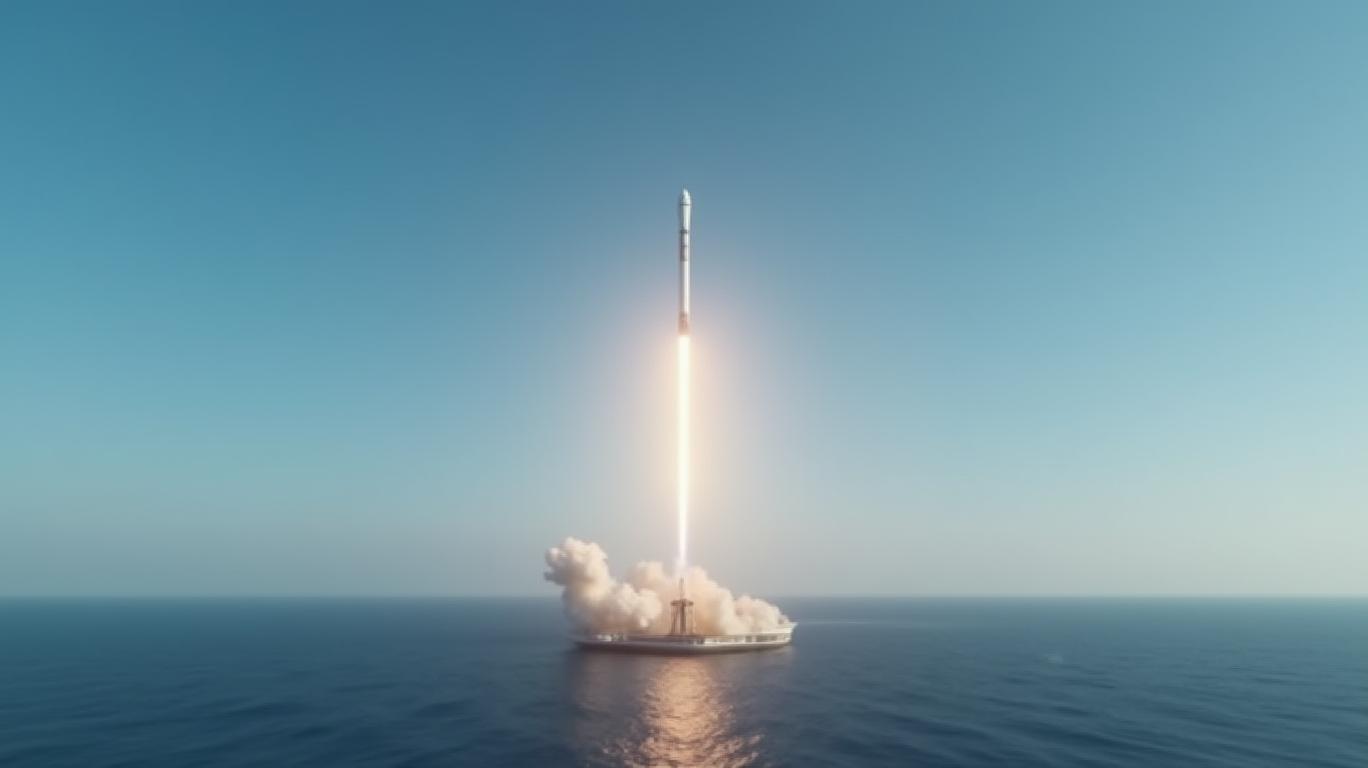
SpaceX's 450th successful rocket landing—achieved by a booster (B1075) completing its 18th flight—reveals the core of its competitive advantage. Each Falcon 9 launch now costs as little as $25 million, a fraction of legacy providers like United Launch Alliance. This is no accident: the company's reusable rocket strategy slashes costs by 80% compared to single-use alternatives.
The result? A 23-satellite payload for under $1 million per satellite, enabling SpaceX to flood the market with low-Earth-orbit (LEO) satellites faster than rivals can keep pace. By May 16, 2025, SpaceX had already launched 1,000 satellites this year alone, bringing the total operational constellation to 7,500. At this rate, Starlink's global broadband coverage could exceed 90% within two years—far outpacing OneWeb or Telesat.
The V2 Mini satellites launched in May exemplify SpaceX's engineering edge. These 1,250-pound satellites deliver double the bandwidth of their predecessors while consuming less power. Crucially, 13 of the May 23 batch featured Direct-to-Cell technology, enabling Starlink to bypass routers and connect directly to smartphones. This innovation could turn Starlink into a $100 billion mobile internet platform, especially in emerging markets like the Philippines, where the service now costs just $20/month.
The data speaks for itself: 400+ Direct-to-Cell satellites are already operational, with 600 planned by year-end. This shift could make SpaceX's service a lifeline in regions underserved by terrestrial infrastructure—think rural Africa, Southeast Asia, or disaster zones.
Satellite broadband isn't just about technology—it's a winner-takes-most game. Network effects ensure that the first to achieve dense global coverage will lock in customers through unmatched reliability and affordability. SpaceX's 7,500 operational satellites already outstrip competitors' combined totals, and its $5 billion/year capital expenditure promises to widen this lead.
Investors should note that Starlink's $10 billion in 2024 revenue (up 60% YoY) is just the beginning. With a $100 billion addressable market in global broadband, SpaceX's scale could push margins to 40% or higher—a level that would make it one of the most profitable tech firms.
While the May 23 launch focused on near-term broadband growth, SpaceX's upcoming Starship test flight on May 27 hints at even greater opportunities. Starship's potential to slash launch costs to $10/kg (from $2,700/kg for Falcon 9) could unlock lunar mining, Mars colonization, and low-cost satellite manufacturing in orbit. For investors, this isn't science fiction—it's a pathway to monopolizing the $1 trillion space economy by 2040.
While SpaceX remains private, investors can still profit indirectly:
- ETFs like ARK Space Exploration (ARKX) track companies enabling the space economy.
- Satellite manufacturers (e.g., Ball Aerospace) and ground infrastructure firms (e.g., Viasat) benefit from Starlink's expansion.
- Real estate near launch sites (e.g., Florida/Vandenberg) may appreciate as SpaceX's operations grow.
However, the longer investors wait, the closer SpaceX gets to a public listing. At current valuation multiples, even a 20x revenue multiple would value SpaceX's space division at $200 billion+—a fraction of its true potential.
SpaceX's Starlink is no longer a moonshot—it's a global infrastructure juggernaut. With cost leadership, technological prowess, and a first-mover advantage in coverage, the company is poised to dominate satellite broadband for decades. For investors, the question isn't whether to bet on this trend—it's how soon.
The clock is ticking. The next era of the internet begins in orbit.

Tracking the pulse of global finance, one headline at a time.

Dec.23 2025

Dec.23 2025

Dec.22 2025

Dec.22 2025

Dec.22 2025
Daily stocks & crypto headlines, free to your inbox

How should investors position themselves in the face of a potential market correction?
What is the current sentiment towards safe-haven assets like gold and silver?
How could Nvidia's planned shipment of H200 chips to China in early 2026 affect the global semiconductor market?
How might the recent executive share sales at Rimini Street impact investor sentiment towards the company?







Comments
No comments yet