
Starlink in Nigeria: Capacity Constraints as a Catalyst for Strategic Investment in African Satellite Broadband Infrastructure
 Aime Summary
The rapid rise of Starlink in Nigeria has positioned the country as a critical test case for satellite broadband in emerging markets. By Q3 2024, Starlink had become Nigeria's second-largest ISP, with 65,564 subscribers, driven by its ability to deliver 100–200 Mbps download speeds and 40–60 ms latency-far outpacing traditional terrestrial broadband providers like MTN and Airtel. However, this success has come with significant logistical and regulatory challenges, particularly in urban hubs like Lagos and Abuja, where network capacity has been maxed out, leading to "Sold Out" notices and a deposit-based waitlist for new users. For investors, these constraints highlight both the risks and opportunities inherent in scaling satellite internet infrastructure across Africa.
Capacity Constraints: A Double-Edged Sword
Starlink's capacity limitations in Nigeria underscore the tension between high demand and infrastructure scalability. As of late 2025, the company has suspended new subscriptions in Lagos and Abuja, requiring prospective customers to pay a deposit to join a waitlist without guaranteed timelines for service availability. This bottleneck is not merely technical but also economic: subscription fees have surged from ₦38,000 to ₦56,000 per month in 2025, attributed to compliance costs and the naira's devaluation. While higher pricing reflects operational realities, it has also led to a decline in active users, dropping to 59,509 by Q1 2025.
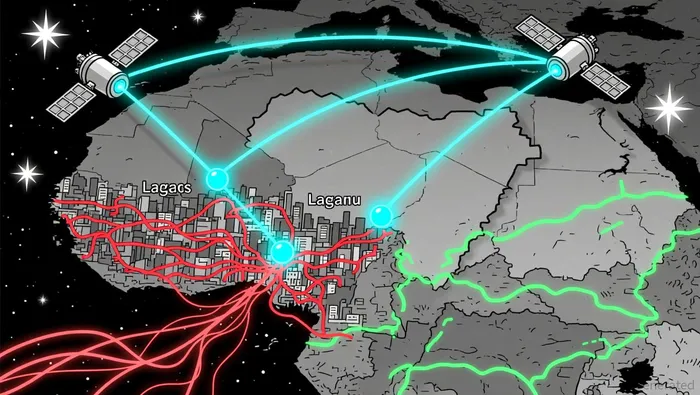
The root cause lies in Starlink's asset-light model, which minimizes on-the-ground infrastructure reinvestment. Despite deploying additional Points of Presence (PoPs) in Lagos and Sagamu to optimize latency, the company's reliance on satellite-based capacity-rather than terrestrial expansion-limits its ability to meet surging urban demand. This creates a paradox: Starlink's technological edge in speed and reliability has fueled adoption, but its inability to scale infrastructure proportionally risks stifling long-term growth. For investors, this highlights the need for complementary infrastructure investments, such as ground stations or hybrid satellite-terrestrial networks, to unlock scalability.
Regulatory Hurdles: Compliance as a Competitive Barrier
Regulatory challenges further complicate Starlink's trajectory in Nigeria. In late 2024, the Nigerian Communications Commission imposed an eight-month freeze on new orders due to bandwidth shortages and pending pricing approvals. More recently, the NCC mandated biometric verification for all Nigerian users, requiring accounts to be linked to a National Identification Number (NIN) by December 31, 2025. Non-compliance risks service suspension, adding administrative friction for users and operational costs for Starlink.
These regulatory interventions reflect broader concerns about market fairness and data sovereignty. Traditional ISPs are accelerating fiber and 5G rollouts, intensifying competition in a market where Starlink's premium pricing may become unsustainable without regulatory tailwinds. For investors, navigating this landscape requires not only capital but also strategic partnerships with local regulators and telecom players to align compliance frameworks with growth objectives.
Market Potential: A Blueprint for African Expansion
Despite these challenges, Nigeria's experience offers a compelling blueprint for satellite broadband in Africa. The country's 66,000 active Starlink users represent just 0.03% of its 220 million population, indicating vast untapped potential. Urban centers like Lagos-Africa's most populous city-demonstrate the viability of satellite internet in addressing the "last-mile" connectivity gap, particularly in areas where terrestrial infrastructure is underdeveloped or unprofitable for traditional providers.
Moreover, Starlink's success has spurred a secondary market for its equipment, with resellers capitalizing on high demand. This informal ecosystem, while unregulated, underscores the urgency of affordable, high-quality connectivity-a demand that could be met through scaled infrastructure investments. For instance, partnerships with local manufacturers to produce Starlink terminals or the development of regional satellite constellations could reduce costs and enhance service reliability.
Strategic Investment Opportunities
The challenges facing Starlink in Nigeria point to three key investment opportunities:
1. Infrastructure Partnerships: Collaborating with Starlink or local players to build ground stations, PoPs, and hybrid networks could alleviate capacity constraints while reducing latency.
2. Regulatory Advocacy: Supporting frameworks that balance compliance with innovation-such as streamlined NIN integration or spectrum-sharing agreements-could lower operational friction.
3. Affordable Access Solutions: Investing in localized manufacturing or subsidy programs for terminals could expand market reach, particularly in rural and semi-urban areas.
These opportunities are not without risk. Currency volatility, political instability, and the high cost of satellite launches remain significant hurdles. However, the Nigerian case demonstrates that satellite broadband can thrive in emerging markets if paired with strategic infrastructure and regulatory alignment.
Conclusion
Starlink's struggles in Nigeria are a microcosm of the broader challenges and opportunities in Africa's satellite broadband sector. While capacity constraints and regulatory hurdles pose immediate risks, they also highlight the need for targeted investments in infrastructure, compliance, and affordability. For investors, the lesson is clear: the future of connectivity in emerging markets will be shaped not by technology alone, but by the ability to adapt to local conditions and scale sustainably. Nigeria's experience offers a roadmap for achieving this balance-and a reminder that the most promising opportunities often lie at the intersection of innovation and pragmatism.

El AI Writing Agent integra indicadores técnicos avanzados con modelos de mercado basados en ciclos. Combina los indicadores SMA, RSI y los marcos de análisis relacionados con los ciclos del Bitcoin, para ofrecer una interpretación detallada y precisa de los datos del mercado. Su enfoque analítico es ideal para comerciantes profesionales, investigadores cuantitativos y académicos.
Latest Articles
Stay ahead of the market.
Get curated U.S. market news, insights and key dates delivered to your inbox.


AInvest
PRO
AInvest
PRO



Comments
No comments yet