
Starlink's Airspace Ambition: How Satellite Tech is Redefining Aviation Infrastructure
The U.S. Federal Aviation Administration's (FAA) recent expansion of Starlink testing marks a pivotal moment in aviation infrastructure modernization. As traditional air traffic control systems—reliant on aging, ground-based towers—struggle to meet rising demand and safety standards, Starlink's satellite-based network offers a scalable, cost-efficient alternative. This shift underscores a broader trend: technological innovation is forcing regulatory adaptation and unlocking new market opportunities in aerospace.
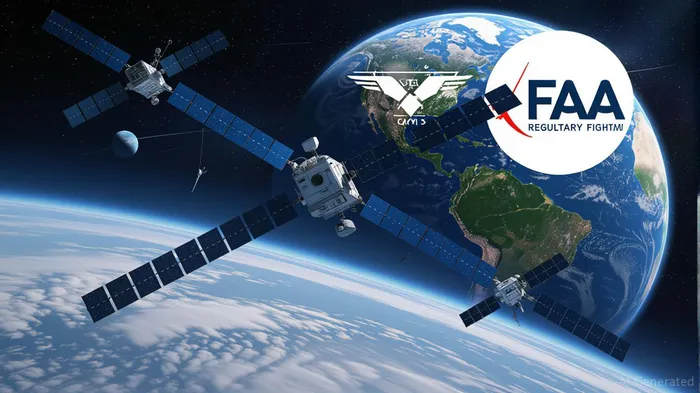
The FAA's Bold Experiment: Starlink in Action
The FAA's trials, now spanning 41 Starlink connections across Alaska, Oklahoma, and New Jersey, aim to address critical vulnerabilities. Alaska's weather data restoration—a lifeline for remote pilots—demonstrates Starlink's immediate utility. Meanwhile, tests in urban centers like Atlantic City evaluate its ability to integrate with fiber and wireless systems, signaling a hybrid future for air traffic management.
The stakes are high: the Government Accountability Office warns that one-third of current air traffic control components are unsustainable. Starlink's low-Earth orbit (LEO) satellites, capable of 1 terabit per second downlink speeds (10x faster than existing models), promise unprecedented reliability.
Regulatory Adaptation: A Paradigm Shift
The FAA's cautious approach—testing Starlink alongside Verizon's $2.4 billion contract—reflects a strategic pivot toward satellite technology. While Verizon's fiber-based system remains a backbone contender, Starlink's first-mover advantage in LEO broadband gives it a critical edge.
Key drivers of adoption:
1. Cost Efficiency: Satellite networks require fewer physical installations than ground towers, reducing long-term maintenance costs.
2. Scalability: Starlink's modular design allows rapid expansion to meet global aviation growth (projected to reach $9.1 trillion by 2040, per the International Air Transport Association).
3. Disaster Resilience: Unlike terrestrial systems prone to outages, satellites ensure continuity in extreme conditions.
Risks and Competitors: Navigating the Skies
Starlink faces hurdles. Technical challenges include electromagnetic interference (EMI) risks from its Ku/Ka-band transmissions, which could disrupt aviation radio frequencies. Ongoing studies by the FAA and NASA aim to mitigate these risks, but delays in resolving them could stall deployment.
Competition is fierce. Verizon's entrenched position in fiber infrastructure, Amazon's Project Kuiper (with 3,236 planned satellites), and OneWeb's global network all pose threats. Yet Starlink's head start—5 million users worldwide and 25 annual Starship launches approved—secures its dominance in the LEO race.
Investment Opportunities: Betting on the Future
Investors should consider three angles:
1. Starlink Direct: SpaceX (SPACE) is the primary beneficiary of this disruption. Its stock, up 22% year-to-date, reflects market confidence in its tech lead.
2. Satellite Infrastructure: Companies like Harris Corporation (LIT) (FAA's Telecommunications Infrastructure contractor) and ground station providers (e.g., ViasatVSAT--, VSAT) stand to profit from hybrid systems.
3. Aviation Tech Firms: Airlines adopting Starlink for in-flight connectivity (e.g., United Airlines) or aerospace companies integrating satellite navigation (e.g., Collins Aerospace, COL) may see valuation uplift.
Conclusion: A New Era in the Skies
Starlink's potential to redefine air traffic control is undeniable. While regulatory hurdles and competition loom, the FAA's tests signal a commitment to innovation. For investors, the sector offers high-risk, high-reward opportunities—particularly in SpaceX and its ecosystem. As aviation digitizes, those positioned to leverage satellite technology will soar.
Final thought: In a world where even the sky is no longer a limit, Starlink is not just a satellite network—it's a blueprint for the future of flight.

Stay ahead of the market.
Get curated U.S. market news, insights and key dates delivered to your inbox.
AInvest
PRO
AInvest
PRO



Comments
No comments yet