
Starlink’s $1.5 Trillion IPO Vision: What Recent Data Means for Investors


 Aime Summary
SpaceX Starlink IPO: A $1.5 Trillion Vision and the Risks Ahead
SpaceX is preparing for one of the most anticipated financial events of the decade. The company's Starlink satellite internet service is now the backbone of its business—and the foundation for an IPO expected to value the company at $1.5 trillion. With a projected $30+ billion raise, the move could reshape the private space industry and redefine how we view broadband access from orbit. For investors, this is a key moment to understand what's at stake—and where the risks might lie.
What is Starlink, and how is it driving SpaceX's growth?
Starlink, SpaceX's satellite internet service, has become the company's most significant revenue driver. As of early 2025, it generated $7.7 billion in revenue in 2024, and that number is expected to nearly double in 2025 alone. In the third quarter of 2025, the service had 8.5 million subscribers, up from 4.6 million in 2024. This rapid growth is being fueled by expanding into over 20 new countries and regions, as well as strategic partnerships such as a $2 billion Pentagon contract for the "Golden Dome" project and a deal with T-Mobile for direct-to-cell satellite connectivity.
Starlink is more than just a consumer product—it's a critical part of SpaceX's vision for a multiplanetary future. The service supports military and government contracts, offers high-speed internet in remote areas, and is building a global satellite-based communications network. This has led to a broader industry shift, with market research projecting the satellite-to-phone service market will grow from $6.22 billion in 2024 to $10.95 billion by 2032.
The IPO timeline and valuation ambitions
SpaceX is aiming for a 2026 IPO, with a valuation target of $1.5 trillion—surpassing even Saudi Aramco's 2019 IPO as one of the largest in history. This would make it one of the most valuable private companies ever. The company is already testing the waters in the market, with recent insider share sales valuing it at $800 billion. If the IPO goes ahead as planned, it could raise over $30 billion, which will be used for the development of Starship, space-based data centers, and Mars-related projects.
Still, the timeline is not set in stone. Market conditions could push the IPO back to 2027, and regulatory challenges remain. The Federal Communications Commission (FCC) and the Federal Aviation Administration (FAA) have both imposed hurdles that could delay the process. That said, SpaceX is actively working with banks, with a potential launch window in mid- to late 2026 as reported by industry sources.
Starlink's financial performance and expansion
Starlink is already making a significant dent in SpaceX's bottom line. In 2024, it accounted for 58% of the company's total revenue. Management expects that to rise to 70% in 2025. With 20,000 terminals being produced daily for shipment to over 150 countries, the service is scaling at a blistering pace as highlighted in industry analysis.
A key milestone was SpaceX's $17 billion spectrum acquisition from EchoStar, which boosted Starlink's direct-to-cell capabilities—enabling it to offer services directly to mobile phones without needing a physical satellite dish. This development is critical for long-term growth, particularly in emerging markets like India and Southeast Asia as market projections suggest.
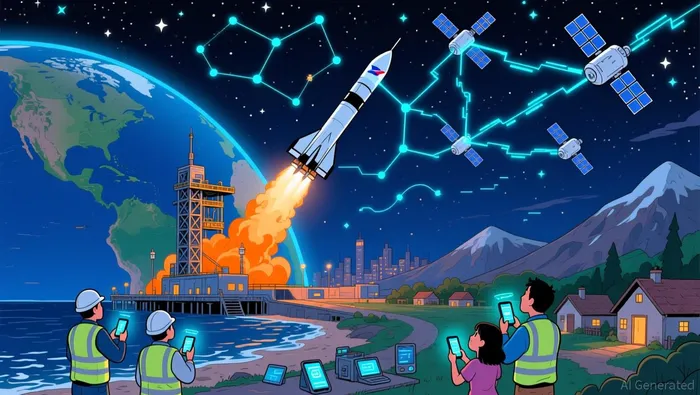
Starlink is also moving beyond just broadband internet. The service is exploring the potential to become a full-fledged mobile network provider, which could significantly expand its addressable market. And with the recent development of laser links between satellites, SpaceX is laying the groundwork for a truly global, low-latency communication network.
Risks and challenges ahead
While the numbers are impressive, there are real risks to consider. Starlink's expansion faces regulatory scrutiny, especially in regions where local telecom providers might view it as a disruptive force. There are also concerns about technical challenges—particularly around the development of the Starship rocket and the deployment of in-space refueling systems needed for longer-term space missions according to company leadership.
Another potential headwind is the sheer scale of the IPO itself. A $1.5 trillion valuation implies not just strong revenue growth but also expectations of rapid scaling and profitability. While Starlink is on a solid trajectory, achieving those expectations will require sustained execution and innovation.
What it means for investors and the space industry
For investors, SpaceX's IPO is a high-stakes opportunity—and a high-risk bet. The company has long been valued on its potential rather than current profitability. But Starlink is changing that equation. With revenue climbing into the tens of billions and the business scaling rapidly, SpaceX is becoming a more mature company. That said, the valuation is still based on future growth expectations.
The broader implications are also significant. SpaceX's IPO could accelerate the commercialization of space. If the company successfully monetizes its satellite infrastructure, it could spur competition and innovation in satellite communications, space-based computing, and even interplanetary logistics.
At the end of the day, SpaceX is betting big on Starlink—and the world is watching. Whether the company can deliver on its ambitious vision will depend on its ability to maintain its technical edge, navigate regulatory hurdles, and keep its growth trajectory on track.

Delivering real-time insights and analysis on emerging financial trends and market movements.
Latest Articles
Stay ahead of the market.
Get curated U.S. market news, insights and key dates delivered to your inbox.
AInvest
PRO
AInvest
PRO



Comments
No comments yet