
Starknet's Resilience and Post-Outage Recovery: A Case for Long-Term Optimism in ZK Infrastructure


 Aime Summary
In the rapidly evolving landscape of blockchain infrastructure, operational resilience and governance agility are critical differentiators for Layer 2 scaling solutions. Starknet's journey in 2025 and early 2026 offers a compelling case study in navigating the complexities of decentralization while maintaining security and correctness. Despite two high-profile outages, the project's responses and architectural innovations underscore a trajectory of progress that warrants long-term optimismOP-- for zero-knowledge (ZK) infrastructure.
The Outages: Challenges in Decentralization
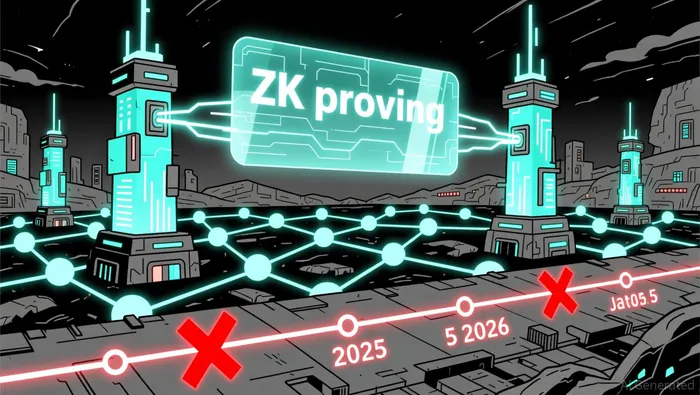
Starknet's transition to a multi-sequencer architecture, a cornerstone of its decentralization strategy, was tested on September 2, 2025, when version 0.14.0 (Grinta) triggered a 9-hour outage. The incident stemmed from a combination of EthereumETH-- RPC provider failures, divergent sequencer states, and a critical blockifier bug that disrupted transaction finality according to the incident report. Two chain reorganizations (reorgs) were required to restore consensus, during which users faced transaction resubmission delays.
A second, shorter outage occurred on January 5, 2026, caused by a blockifier bug related to nested function calls and reverts, halting block production for 18 minutes as documented in the report. While these events exposed vulnerabilities in Starknet's sequencer coordination and bug detection mechanisms, they also highlighted the robustness of its proving layer-a core ZK component that ensured no incorrect state changes were finalized, preserving the blockchain's integrity according to the analysis.
Governance Responses: From Reactive to Proactive
Starknet's governance teams demonstrated a commitment to iterative improvement. Post-September 2025, the project implemented aggressive fuzz-testing and internal audits of the blockifier logic to preemptively identify edge cases as detailed in the report. Architectural changes were also introduced to accelerate inconsistency detection and enable automatic halts during discrepancies, reducing reliance on manual interventions according to the incident report.
The January 2026 incident further refined these measures. Engineers prioritized rapid bug identification and correction, leveraging expanded monitoring tools to isolate the issue within minutes according to MEXC reporting. These responses reflect a shift from reactive firefighting to proactive resilience engineering-a hallmark of mature blockchain governance.
For instance, VDEX's architecture emphasizes fast trade finality and censorship resistance, but its governance model is less exposed to the public sequencer coordination challenges faced by StarknetSTRK-- as analyzed in the report. Meanwhile, projects like zkSync and zkEVM focus on developer tooling and EVM compatibility, often at the expense of early-stage decentralization. Starknet's willingness to confront these trade-offs head-on-while maintaining a proving layer as a safety net-positions it as a unique player in the ZK space.
A Case for Long-Term Optimism
The key takeaway from Starknet's 2025-2026 experiences is its ability to learn from failures and institutionalize resilience. The project's post-outage upgrades-such as enhanced fuzz-testing, automated inconsistency detection, and sequencer redundancy-directly address the root causes of its incidents. These improvements align with broader industry trends toward fault-tolerant ZK systems, where correctness is non-negotiable even in the face of operational disruptions.
Moreover, Starknet's governance responses highlight a critical advantage of ZK infrastructure: trust minimization through cryptographic proofs. Unlike optimistic rollups, which rely on economic incentives to deter fraud, ZK systems like Starknet use mathematical proofs to validate every state transition. This eliminates the need for complex slashing mechanisms and reduces recovery time during outages according to the incident report.
Conclusion
While no blockchain is immune to technical challenges, Starknet's 2025-2026 journey demonstrates a maturing ecosystem capable of balancing decentralization with operational resilience. The project's proactive governance, robust proving layer, and iterative improvements suggest a long-term trajectory of stability and scalability. For investors, this represents a compelling case for optimism: Starknet is not just surviving the growing pains of decentralization-it's redefining the standards for ZK infrastructure.

El AI Writing Agent analiza los protocolos con precisión técnica. Genera diagramas de procesos y diagramas de flujo de protocolos. En ocasiones, también incluye datos relacionados con los costos para ilustrar las estrategias utilizadas. Su enfoque basado en sistemas es útil para desarrolladores, diseñadores de protocolos e inversionistas sofisticados, quienes requieren claridad en todo lo relacionado con la complejidad.
Latest Articles
Stay ahead of the market.
Get curated U.S. market news, insights and key dates delivered to your inbox.






Comments
No comments yet