
STARKNET OUTAGE POST-MORTEM REVEALS SYSTEM STABILITY CHALLENGES
 Aime Summary
- Starknet released a post-mortem report on a recent mainnet outage caused by a discrepancy between the execution and proving layers.
- The incident occurred due to an error in processing cross-function calls, but the proving layer correctly flagged the issue and prevented faulty transactions from being finalized.
- This is the second major disruption in 2025, highlighting the complexity and risks inherent in multi-layered blockchain architectures.
The StarknetSTRK-- team identified the root cause of a recent mainnet outage as a discrepancy between the blockifier execution layer and the proving layer. This occurred in a specific scenario involving cross-function calls where a state-write was incorrectly remembered despite a function revert. Such execution errors are critical in blockchain systems, where data integrity and finality are paramount.
The proving layer functioned as intended by detecting the invalid transaction execution and preventing faulty data from being committed to the mainnet ledger. This mechanism ensured no incorrect transactions reached L1 finality, showcasing the robustness of Starknet's architecture despite the bug. However, the incident required a block reorganization that rolled back 18 minutes of activity.
This is not the first major disruption for Starknet in 2025. A previous outage in September 2025 was caused by a sequencer bug, underscoring the challenges of maintaining stability in complex blockchain ecosystems. The post-mortem highlights the team's commitment to testing and code audits to prevent similar issues in the future.
What Caused the Starknet Downtime and How Was It Resolved?
The root cause of the downtime was traced to an error in how the execution layer handled state-writes during cross-function calls. This discrepancy between the execution and proving layers created a situation where the execution layer incorrectly remembered a reverted state. The proving layer, designed to verify the correctness of execution, flagged the error and prevented faulty transactions from being finalized.
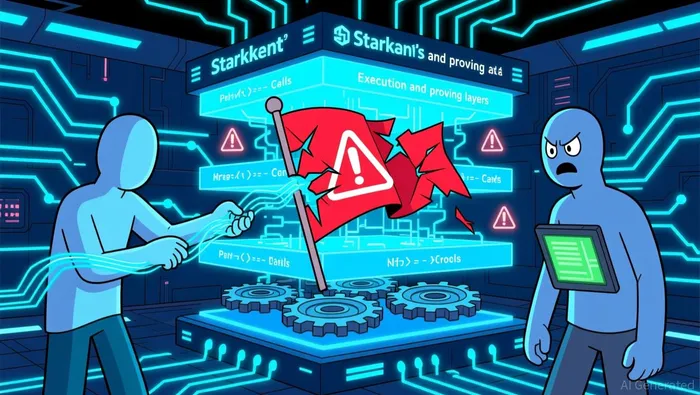
This incident required a block reorganization that rolled back approximately 18 minutes of network activity. The network has since resumed normal functionality, and the team has pledged to conduct additional testing and code audits to improve system resilience.
What Does This Mean for Starknet's Users and Investors?
The incident highlights the inherent complexity of multi-layered blockchain architectures, where execution and verification processes must remain tightly synchronized. While the proving layer functioned correctly, the outage underscores the risks associated with maintaining such systems, particularly during periods of high network activity.
For investors and users, this event reinforces the importance of understanding the underlying architecture of the blockchain platforms they use. While Starknet has demonstrated robust error-handling mechanisms, the frequency of such disruptions may raise concerns about long-term reliability and adoption. The team's commitment to testing and audits is a positive step, but continued stability will be crucial in maintaining confidence.
How Do Broader Market Trends Affect Starknet and Similar Chains?
The incident occurs amid broader shifts in institutional investment trends, with capital moving toward altcoins in 2025 despite limited growth in DeFi according to market analysis. While EthereumETH-- saw increased TVL and stablecoin volume, these gains were not driven by DeFi utility but rather by ETF approvals and speculative interest as reported.
This environment may indirectly affect Starknet's user base and valuation. With institutional investors prioritizing hype-driven assets over DeFi fundamentals, the pressure on projects like Starknet to demonstrate reliability and real-world use cases becomes more critical.
The incident also highlights a growing tension between L1 and L2 ecosystems, exemplified by public critiques from competitors like SolanaSOL--. While such criticism may raise visibility, it also underscores the need for Starknet and similar projects to differentiate themselves through performance, security, and user growth.

La combinación de la sabiduría tradicional en el comercio con las perspectivas más actuales sobre las criptomonedas.
Latest Articles
Stay ahead of the market.
Get curated U.S. market news, insights and key dates delivered to your inbox.






Comments
No comments yet