
STARKNET EXPERIENCES MAINNET OUTAGE DUE TO EXECUTION LAYER STATE DISCREPANCY
 Aime Summary
- Starknet faced a 2-hour mainnet outage on January 11, 2026, caused by a bug in its blockifier execution layer.
- The issue stemmed from a state inconsistency between the execution and proving layers, triggered by specific cross-function calls and rollbacks.
- The proving layer flagged the inconsistency, halting the faulty execution before it could be finalized on Ethereum, which limited the disruption.
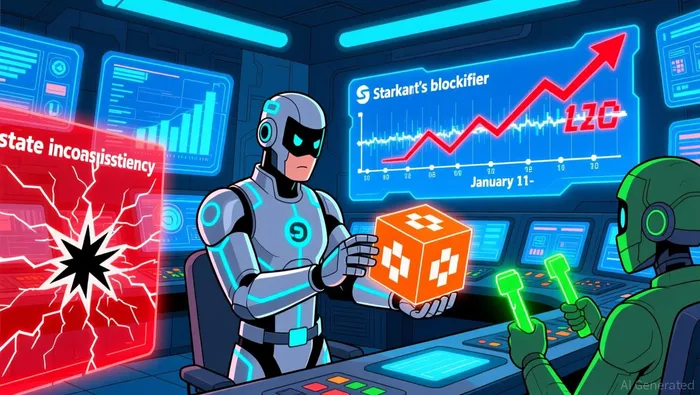
Starknet experienced a 2-hour mainnet outage on January 11, 2026, when an error in the blockifier execution layer led to a mismatch in how network state changes were handled. This resulted in an incorrect transaction execution that was flagged by the proving layer before it could be finalized. The blockifier, a core component of Starknet's sequencer, simulates transaction execution to maintain high throughput, but in this case, its behavior diverged from the expected Cairo-based proving system.
The incident forced a block reorganization, reverting approximately 18 minutes of network activity. Users affected by the error were required to resubmit transactions, but no funds were lost due to the proving layer's intervention. StarknetSTRK-- confirmed that its total value locked (TVL) remained at $840 million during the outage and average transaction fees stayed below one cent.
The team behind Starknet acknowledged the technical complexity of multi-layered blockchain architectures and committed to increased testing and code audits to prevent similar incidents. In the post-mortem, the team outlined plans for enhanced fuzz-testing and tighter coordination between the blockifier and proving layers.
What Caused the Outage and How Was It Resolved?
The outage was traced to a state inconsistency between Starknet's execution layer (blockifier) and the proving layer, which checks the correctness of transaction execution. In specific function call scenarios involving reverts and rollbacks, the execution layer incorrectly retained state changes that should have been discarded. This created a mismatch that was eventually flagged by the proving layer.
The proving layer acted as a safeguard by detecting the discrepancy and halting the faulty execution before it could be finalized on Ethereum's Layer 1. This allowed Starknet to roll back the last 18 minutes of transactions without any loss of user funds or data. The network resumed normal operations after the block reorganization was complete.
What Are the Implications for Network Reliability and Future Operations?
This incident highlights the challenges of managing complex, multi-layered blockchain infrastructure. Starknet plans to implement new testing frameworks to compare blockifier execution results directly with the proving layer and reduce the window between execution and verification.
The outage was the second major disruption for Starknet in early 2026, following a September 2025 incident caused by a sequencer bug that led to over five hours of downtime. These events underscore the importance of robust verification mechanisms in maintaining network stability.
While the STRKSTRK-- token saw a 1.3% increase following the outage, it remains below its 2024 peak, reflecting ongoing concerns about network reliability and supply dynamics. The team has committed to architectural changes and expanded monitoring to mitigate future risks.

Blending traditional trading wisdom with cutting-edge cryptocurrency insights.
Latest Articles
Stay ahead of the market.
Get curated U.S. market news, insights and key dates delivered to your inbox.






Comments
No comments yet