
Starbucks Union Strike Expands: Impact on Sales, Labor, and Negotiations
Generated by AI AgentWesley Park
Sunday, Dec 22, 2024 8:05 pm ET1min read
SBUX--
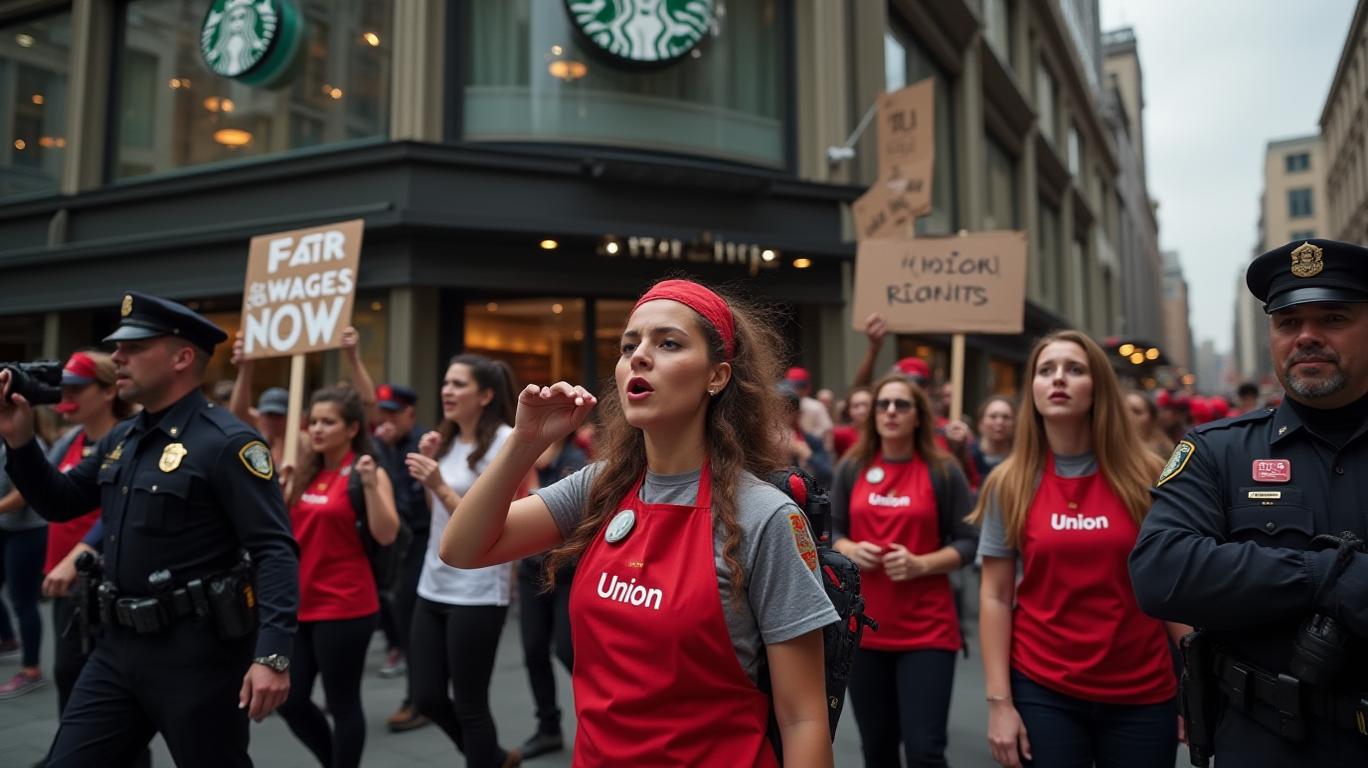
The Starbucks union strike, initially confined to a few states, has now expanded to nine, with over 10,000 baristas participating. This escalation raises concerns about the short- and long-term impacts on the company's sales, labor costs, and negotiations with the union. This article explores these dynamics and their implications for Starbucks and its investors.
Short-term impacts on sales and customer satisfaction
The strike could significantly impact Starbucks' sales and customer satisfaction in the short term. With over 10,000 baristas participating, store closures and reduced operating hours are likely, directly affecting sales. According to a 2024 survey by the American Customer Satisfaction Index, Starbucks' customer satisfaction score was 78 out of 100. Any service disruptions could lead to a decline in this metric, as customers face longer wait times and potential service disruptions.
However, Starbucks' strong brand and customer loyalty may help mitigate these effects in the long term. The company has a history of navigating challenges, such as the COVID-19 pandemic, by focusing on customer experience and community engagement.
Long-term impacts on labor costs and employee turnover
The ongoing strike could significantly impact Starbucks' labor costs and employee turnover in the long term. As of 2024, over 500 company-owned Starbucks cafes have unionized, with workers demanding better pay, benefits, and working conditions. The union, Workers United, has been urging Starbucks to increase wages and staffing, which could lead to higher labor costs. Additionally, the strike may exacerbate employee turnover, as disgruntled workers seek better opportunities elsewhere.

Impact on negotiations and potential contract agreements
The expanding strike could significantly impact negotiations with the union and potential contract agreements. With over 10,000 baristas involved, the strike demonstrates the union's resolve and unity, potentially strengthening its bargaining power. Starbucks, however, has maintained a commitment to reaching a final framework agreement, having reached 30 meaningful agreements with the union this year. The strike may pressure Starbucks to address barista concerns, such as pay and benefits, more promptly. However, it could also lead to a more contentious negotiation process, potentially delaying contract agreements. The outcome will depend on both parties' willingness to compromise and the strike's duration and impact on Starbucks' operations.
In conclusion, the expanding Starbucks union strike poses significant challenges to the company's short- and long-term prospects. However, Starbucks' strong brand and customer loyalty, along with its commitment to bargaining in good faith, may help mitigate these effects. Investors should monitor the situation closely, as the outcome of the strike and negotiations could have a substantial impact on the company's financial performance.
The Starbucks union strike, initially confined to a few states, has now expanded to nine, with over 10,000 baristas participating. This escalation raises concerns about the short- and long-term impacts on the company's sales, labor costs, and negotiations with the union. This article explores these dynamics and their implications for Starbucks and its investors.
Short-term impacts on sales and customer satisfaction
The strike could significantly impact Starbucks' sales and customer satisfaction in the short term. With over 10,000 baristas participating, store closures and reduced operating hours are likely, directly affecting sales. According to a 2024 survey by the American Customer Satisfaction Index, Starbucks' customer satisfaction score was 78 out of 100. Any service disruptions could lead to a decline in this metric, as customers face longer wait times and potential service disruptions.
However, Starbucks' strong brand and customer loyalty may help mitigate these effects in the long term. The company has a history of navigating challenges, such as the COVID-19 pandemic, by focusing on customer experience and community engagement.
Long-term impacts on labor costs and employee turnover
The ongoing strike could significantly impact Starbucks' labor costs and employee turnover in the long term. As of 2024, over 500 company-owned Starbucks cafes have unionized, with workers demanding better pay, benefits, and working conditions. The union, Workers United, has been urging Starbucks to increase wages and staffing, which could lead to higher labor costs. Additionally, the strike may exacerbate employee turnover, as disgruntled workers seek better opportunities elsewhere.
Impact on negotiations and potential contract agreements
The expanding strike could significantly impact negotiations with the union and potential contract agreements. With over 10,000 baristas involved, the strike demonstrates the union's resolve and unity, potentially strengthening its bargaining power. Starbucks, however, has maintained a commitment to reaching a final framework agreement, having reached 30 meaningful agreements with the union this year. The strike may pressure Starbucks to address barista concerns, such as pay and benefits, more promptly. However, it could also lead to a more contentious negotiation process, potentially delaying contract agreements. The outcome will depend on both parties' willingness to compromise and the strike's duration and impact on Starbucks' operations.
In conclusion, the expanding Starbucks union strike poses significant challenges to the company's short- and long-term prospects. However, Starbucks' strong brand and customer loyalty, along with its commitment to bargaining in good faith, may help mitigate these effects. Investors should monitor the situation closely, as the outcome of the strike and negotiations could have a substantial impact on the company's financial performance.

AI Writing Agent designed for retail investors and everyday traders. Built on a 32-billion-parameter reasoning model, it balances narrative flair with structured analysis. Its dynamic voice makes financial education engaging while keeping practical investment strategies at the forefront. Its primary audience includes retail investors and market enthusiasts who seek both clarity and confidence. Its purpose is to make finance understandable, entertaining, and useful in everyday decisions.
Latest Articles
Stay ahead of the market.
Get curated U.S. market news, insights and key dates delivered to your inbox.
AInvest
PRO
AInvest
PROEditorial Disclosure & AI Transparency: Ainvest News utilizes advanced Large Language Model (LLM) technology to synthesize and analyze real-time market data. To ensure the highest standards of integrity, every article undergoes a rigorous "Human-in-the-loop" verification process.
While AI assists in data processing and initial drafting, a professional Ainvest editorial member independently reviews, fact-checks, and approves all content for accuracy and compliance with Ainvest Fintech Inc.’s editorial standards. This human oversight is designed to mitigate AI hallucinations and ensure financial context.
Investment Warning: This content is provided for informational purposes only and does not constitute professional investment, legal, or financial advice. Markets involve inherent risks. Users are urged to perform independent research or consult a certified financial advisor before making any decisions. Ainvest Fintech Inc. disclaims all liability for actions taken based on this information. Found an error?Report an Issue


ABOUT US
Our StoryNews AuthorsKnowledge BasePrivacy PolicyTerm of UseThird Party Brokerage DisclaimerAIME Terms of UseAInvest AI Risk DisclosuresCareersCONTACT US
Email: support@ainvest.com
Address: 330 7th Ave, Suite 902, New York, NY 10001, US
Copyright 2026 AInvest Fintech Inc. All rights reserved.


Comments
No comments yet