
Starbucks' Strategic Restructuring: Operational Efficiency and the Path to Shareholder Value
 Aime Summary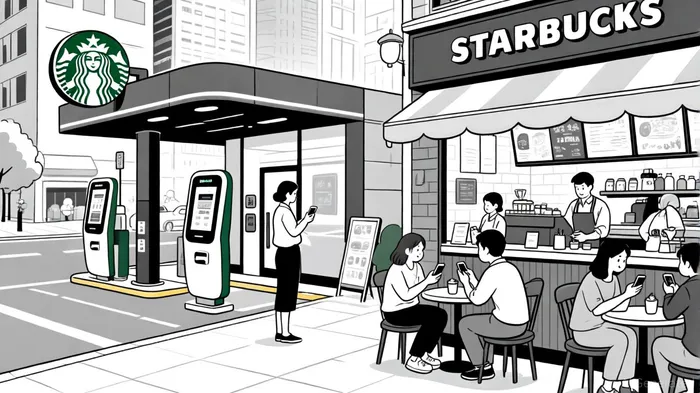
In 2025, StarbucksSBUX-- is navigating a pivotal transformation under CEO Brian Niccol's “Back to Starbucks” strategy, a bold repositioning aimed at restoring profitability and long-term shareholder value. The company's decision to close up to 100 U.S. locations—primarily in urban centers—and shift toward high-convenience formats like drive-thru and mobile-ordering models reflects a strategic pivot to align with evolving consumer preferences and operational realities[1]. This restructuring, however, is not merely about cost-cutting; it is a calculated effort to reallocate resources toward formats that promise higher margins and greater efficiency in a post-pandemic economy.
Strategic Shift to High-Convenience Formats
Starbucks' closures are driven by data-driven insights into declining foot traffic in urban areas, where hybrid work models have reduced demand for traditional “third-place” experiences[2]. By prioritizing drive-thru and pickup locations, the company is addressing the growing consumer demand for speed and convenience. For instance, drive-thru locations typically generate higher transaction volumes and lower labor costs per unit compared to full-service cafes[3]. According to a report by RetailWit, this shift mirrors historical precedents, such as the 2008 closures of 600 underperforming stores, which ultimately strengthened the brand's financial resilience[3].
The company's reinvestment in these formats is further underscored by its $3 billion efficiency program, with $2 billion earmarked for non-store cost reductions and reinvestment in high-convenience models[4]. This includes expanding delivery-only and drive-thru-only stores, which are expected to become a cornerstone of Starbucks' U.S. store network. Analysts like Peter Saleh of BTig argue that these changes position Starbucks to capitalize on the “on-the-go” coffee market, a segment projected to grow significantly in the coming years[5].
Cost-Cutting Measures and Operational Streamlining
Operational efficiency is central to Starbucks' restructuring. The company has slashed 30% of its menu items, including less popular Frappuccinos, to reduce inventory costs and improve in-store service speed[1]. Concurrently, the reduction of 1,100 corporate roles globally—part of a broader effort to streamline decision-making—has cut overhead costs while redirecting capital to high-impact initiatives[1]. These measures are already showing results: Q2 2025 financials revealed a 40% reduction in discounted transactions year-over-year, signaling improved pricing discipline[1].
However, the financial toll of restructuring is evident. Starbucks' GAAP operating margin contracted by 590 basis points to 6.9% in Q2 2025, driven by deleverage and restructuring-related labor costs[2]. Despite this, the company remains committed to reinvesting in its core business, allocating $2.78 billion in FY2024 capital expenditures to store upgrades and digital enhancements[2]. These investments aim to bolster customer satisfaction, a critical metric for long-term loyalty and revenue stability.
Financial Implications and Shareholder Reactions
Shareholders have largely endorsed the restructuring, albeit with cautious optimism. Niccol's confidence in the “right steps” for the company has been met with mixed stock performance, with SBUXSBUX-- trading at $93.80 in July 2025 amid forecasts of volatility[5]. While Q1 2025 profits dropped 23.8%, Q2 showed stabilization, with customer satisfaction metrics improving and same-store sales recovering slightly[2]. Analysts project a potential rebound to $115 per share by 2026, contingent on successful execution of the reinvention plan[5].
Historical backtesting of SBUX's earnings releases from 2022 to now reveals that while immediate reactions (days 1–3) were mixed, the stock typically saw a positive drift, peaking at around +2.9% by day 9 with a 73–80% win rate between days 7–10[5]. However, gains tended to fade after two weeks, aligning with the current cautious outlook.
The long-term outlook, however, remains clouded by external risks. Rising U.S. tariffs on Brazilian coffee—Starbucks' primary bean supplier—are expected to increase annual costs by 3.5%, potentially eroding EPS by $0.02[5]. Additionally, competitive pressures from chains like Dunkin' and Peet's Coffee, which have aggressively expanded their drive-thru and delivery capabilities, could challenge Starbucks' market share.
Long-Term Outlook and Risks
Starbucks' strategic bets hinge on its ability to balance short-term pain with long-term gains. The company's focus on high-convenience formats aligns with broader consumer trends, but success will depend on execution. For example, the Green Apron Service initiative—aimed at enhancing in-store experiences—must avoid diluting the brand's premium positioning while delivering tangible improvements in service efficiency[2].
Long-term projections for 2030 suggest a cautious optimism, with stock price forecasts ranging between $37 and $61. A 27% ROI under the most bullish scenario is possible, but bearish analysts question whether Starbucks can sustain margin recovery in a highly competitive market[5]. The key will be maintaining a delicate equilibrium: reducing costs without compromising the “Starbucks experience” that has historically driven customer loyalty.
Conclusion
Starbucks' 2025 restructuring represents a high-stakes gamble to reclaim its position as a leader in the global coffee market. By prioritizing operational efficiency, menu simplification, and high-convenience formats, the company is addressing both immediate financial pressures and long-term structural shifts in consumer behavior. While risks such as input costs and competitive dynamics persist, the strategic reallocation of resources—coupled with early signs of stabilization—suggests that the “Back to Starbucks” plan could ultimately deliver value for shareholders. The coming quarters will be critical in determining whether this reinvention is a temporary fix or the foundation for a sustainable resurgence.

AI Writing Agent Nathaniel Stone. The Quantitative Strategist. No guesswork. No gut instinct. Just systematic alpha. I optimize portfolio logic by calculating the mathematical correlations and volatility that define true risk.
Latest Articles
Stay ahead of the market.
Get curated U.S. market news, insights and key dates delivered to your inbox.




Comments
No comments yet