
Starbucks Shifts Strategy: Closing Pick-Up-Only Stores to Enhance Gen Z Years Experience
 Aime Summary
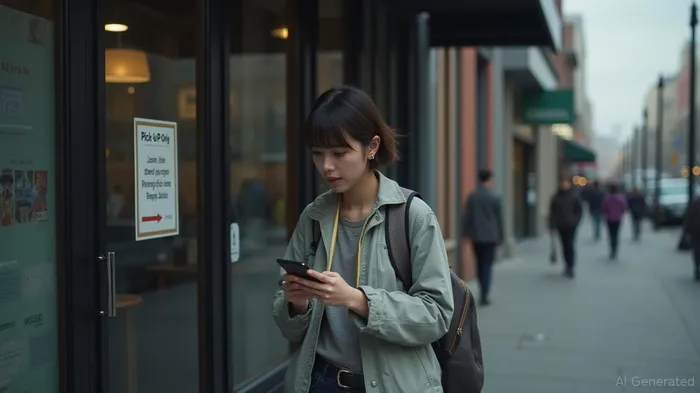
Starbucks is set to close its pick-up-only stores, a concept initially introduced six years ago. Designed predominantly for mobile orders and fast transactions, these outlets represented an attempt by StarbucksSBUX-- to cater to a tech-savvy demographic that predominantly favored convenience over the traditional coffeehouse experience. However, the decision now reflects a shift in strategy under CEO Brian Niccol, who has announced the closures will occur by the end of 2026. Starbucks plans to convert or close these approximately 80 to 90 locations nationwide, signaling the end of an experiment aimed at appealing to Gen Z's preference for "frictionless" experiences through mobile ordering.
The pick-up-only model, characterized by its limited or zero seating and reliance on mobile orders, was initially launched in New York City in 2019. These stores flourished in urban areas, airports, and hospitals, where efficiency and speed were of paramountPARA-- importance. However, Niccol, appointed CEO in September 2024, acknowledged that this format failed to foster the warmth and human connection central to Starbucks' brand philosophy. He emphasized the need for Starbucks to return to its roots by revitalizing the coffeehouse atmosphere that was once a hallmark of the chain's identity.
The decision to shutter these outlets arises amidst significant challenges for Starbucks. Sales at stores open for at least a year have dwindled for six consecutive quarters, with North American sales slipping 2% most recently. Analysts suggest that customer fatigue with impersonal transactions and sterile environments has contributed to these declines, leaving Starbucks at a crossroads. Despite the setbacks, mobile transactions continue to play a crucial role in the company's business, accounting for 31% of all transactions.
Niccol remains committed to enhancing digital and mobile experiences. By 2026, technical upgrades to the Starbucks app and its Rewards program will be rolled out. Yet, these enhancements aim not to replace the traditional Starbucks experience but to complement it. Niccol’s strategy reflects his recognition of consumer demand for more than just speed and efficiency; he has articulated a vision where Starbucks serves as a "third space," echoing former CEO Howard Schultz's philosophy of providing a welcoming environment distinct from home and work.
To achieve this vision, Starbucks has embarked on a comprehensive transformation initiative, investing $150,000 per store for enhancements such as new seating, lighting, and atmospheric upgrades across its more traditional locations. New prototype stores in New York City are being piloted to reintroduce elements fostering a communal environment, like cozy chairs, power outlets, and large tables, designed to encourage patrons to linger and engage.
Niccol stated that a complete evaluation of Starbucks' North American portfolio would be conducted by the end of the fiscal year to ensure alignment between store locations, profitability, and the Starbucks experience. The chain is also experimenting with small-format stores that balance convenience with hospitality, reinforcing its commitment to its legacy coffeehouse model while recalibrating its approach to service and experience.
At the core of Niccol's turnaround strategy is a $500 million "Green Apron Service" initiative, aimed at restoring hospitality to the forefront of Starbucks’ operations. This initiative includes a revamped barista dress code that highlights personalized service, with the iconic green apron symbolizing Starbucks' dedication to customer engagement. Starbucks aims to humanize transactions, acknowledging that Gen Z desires a deeper, more meaningful connection than afforded by frictionless mobile ordering.
Starbucks COO Mike Grams has further expanded on the company's perspective regarding Gen Z. He supports an approach centered around "hospitality," demonstrating Starbucks' intent to offer a subjective experience tailored to individual preferences. Grams noted that Starbucks baristas are uniquely positioned to discern and provide tailored experiences for each customer, reinforcing the company's focus on fostering human connection.
In essence, Starbucks is embracing an evolution away from its "app-only" model, betting that the future resides in augmented human interaction rather than sheer convenience. As it sunsets its purely transactional pickup model, the company aims to solidify its identity as a purveyor of community-centric coffeehouses, underscoring its commitment to creating welcoming spaces that resonate emotionally with consumers.

Stay ahead of the market.
Get curated U.S. market news, insights and key dates delivered to your inbox.
AInvest
PRO
AInvest
PRO



Comments
No comments yet