
Starbucks' Sales Slump and Strategic Turnaround: Assessing Brian Niccol's Path to Reclaiming the Coffee Market
 Aime Summary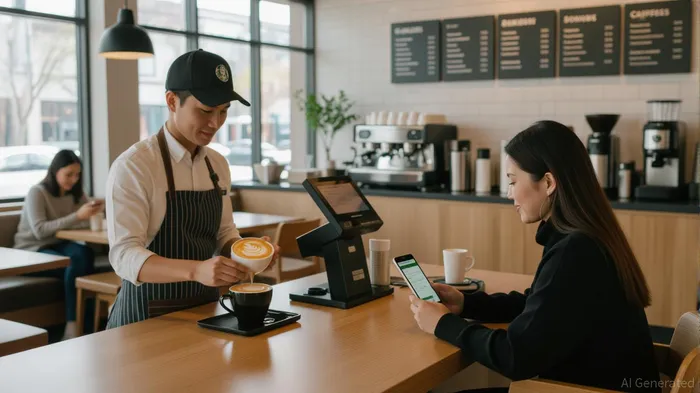
Introduction
Starbucks Corporation (NASDAQ: SBUX) has long been a symbol of premium coffee culture, but its recent financial performance and brand reputation struggles have raised critical questions for investors. Under CEO Brian Niccol, who took the helm in September 2024, the company is navigating a sales slump marked by declining same-store traffic and eroded consumer trust. This article evaluates whether Niccol's “Back to Starbucks” strategy—focused on reinvigorating the in-store experience, streamlining operations, and adapting to post-pandemic consumer behavior—can restore the brand's dominance or if it risks becoming a cautionary tale of brand resilience in a fragmented retail environment.
The Sales Slump: A Perfect Storm of Pricing and Preferences
Starbucks' Q2 FY2025 results revealed a 50% year-over-year decline in GAAP earnings per share and a 2% drop in global comparable store sales, despite a 3% rise in average ticket prices. The North American segment, which accounts for 61% of the company's revenue, saw a 1% sales decline amid a 2% drop in U.S. transactions. These figures underscore a broader trend: consumers are trading down to affordability-focused rivals like Dutch BrosBROS--. and Cotti Coffee, which prioritize speed and customization over the premium StarbucksSBUX-- experience.
The decline is not merely financial. Brand Finance's 2025 report highlights a 36% drop in Starbucks' brand value to $38.8 billion, its lowest since 2016. RepTrak's analysis further notes a reputational score of 57.7 (out of 100), down from 71.5 in 2021, driven by dissatisfaction with wait times, menu complexity, and perceived disconnection from the “third place” ethos. In China, where Starbucks once dominated, local rivals like Luckin Coffee have surged, with a 17% brand value increase to $1.7 billion.
Niccol's Strategic Gambit: Balancing Premium and Practicality
Brian Niccol's leadership has centered on the “Back to Starbucks” strategy, which seeks to harmonize Starbucks' premium brand identity with the practical demands of today's consumers. Key initiatives include:
- Operational Streamlining: AI-driven staffing tools like the “Green Apron Service” have improved service speed in pilot stores, achieving an 80% success rate in meeting four-minute order goals. Menu simplification and standardized workflows aim to reduce complexity while maintaining quality.
- Reimagined Store Experiences: Over 1,500 U.S. locations now feature lounge-style seating, warmer lighting, and self-serve condiment bars—moves designed to rekindle the “third place” vibe. In China, Starbucks is testing smaller, community-focused stores to compete with local rivals.
- Digital Reinvention: Enhanced mobile app features, such as personalized promotions and loyalty rewards, aim to retain Starbucks Rewards members (33.8 million as of Q4 2024). However, critics argue that digital convenience has come at the cost of in-store interactions, which remain a cornerstone of the brand's identity.
Niccol has also addressed internal challenges, cutting 1,100 corporate roles and shifting to in-office work to streamline decision-making. CFO Cathy Smith emphasizes a focus on “iterative testing and scaling,” prioritizing long-term returns over short-term gains.
Navigating Consumer Behavior Shifts
Post-pandemic consumer behavior has reshaped the coffee market. Gen Z and millennial customers increasingly value affordability, customization, and authenticity—traits that newer rivals have leveraged effectively. For example, Dutch Bros. and Scooter's Coffee thrive on drive-thru efficiency and lower prices, while Luckin Coffee dominates China with aggressive digital marketing and $1.50 lattes.
Starbucks' response has been twofold:
- Price Sensitivity Mitigation: Initiatives like the “$10 RMB Latte” promotion in China and free refills for non-loyalty customers aim to attract price-conscious buyers.
- Emotional Reconnection: Handwritten notes on cups, macchiato art, and storytelling campaigns (e.g., Super Bowl promotions) seek to rekindle the emotional bond with core customers.
However, the company faces a delicate balancing act. While 70% of surveyed consumers report intent to reduce Starbucks consumption due to cost concerns, the brand's premium pricing remains a barrier. UBS analysts note that even with improved service speed, customer satisfaction metrics remain mixed, with same-store sales declines persisting in North America.
Competitive Positioning and Long-Term Viability
Starbucks' global store count (40,789 as of Q2 2025) and 60 consecutive quarters of dividend payouts remain strengths. Yet, its market share in key regions is under threat. In the U.S., drive-thru-focused competitors account for 20% of the coffee market, while in China, Luckin's store count now exceeds Starbucks'.
The company's reliance on high-margin company-operated stores (53% of its portfolio) contrasts with rivals' licensed or franchise models, which offer lower overhead but less control. Niccol's strategy to expand partnerships in China, including collaborations with Meituan and China Resources, could help mitigate this gap.
Investment Implications: Caution and Opportunity
For investors, Starbucks represents a high-risk, high-reward proposition. The stock has declined 7% year-to-date (as of July 2025), reflecting skepticism about the “Back to Starbucks” strategy's ability to reverse declining sales. However, the company's strong balance sheet, with $3.8 billion in cash reserves and a 1.5% dividend yield, offers a safety net.
Key risks include:
- Execution Risk: The success of store redesigns and AI-driven staffing hinges on consistent implementation across 40,000+ locations.
- Competition: Local rivals in China and fast-casual chains in the U.S. are rapidly innovating, threatening Starbucks' market share.
- Consumer Sentiment: A 57.7 RepTrak score indicates a fragile relationship with customers, which could erode further without meaningful engagement.
Conversely, opportunities exist in:
- Loyalty Program Growth: Starbucks Rewards' 4% membership increase in Q4 2024 suggests potential for monetizing high-spending customers.
- Operational Efficiency: If the Green Apron Service and menu simplification reduce labor costs, margins could stabilize.
- Long-Term Brand Resilience: Starbucks' cultural legacy and global footprint remain unmatched, providing a foundation for recovery if the strategy gains traction.
Conclusion: A Test of Leadership and Patience
Brian Niccol's tenure is a high-stakes experiment in redefining Starbucks for a post-pandemic world. While the “Back to Starbucks” strategy has shown early promise in operational efficiency and employee engagement, the company must prove it can balance affordability with premium branding, streamline operations without sacrificing the “third place” experience, and outmaneuver agile competitors.
For long-term investors, Starbucks offers a compelling case study in brand resilience. However, patience is key. The stock's current valuation reflects skepticism, but if Niccol's reforms yield durable growth in customer traffic and margins, Starbucks could reclaim its position as a global coffee leader. Until then, it remains a high-conviction bet—a blend of strategic ambition and market uncertainty.

Stay ahead of the market.
Get curated U.S. market news, insights and key dates delivered to your inbox.
AInvest
PRO
AInvest
PRO



Comments
No comments yet