
Stanford's Breakthrough: 3D-Printed Organs' Vascular Networks Designed in Minutes
Scientists from Stanford University have made a significant breakthrough in the field of regenerative medicine by successfully designing vascular networks for 3D-printed organs. The team, led by Alison Marsden, developed a computational model that can rapidly create intricate blood vessel networks based on mathematical laws governing how blood vessels branch into smaller vessels. This innovation was published in the journal Science and represents a major step forward in addressing the critical challenge of designing vascular networks for 3D-printed organs.
The research team demonstrated the effectiveness of their model by designing a vascular network consisting of 25 blood vessels for a 1-centimeter-wide ring structure made from 3D-printed kidney cells. The entire process took only a few minutes, showcasing the speed and efficiency of the new method. The team then used coldCOLD-- gelatin particles to print the vascular network onto the ring structure, further validating the practical application of their computational model.
This breakthrough has the potential to revolutionize the field of organ transplantation, where the demand far outstrips the supply of available organs. The ability to rapidly design vascular networks for 3D-printed organs could significantly accelerate the development of artificial organs, bringing the goal of transplanting these organs without the need for donors closer to reality. The success of this model highlights the potential of computational methods in overcoming the technical challenges associated with 3D-printed organs, paving the way for future advancements in this area.
Hugues Talbot, a researcher from Paris-Saclay University, praised the Stanford team's work, stating that their method could potentially allow scientists to design vascular networks for full-sized organs in a matter of hours, rather than days or weeks. This rapid design process could be a game-changer in the field of regenerative medicine, enabling the creation of complex organ structures with functional blood vessel networks.
Marsden expressed optimism about the future of their research, stating that if progress continues at the current pace, they hope to test 3D-printed organs in pigs within the next five years. This would be a significant milestone in the development of artificial organs, as it would provide valuable insights into the feasibility and safety of transplanting 3D-printed organs into living organisms.
The success of this computational model represents a major advancement in the field of regenerative medicine, offering a new approach to designing vascular networks for 3D-printed organs. The ability to rapidly and efficiently create these networks could have far-reaching implications for the future of organ transplantation, potentially saving countless lives by providing a sustainable source of artificial organs. As research in this area continues to progress, the dream of transplanting 3D-printed organs without the need for donors may soon become a reality. 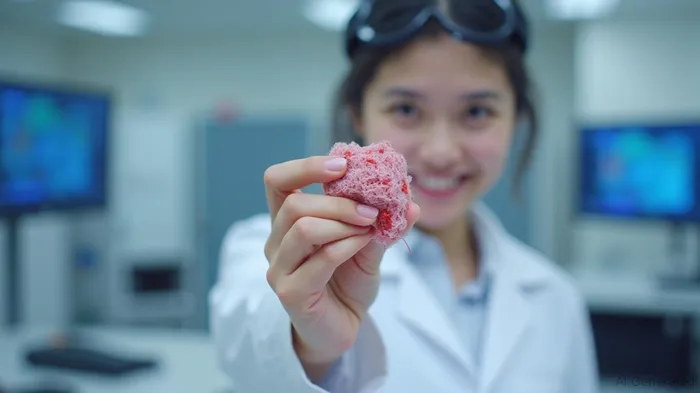

Stay ahead of the market.
Get curated U.S. market news, insights and key dates delivered to your inbox.






Comments
No comments yet