
Stagnant Wholesale Inflation: A Green Light for Tariff-Exposed Sectors?
 Aime Summary
The recent U.S. Producer Price Index (PPI) data for June 2025 reveals a surprising trend: wholesale inflation has stagnated despite escalating tariffs on imports. This report challenges market fears of a sharp inflation spike and opens a window of opportunity for investors to reassess tariff-exposed sectors. Let's unpack the implications for industries like manufacturing, retail, and energy—and where to position portfolios next.
The Data: Cooling Inflation Amid Tariffs
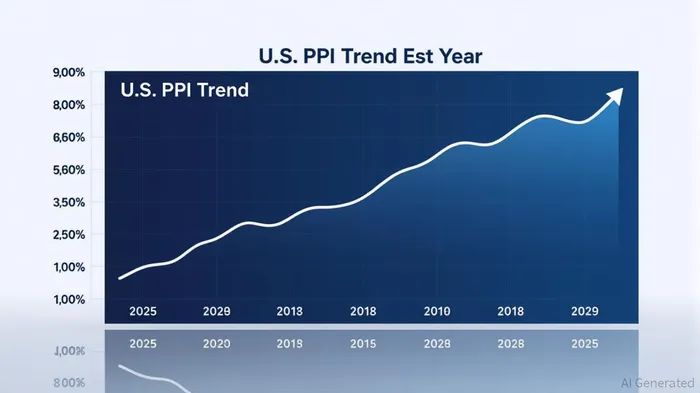
The June PPI report showed no monthly change in producer prices, with annual growth dipping to 2.3%—the lowest since September 2024. Core inflation (excluding volatile sectors like energy) also remained subdued at 2.5% year-over-year. This stability defies expectations that tariffs would immediately ignite higher input costs. Instead, businesses are absorbing tariff impacts through operational efficiency, delayed price hikes, and inventory management.
The key driver of this calm? A sharp decline in travel-related services, such as airline passenger and hotel costs, which offset rising prices in goods like steel and processed foods. Meanwhile, energy prices surged in natural gas but fell in gasoline and diesel, balancing sectoral pressures.
Sector-Specific Opportunities
1. Manufacturing: Steel and Chemicals—A Mixed Picture
The PPI data highlights a divergence within manufacturing. Steel mill products saw a 7.1% price jump in March 2025, benefiting companies like U.S. Steel (X) or Nucor (NUE), which might capitalize on domestic demand. However, other sectors like industrial chemicals (-1.1%) and carbon steel scrap (-9.5%) lagged, signaling oversupply concerns.
Investors should focus on manufacturers with exposure to tariff-protected industries (e.g., steel) or those capable of substituting imported materials with domestic alternatives.
2. Retail: Margin Stability and Consumer Resilience
Retailers, particularly in apparel and consumer durables, are navigating tariffs without passing costs to consumers. The PPI noted that retailer margins held steady in June, despite a 0.4% rise in durable goods prices. This suggests companies like Home Depot (HD) or Walmart (WMT) could maintain profitability if demand stays robust.
However, sectors like airline travel (e.g., American Airlines (AAL)) face headwinds, with passenger services down 2.7% month-over-month. Investors should avoid overexposure to travel until demand recovers.
3. Energy: Natural Gas Gains, Fossil Fuels Falter
The PPI's 8.2% drop in jet fuel prices and 2.5% decline in diesel contrast with a 36.2% surge in natural gas for electric power. This bifurcation benefits utilities and renewables players (e.g., NextEra Energy (NEE)) but penalizes fossil fuel-heavy firms.
4. Agriculture: Volatility Amid Trade Tensions
While grains like wheat and corn declined (-7.8% for grains overall), egg prices plummeted 36.2% in unprocessed goods—a sign of oversupply. However, slaughter cattle prices rose 7.2%, hinting at demand for protein. Agribusinesses with diversified portfolios (e.g., Archer-Daniels-Midland (ADM)) may outperform peers.
The Risks: Tariffs as a Slow-Motion Bomb
Economists caution that the current calm could be temporary. As companies deplete pre-tariff stockpiles and global supply chains adjust, input costs may rise sharply in late 2025 or 2026. The June CPI report already showed grocery prices ticking up, with meats and poultry rising 30% annually.
Historical precedents, such as the 2018 U.S.-China trade war, suggest that tariffs eventually force businesses to raise prices or shrink margins. Investors should monitor wholesaler and retailer margins closely—any widening could signal unsustainable cost absorption.
Investment Strategy: Play the Lag, Not the Spike
- Buy tariff-affected sectors now, but with a medium-term horizon. Target companies that:
- Operate in industries with domestic supply alternatives (e.g., steel).
- Have pricing power (e.g., consumer staples firms like Coca-Cola (KO)).
Are diversified geographically to avoid overreliance on tariff-hit regions.
Avoid sectors with inelastic demand and no pricing power, such as airlines or energy-heavy manufacturers.
Hedge with inflation-linked bonds (e.g., TIPS) to offset potential price spikes later.
Conclusion: A Tactical Shift for Tariff Winners
The June PPI report offers a reprieve for tariff-exposed sectors, but this respite is unlikely to last. Investors who position now in resilient industries—like steel, utilities, and diversified agriculture—can capture undervalued opportunities while hedging against future inflation risks. Stay agile: the next PCE report and tariff developments in Q4 2025 will be critical in determining the next phase of this inflation story.
Data queries and visualizations can be generated using platforms like Yahoo Finance or TradingView to track sector-specific PPI trends and company performance.

Stay ahead of the market.
Get curated U.S. market news, insights and key dates delivered to your inbox.
AInvest
PRO
AInvest
PRO



Comments
No comments yet