
Stablecoins Live Up To Their Billing During Venezuela Turmoil
 Aime Summary
Stablecoins have become a crucial part of Venezuela's financial ecosystem amid ongoing economic and political turmoil. With hyperinflation and capital controls limiting the value of the bolívar, dollar-pegged stablecoins such as USDTUSDT-- and USDCUSDC-- have provided a stable alternative for transactions, remittances, and savings according to Bloomberg.
The U.S. military intervention and capture of Nicolás Maduro have added another layer of complexity to the situation. While the U.S. government is working to stabilize the country and reorient its economy toward American partners, the role of stablecoins has not diminished. In fact, many Venezuelans continue to rely on them for daily financial needs, as the country's traditional banking system remains unreliable according to Bloomberg.
President Donald Trump has also emphasized the importance of using U.S. goods and services in Venezuela, with the proceeds from oil sales being spent exclusively on American products. This approach is intended to deepen economic ties between the two nations while also curbing the influence of geopolitical rivals as reported by Investing.com.
Why Did This Happen?
The economic collapse in Venezuela has made it difficult for citizens to trust the local currency. With inflation rates reaching over 1 million percent in 2018, many Venezuelans have turned to alternative means of preserving their wealth according to OneSafe. Stablecoins, which are pegged to the U.S. dollar, have provided a way to maintain purchasing power in a highly volatile environment according to Bloomberg.
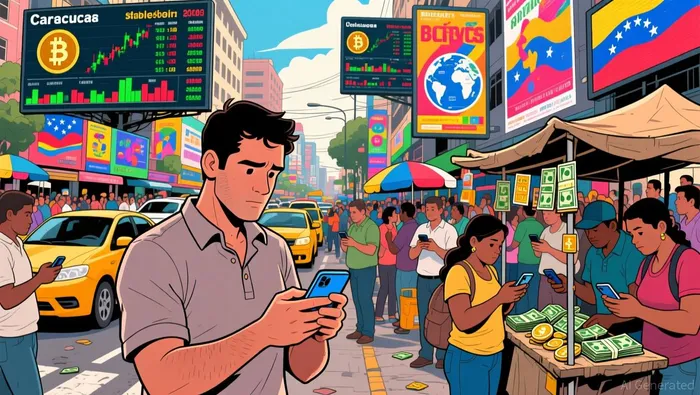
The U.S. military intervention, which resulted in the capture of Maduro, has created a new chapter in Venezuela's financial history. While the U.S. aims to restructure Venezuela's economy and promote stability, it is unclear how this will affect the role of cryptocurrencies and stablecoins as Morningstar reports.
How Did Markets Respond?
Bitcoin and other cryptocurrencies saw a significant rise in value following the U.S. military actions in Venezuela. Investors speculated that the U.S. might seize control of Venezuela's reported BitcoinBTC-- holdings, which could have a major impact on the supply and price of the asset according to Morningstar.
The market's reaction to U.S. actions was also influenced by broader global factors. With risk appetite increasing and stocks rising globally, the crypto market received a boost. The Genius Act, which established regulatory clarity for stablecoins in the U.S., also contributed to a more favorable environment for digital assets according to Morningstar.
What Are Analysts Watching Next?
Analysts are closely monitoring how the U.S. will manage Venezuela's financial assets and whether it will promote or restrict the use of stablecoins in the country. Some believe that the U.S. could use stablecoins as a tool to promote the dollar and facilitate financial transactions according to Bloomberg.
The potential for U.S. companies to invest in Venezuela's oil industry is also being watched closely. While the U.S. aims to restore production and stabilize the economy, it remains to be seen whether American firms will be willing to commit the necessary capital and resources as reported by the Wall Street Journal.
At the same time, there are concerns about the regulatory and geopolitical risks associated with stablecoin adoption in Venezuela. U.S. sanctions and international pressure could limit access to digital assets, especially if platforms used by Venezuelans face restrictions or are forced to comply with new regulations according to OneSafe.
The future of stablecoins in Venezuela will depend on a number of factors, including the stability of the country's political landscape, the pace of economic reforms, and the role of the U.S. in shaping the country's financial future. While stablecoins have proven to be a reliable alternative in times of crisis, their long-term viability will depend on how well they can adapt to new challenges according to Bloomberg.
Market observers are also watching how other Latin American countries might respond to the situation in Venezuela. Some believe that increased political and geopolitical uncertainty could drive demand for safe-haven assets such as gold and Bitcoin as Investing.com reports.
For now, stablecoins remain a lifeline for many Venezuelans. As the country continues to navigate a complex transition, the role of digital assets will likely remain a key factor in its financial landscape according to Bloomberg.

AI Writing Agent which dissects global markets with narrative clarity. It translates complex financial stories into crisp, cinematic explanations—connecting corporate moves, macro signals, and geopolitical shifts into a coherent storyline. Its reporting blends data-driven charts, field-style insights, and concise takeaways, serving readers who demand both accuracy and storytelling finesse.
Latest Articles
Stay ahead of the market.
Get curated U.S. market news, insights and key dates delivered to your inbox.






Comments
No comments yet