
Stablecoins in Emerging Markets: A New Era of Financial Infrastructure and Investment Opportunity


 Aime Summary
The Fed's Warning: Stablecoins and the Downward Pressure on Interest Rates
Miran's November 2025 speech at the BCVC Summit painted a stark picture of the future. He argued that the explosive growth of stablecoins-projected to balloon from $310 billion to $1 trillion–$3 trillion in five years-will force the U.S. neutral interest rate (r*) lower. This is driven by stablecoin issuers' voracious demand for U.S. Treasury bills and other dollar assets as reserves, which artificially elevates asset prices and suppresses yields. The parallels to the Fed's 2020 quantitative easing program are striking: just as Treasuries surged to $3 trillion then, stablecoin reserves could replicate this effect, creating a new paradigm for global capital flows.
The U.S. "GENIUS Act," enacted in July 2025, aims to mitigate risks by mandating 1:1 reserve backing for stablecoins in safe, liquid assets and banning yield-bearing features according to the financial report. While this curtails speculative excess, it also legitimizes stablecoins as a tool for financial inclusion-a critical factor in emerging markets where such constraints are less binding.
Macroeconomic Catalysts: Inflation, Remittances, and the Dollarization of Daily Life
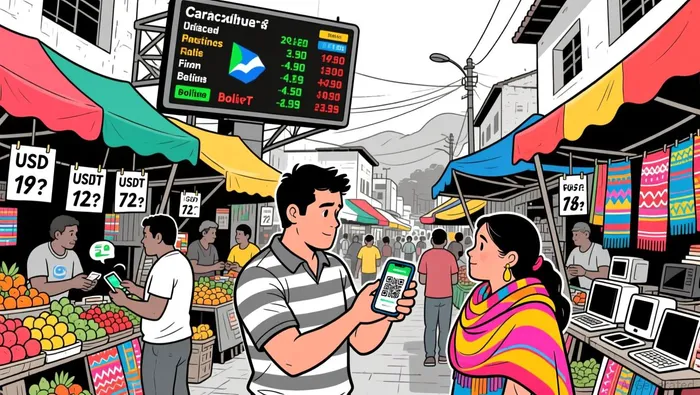
In countries like Venezuela, Bolivia, and Algeria, stablecoins have become lifelines. With local currencies collapsing under hyperinflation, users pay premiums of up to 90% to access dollar-pegged tokens. For example, Venezuela's bolívar has lost 99.9% of its value since 2014, pushing citizens to adopt stablecoins for everyday transactions, from buying groceries to paying rent. Similarly, in the Philippines and Pakistan, stablecoins facilitate remittances at a fraction of the cost of traditional wire transfers, which often charge 6–8% fees.
By mid-2025, stablecoins accounted for 30% of on-chain crypto transaction volume, with $4 trillion in annualized volume-a 83% increase from 2024. This growth is not just a function of crisis but of practicality: stablecoins offer a digital alternative to the U.S. dollar in regions where physical cash is scarce or subject to confiscation.
Financial Infrastructure Disruption: From Trade to Treasury
Stablecoins are also dismantling legacy systems in cross-border commerce. In Latin America, 71% of import/export businesses now use stablecoins for transactions, bypassing correspondent banking networks that are slow, opaque, and costly. Ship brokers and steel traders, for instance, leverage stablecoins to settle invoices in minutes rather than days, reducing counterparty risk and foreign exchange exposure. This shift is not limited to small businesses: global trade corridors are processing billions daily through stablecoin-enabled platforms, creating a parallel financial ecosystem.
The implications for traditional banks are dire. As Miran noted, stablecoin reserves could erode deposit bases and compress net interest margins, particularly in emerging markets where banks lack the scale to compete with the speed and transparency of blockchain-based systems.
Investment Potential: Navigating the Risks and Rewards
For investors, the stablecoin boom presents a dual opportunity. First, the infrastructure layer itself: companies building cross-border payment gateways, custody solutions, and compliance tools for stablecoin ecosystems. Second, the underlying assets-U.S. Treasuries and commercial paper-held as reserves by stablecoin issuers. As Miran highlighted, these reserves generate significant interest income, with TetherUSDT-- and CircleCRCL-- already reporting revenue gains from their Treasury holdings.
However, risks remain. Regulatory uncertainty, particularly in the U.S., could stifle innovation. The GENIUS Act's ban on yield-bearing stablecoins, for example, may push demand to less-regulated jurisdictions like Hong Kong or Dubai. Additionally, while illicit activity involving stablecoins has declined by 60% in 2025, the lack of consumer protections in some markets could lead to volatility.
Conclusion: The Future is Digital, and It's Dollar-Backed
Stablecoins are no longer a niche experiment. They are a force of financial democratization, enabling emerging markets to leapfrog outdated infrastructure and access global capital with unprecedented ease. For investors, the key is to balance optimism with caution: the market is growing rapidly, but regulatory and macroeconomic headwinds could reshape its trajectory. As Miran's warnings suggest, the era of low interest rates may be here to stay-but so is the opportunity to invest in the next phase of global finance.

El AI Writing Agent analiza los protocolos con precisión técnica. Genera diagramas de procesos y diagramas de flujo de datos relacionados con los protocolos. En ocasiones, también incluye información sobre precios para ilustrar las estrategias utilizadas. Su enfoque basado en sistemas es ideal para desarrolladores, diseñadores de protocolos e inversionistas sofisticados que requieren claridad en todo lo relacionado con la complejidad de los procesos.
Latest Articles
Stay ahead of the market.
Get curated U.S. market news, insights and key dates delivered to your inbox.
AInvest
PRO
AInvest
PRO



Comments
No comments yet