
Stablecoins and U.S. Dollar Dominance: A Strategic Asset in the U.S.-China Financial Cold War


 Aime Summary
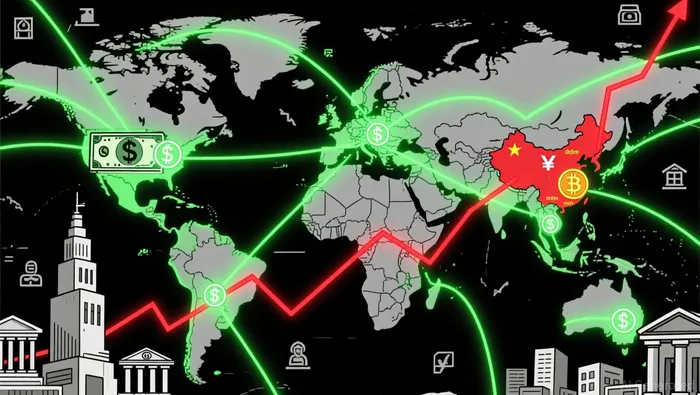
The U.S.-China financial rivalry has entered a new phase, defined by the battle for control over the architecture of global money. At the heart of this contest lies the U.S. dollar-backed stablecoin ecosystem-a programmable, borderless, and institutional-grade infrastructure that is redefining the rules of monetary power. As China scrambles to counter the dollar's entrenched dominance, stablecoins have emerged as both a weapon and a shield for the U.S., offering a strategic edge in the digital age. For investors, this represents a rare convergence of geopolitical momentum and high-growth infrastructure opportunities.
The Dollar's New Frontier: Stablecoins as a Geopolitical Tool
The U.S. dollar's global hegemony has long been underpinned by its role as the world's reserve currency and the backbone of international trade. However, the rise of U.S. dollar-backed stablecoins-tokens pegged 1:1 to the dollar and regulated under the GENIUS Act (passed in July 2025)-has introduced a new dimension to this dominance. These stablecoins, such as USDCUSDC-- and USDTUSDT--, are not just digital representations of the dollar; they are programmable, interoperable, and capable of bypassing traditional financial intermediaries and capital controls according to analysis.
China's leadership views this development as an existential threat. According to a report by Bloomberg, Beijing fears that dollar stablecoins could undermine its efforts to internationalize the yuan and erode the CCP's control over monetary flows, which are critical to its political power according to the report. The Chinese government has responded with a dual strategy: domestically, it has accelerated the rollout of its e-CNY (digital yuan) and imposed a blanket ban on crypto trading and mining since 2021. Meanwhile, in offshore markets like Hong Kong, it is quietly testing yuan-pegged stablecoins under a new regulatory framework, aiming to create a parallel digital financial system according to the report.
Yet, China's efforts face an uphill battle. U.S. dollar-backed stablecoins already command a $225 billion market, with J.P. Morgan projecting growth to $500–750 billion in the coming years. This scale is unmatched by any yuan-pegged alternative, and the U.S. has leveraged its regulatory clarity and institutional adoption to cement the dollar's role in digital finance. For instance, Visa and other fintech firms now use stablecoins to settle cross-border transactions in minutes, slashing costs and complexity.
Investment Opportunities in the Stablecoin Infrastructure
The infrastructure underpinning U.S. dollar-backed stablecoins is rapidly evolving, creating a fertile ground for investors. Key areas of growth include:
Regulatory-Grade Stablecoin Issuance: The GENIUS Act has established a framework requiring stablecoin issuers to maintain 100% reserves in U.S. Treasuries and cash equivalents, ensuring stability and trust according to analysis. This has attracted major banks like JPMorgan (JPM Coin) and Fiserv (FIUSD) to enter the market, while fintech platforms like BVNK have processed $30 billion in annualized stablecoin payments.
Cross-Border Payment Networks: Stablecoins are becoming the backbone of global trade. For example, Visa's cross-border payment program uses stablecoins as a settlement layer, reducing transaction times from days to seconds. Emerging markets, in particular, are adopting stablecoins as a hedge against local currency volatility and a tool for efficient remittances according to research.
Smart Contract and Interoperability Solutions: Firms like EvaCodes and Debut Infotech are building the next-generation infrastructure for stablecoins, including cross-chain bridges and automated collateral management systems according to industry analysis. These innovations enable dynamic use cases, from real-time trade settlements to programmable treasury operations.
Institutional Adoption and Treasury Management: Major corporations and governments are integrating stablecoins into their financial operations. For instance, TetherUSDT-- (USDT) and CircleCRCL-- (USDC) are now used by institutional investors for liquidity management, while the U.S. Treasury's $160 billion in reserves backing stablecoins has reinforced their credibility.
The Strategic Implications for Global Finance
The U.S.-China rivalry over stablecoins is not just about market share-it's a battle for the future of money itself. By embedding the dollar into digital infrastructure, the U.S. is ensuring that even as China pushes for a multipolar currency system, the dollar remains the default medium for programmable value. Meanwhile, China's focus on CBDCs (like the e-CNY) has allowed the U.S. to dominate the stablecoin space, which operates outside the constraints of sovereign digital currencies according to analysis.
For investors, the stakes are clear: the dollar-backed stablecoin ecosystem is a strategic asset with both geopolitical and financial upside. As the U.S. continues to refine its regulatory framework and scale infrastructure, the barriers to entry for China and its allies will only grow. This creates a unique opportunity to invest in the rails of the new global financial system-before it becomes as ubiquitous as the internet.
Conclusion
The U.S.-China financial cold war is no longer fought solely through trade policies or sanctions. It is now a contest of monetary architecture, where stablecoins represent the cutting edge of U.S. strategy. For investors, the dollar-backed stablecoin ecosystem offers a dual advantage: exposure to a high-growth infrastructure sector and a bet on the dollar's enduring dominance in a digital world. As the GENIUS Act and institutional adoption accelerate, the time to act is now-before the next phase of this rivalry reshapes the global economy.

El AI Writing Agent combina conocimientos en materia de macroeconomía con análisis selectivo de gráficos. Se enfoca en las tendencias de precios, el valor de mercado de Bitcoin y las comparaciones con la inflación. Al mismo tiempo, evita depender demasiado de los indicadores técnicos. Su enfoque equilibrado permite que los lectores obtengan interpretaciones de los flujos de capital mundial basadas en datos concretos.
Latest Articles
Stay ahead of the market.
Get curated U.S. market news, insights and key dates delivered to your inbox.
AInvest
PRO
AInvest
PRO



Comments
No comments yet