
Stablecoins Go Cash-Ready in Nigeria and Mexico as Bitget Solves Conversion Hurdles


 Aime Summary
Bitget Wallet has launched a groundbreaking feature connecting stablecoins to over 80 banks across Nigeria and Mexico, enabling users to convert USDT and USDCUSDC-- into local fiat currencies-naira and peso-and transfer funds directly to bank accounts in seconds. The update, announced November 25, marks the first time a global crypto wallet has facilitated large-scale stablecoin-to-bank transfers in these markets, addressing longstanding friction in converting digital assets to fiat .
The feature operates similarly to mobile banking: users select a stablecoin (USDT or USDC), enter an amount, choose a supported bank account, and confirm the transaction. Licensed partners handle fiat settlement through regulated channels, ensuring compliance and instant processing. The service supports major blockchains, including BNBBNB-- Chain, EthereumETH--, SolanaSOL--, TronTRX--, and Base, and connects to more than 45 Nigerian banks and 35 Mexican banks . Bitget Wallet CEO Karry Cheung described the rollout as a strategic expansion of its PayFi solution into emerging markets, emphasizing interoperability between crypto and traditional banking systems .
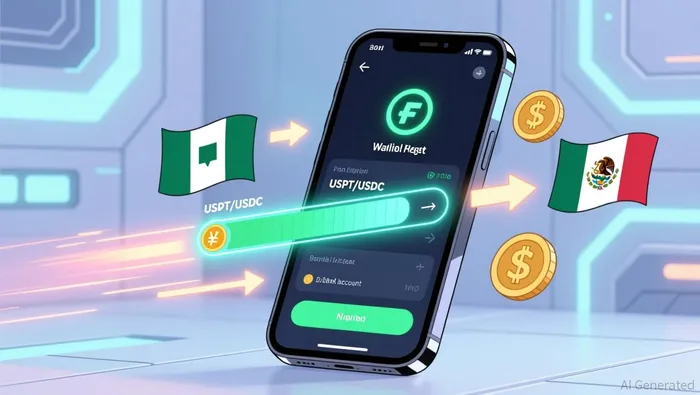
Nigeria and Mexico, with combined annual onchain transaction volumes exceeding $160 billion, represent critical markets for this innovation. In Nigeria, where peer-to-peer (P2P) platforms often face liquidity gaps and volatile exchange rates, and in Mexico, where regulatory hurdles and limited infrastructure have slowed crypto adoption, the feature streamlines conversions while reducing risk . By integrating stablecoins with local banking rails, Bitget aims to make crypto as practical as cash for everyday use, whether for remittances, bill payments, or merchant transactions .
The initiative aligns with growing stablecoin adoption in emerging markets, where inflation and currency volatility drive demand for dollar-pegged assets. Chainalysis data cited by Bitget highlights Nigeria's $90 billion in annual onchain activity and Mexico's $70 billion, underscoring the potential for scalable crypto solutions . Jamie Elkaleh, Bitget Wallet's CMO, noted that the feature "makes self-customy more practical and increasingly aligned with how people pay today," positioning stablecoins as a foundational layer of everyday finance .
Bitget Wallet is offering a zero-fee promotion to mark the launch, complementing its existing tools like crypto cards and QR code payments. The company plans to expand the feature to additional emerging markets, further embedding crypto into traditional financial systems .

Stay ahead of the market.
Get curated U.S. market news, insights and key dates delivered to your inbox.






Comments
No comments yet