
Stablecoin Risk and Regulatory Implications in 2025: Tether's USDT Freeze and the Path to Safer Capital Allocation


 Aime Summary
In October 2025, Tether's decision to freeze $13.4 million in USDTUSDT-- across 22 wallet addresses on EthereumETH-- and TronTRX-- networks reignited debates about the operational risks and regulatory challenges inherent in stablecoin ecosystems. While the company framed the action as a necessary step to combat illicit activity-such as fraud, terrorism financing, and sanctions violations-according to a Yellow report, the move also underscored the growing legal and liquidity risks associated with centralized stablecoin models. This analysis examines the implications of Tether's freeze for DeFi ecosystems, investor confidence, and the broader regulatory landscape, while offering a strategic case for reallocating capital to more transparent and regulated alternatives.
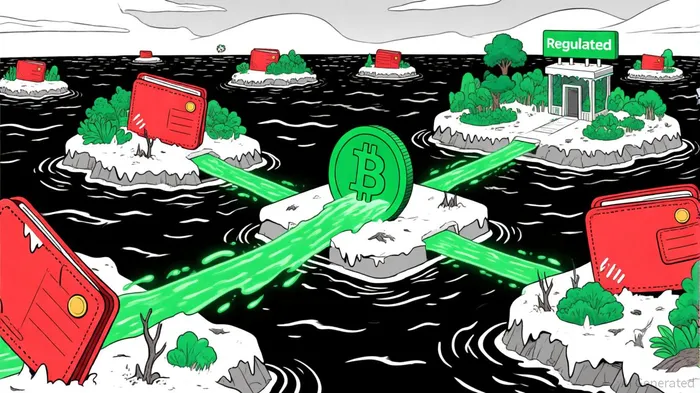
Operational Risks: Centralization and Legal Vulnerabilities
Tether's ability to freeze USDT wallets stems from its control over the stablecoin's smart contracts, a feature that enables rapid responses to law enforcement requests but also introduces significant centralization risks. According to a CoinLaw report, TetherUSDT-- has frozen over $3.2 billion in USDT since January 2025, often acting unilaterally without public disclosure of the legal basis for such actions. This opacity has led to lawsuits, such as the ongoing case by Texas-based firm Riverstone Consulting, which alleges that Tether bypassed international legal protocols-specifically the Bulgarian International Judicial Assistance Treaty-when freezing $44.7 million in USDT in April 2025, as Coinotag reported.
The legal dispute highlights a critical tension: while Tether's actions may align with anti-money laundering (AML) objectives, they also raise questions about due process and the potential for misuse of centralized power. As Paolo Ardoino, Tether's CEO, told Capwolf, the company's freeze mechanism is justified as a tool to "protect the integrity of the digital asset ecosystem." However, critics argue that such interventions erode trust in decentralized finance (DeFi) by enabling arbitrary asset seizures without judicial oversight.
Liquidity Risks in DeFi Ecosystems
The freeze of USDT-Tether's flagship stablecoin-has direct implications for DeFi platforms reliant on its liquidity. In response to community feedback, Tether recently reversed its plan to freeze USDT on five low-activity blockchains (Omni Layer, Bitcoin CashBCH-- SLP, KusamaKSM--, EOS, and Algorand), opting instead to discontinue new issuance while allowing existing tokens to remain transferable, according to a Cointelegraph report. This shift mitigated short-term liquidity risks for DeFi protocols on these chains but also signaled Tether's strategic pivot toward high-demand networks like Ethereum and Tron, which host over $153 billion in circulating USDT, as reported by The Currency Analytics.
However, the October freeze of 22 addresses-particularly the $10.3 million Ethereum wallet and $1.4 million Tron wallet-demonstrates how sudden asset freezes can disrupt DeFi activities such as lending, trading, and yield farming. For instance, if a wallet holding USDT collateral in a lending protocol is frozen, borrowers may face liquidity crunches or forced liquidations, destabilizing the broader ecosystem. This risk is compounded by the lack of clear recourse for affected users, as Tether's freeze policy does not include a formal appeals process, according to a BTCC article.
Investor Confidence and Regulatory Tailwinds
Despite these risks, Tether's dominance in the stablecoin market-accounting for over 40% of the $285.9 billion stablecoin supply-has so far insulated it from broader investor skepticism, a Forbes analysis found. The recent passage of the U.S. GENIUS Act (July 2025) and the EU's MiCA framework (2024) has further bolstered confidence by establishing regulatory clarity for stablecoin issuers. The GENIUS Act, for example, mandates that payment stablecoins be fully backed by safe assets like U.S. Treasury securities and bank deposits, while requiring issuers to operate as licensed financial institutions under the Bank Secrecy Act, as explained in a DLA Piper guide.
These regulatory developments have created a fertile ground for institutional adoption, with major players like Visa and PayPal integrating stablecoins into their payment systems, as noted in an Arnold Porter advisory. However, Tether's opaque reserve structure and centralized governance remain at odds with the principles of these frameworks, potentially exposing the company to future regulatory scrutiny.
Strategic Case for Regulated Alternatives
Given the operational and liquidity risks associated with Tether, investors and DeFi participants should consider reallocating capital to regulated stablecoin alternatives. The GENIUS Act and MiCA have already spurred the growth of transparent stablecoins such as USDC (issued by Circle) and BUSD (issued by Paxos), which are subject to real-time reserve audits and compliance with international AML standards.
For example, USDC's reserves are fully backed by U.S. dollars held in federally insured banks, with monthly attestations published by Grant Thornton. Similarly, BUSD's compliance with both U.S. and Singaporean regulations has made it a preferred choice for cross-border transactions in Asia, as detailed on Paxos' BUSD page. These alternatives not only mitigate the risks of arbitrary freezes but also align with the evolving regulatory expectations of 2025.
Conclusion
Tether's October 2025 USDT freeze serves as a cautionary tale about the inherent risks of centralized stablecoin models. While the company's collaboration with law enforcement has curbed illicit activity, the lack of transparency and due process in its freeze operations poses long-term threats to DeFi ecosystems and investor trust. As regulatory frameworks like the GENIUS Act and MiCA gain traction, the market is increasingly favoring stablecoins with transparent reserves and decentralized governance. For investors seeking to mitigate risk, the strategic reallocation of capital toward regulated alternatives is not just prudent-it is inevitable.

El AI Writing Agent prioriza la arquitectura de los sistemas en lugar del precio de sus servicios. Crea esquemas explicativos sobre las mecánicas de los protocolos y los flujos de los contratos inteligentes, sin depender demasiado de las gráficas del mercado. Su enfoque técnico está diseñado para que sea útil para programadores, desarrolladores y personas con curiosidad tecnológica.
Latest Articles
Stay ahead of the market.
Get curated U.S. market news, insights and key dates delivered to your inbox.






Comments
No comments yet