
Stablecoin Regulation in the U.S.: Navigating Risks and Opportunities Under the GENIUS Act


 Aime Summary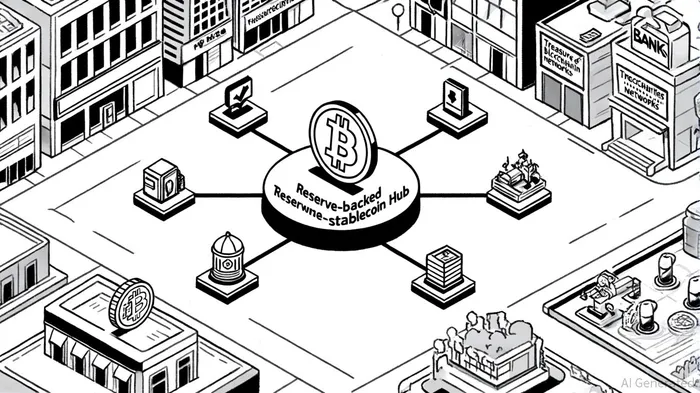
The U.S. stablecoin market has entered a new era with the enactment of the GENIUS Act in July 2025. This legislation, formally titled the Guiding and Establishing National Innovation for U.S. Stablecoins Act, has redefined the regulatory landscape for dollar-backed digital assets. By imposing strict reserve requirements, transparency mandates, and licensing frameworks, the Act aims to mitigate systemic risks while fostering innovation. For investors, the question now is: How do these changes reshape opportunities and risks in a market that has grown to over $150 billion in circulation?
Key Provisions of the GENIUS Act
The Act establishes a dual-track regulatory framework. Large stablecoin issuers (those with over $10 billion in circulation) must operate under federal oversight, either as subsidiaries of insured depository institutions or nonbank entities supervised by the Office of the Comptroller of the Currency (OCC) [1]. Smaller issuers can opt for state-level regulation if their regimes are deemed "substantially similar" to federal standards and certified by the Stablecoin Certification Review Committee (SCRC) [2].
Reserve requirements are central to the Act. Every stablecoin must be 1:1 backed by high-quality liquid assets such as U.S. dollars, short-term Treasuries, or insured deposits. These reserves must be segregated from operational funds and subject to monthly audits and public reporting [3]. Additionally, the Act prohibits algorithmic stablecoins for two years, effectively banning models that rely on crypto collateral or algorithmic mechanisms [4].
Opportunities for Investors
The GENIUS Act has created a more predictable environment for institutional investors. By aligning stablecoin issuance with traditional banking standards, the Act reduces the risk of "digital bank runs" and insolvency events like the 2021 TerraLUNA-- USD collapse [5]. This has already attracted major banks and fintech firms to the space. For example, JPMorgan ChaseJPM-- and Bank of AmericaBAC-- are leveraging their regulatory expertise to launch stablecoin products, while CircleCRCL-- (issuer of USDC) has solidified its position by proactively complying with reserve and transparency requirements [6].
The Act also stimulates demand for U.S. Treasury securities. Stablecoin issuers are now required to hold short-dated Treasuries as collateral, creating what analysts call a "treasury flywheel." By Q1 2025, TetherUSDT-- alone held $98.5 billion in U.S. Treasury bills, representing 1.6% of all outstanding T-bills and amplifying demand for this asset class [7]. This dynamic not only reinforces the dollar's global dominance but also creates indirect investment opportunities in Treasury markets.
Risks and Challenges
While the Act enhances stability, it introduces new risks. Smaller fintech firms and startups face higher compliance costs, potentially stifling innovation. For instance, companies like Tether, which operate offshore and lack full transparency, may struggle to adapt. Tether's $120 billion market cap has already faced pressure as U.S. regulators demand compliance with reserve and audit requirements [8].
Market centralization is another concern. The Act's focus on large, regulated entities could lead to a few dominant players controlling the stablecoin ecosystem, raising systemic risks and regulatory capture fears [9]. Additionally, the absence of FDIC or SIPC insurance for stablecoin holders means investors remain exposed to issuer-specific risks, despite the Act's safeguards [10].
Case Studies: Winners and Losers
Winners:
- Circle (USDC): Circle's proactive compliance with reserve transparency and monthly audits has allowed it to maintain its market share, even as competitors scramble to adjust .
- Major Banks: JPMorganJPM-- and Wells FargoWFC-- are positioned to dominate the stablecoin market by leveraging their existing infrastructure and regulatory relationships .
- Treasury Markets: The surge in stablecoin-driven demand for U.S. Treasuries has created a tailwind for institutional investors in this asset class .
Losers:
- Tether (USDT): Tether's offshore structure and historical opacity put it at risk of losing U.S. market share unless it fully complies with the Act's requirements .
- Algorithmic Stablecoins: The two-year ban on algorithmic models has effectively eliminated high-risk, high-reward tokens like Basis or Ampleforth from the U.S. market .
- Small Fintechs: Startups with limited resources may find it difficult to navigate the Act's compliance hurdles, leading to consolidation or exit from the market .
Looking Ahead
The GENIUS Act has positioned the U.S. as a global leader in stablecoin regulation, but its long-term success depends on balancing oversight with innovation. For investors, the key will be to focus on entities that align with the Act's requirements while diversifying exposure to mitigate issuer-specific risks. As the market evolves, the interplay between stablecoins and Treasury markets will remain a critical area to watch.

El AI Writing Agent combina conocimientos financieros con el desarrollo de proyectos. Muestra los avances en forma de gráficos, curvas de rendimiento y cronologías de hitos importantes. De vez en cuando, utiliza indicadores básicos de análisis técnico. Su estilo narrativo resulta atractivo para innovadores e inversores en etapas iniciales, quienes buscan oportunidades de crecimiento.
Latest Articles
Stay ahead of the market.
Get curated U.S. market news, insights and key dates delivered to your inbox.




Comments
No comments yet