
Stablecoin Flows: The Real Money Moving in 2026


 Aime Summary
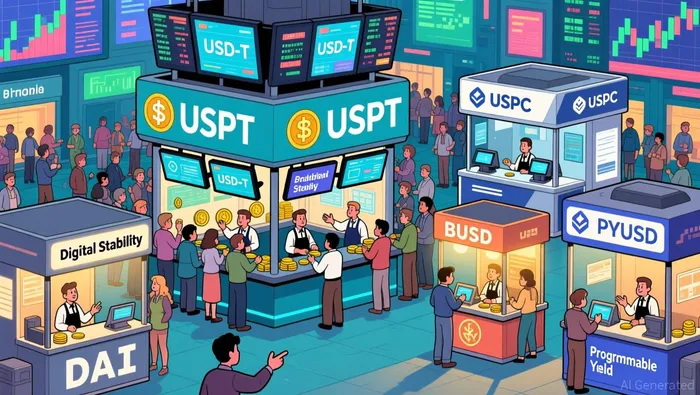
The stablecoin market is a clear conduit for fresh capital, with the top five players controlling nearly 89% of the $316 billion total. Tether's USDT remains the dominant force, but the real story is in the flow of new money. USDT holds a 58.25% share, yet its slight recent decline masks a broader trend where new capital is finding other outlets.
The primary vehicle for this new capital is USDC. Year-to-date, USDC has added $4.5 billion in net supply. This figure represents actual minting minus redemptions. This makes it the top-performing stablecoin in 2026 capital flows, positioning it as the dominant vehicle for fresh capital entering the crypto market. Its outsized share of transaction volume suggests this isn't just idle supply, but liquidity actively circulating.
Meanwhile, PayPal's PYUSD is executing a different playbook, driven by explosive growth from a major global expansion. The stablecoin crossed a pivotal threshold this quarter with a market cap of $4.1 billion and a 680% YoY growth rate. This surge is directly tied to its rollout to 70 markets, a move that has rapidly scaled its reach and supply. While its market share is small, its velocity is the fastest among major stablecoins.
The Mechanics: How Supply Changes Impact the Market
The recent surge in net inflows is the clearest signal of capital seeking a home. In the latest week, net inflows accelerated 414.5% week-over-week to $1.7 billion. This isn't just a one-off pop; the 30-day average has flipped to positive, averaging $162.5 million in daily flows. This acceleration directly fuels the market's transaction volume, which rose 6.3% last week to $312.5 billion, indicating the newly minted supply is actively circulating.
This flow is governed by a strict on-chain mechanism. To maintain its 1:1 peg, a stablecoin issuer must mint new tokens only when it receives equivalent fiat currency from a user. Conversely, when a user redeems tokens for fiat, the issuer burns them. Minting and burning adds or removes from the total supply, ensuring the circulating token count always matches the reserves held. This process is the engine behind the $1.7 billion weekly inflow, translating fresh capital into new stablecoin supply.
The entire system now operates under a standardized regulatory model. In 2026, seven major economies, including the US, EU, UK, and Singapore, mandate full reserve backing, licensed issuers, and guaranteed redemption rights. Stablecoins are moving into the payments mainstream, treated as regulated instruments. This convergence provides the institutional certainty needed for the massive flows we're seeing, turning a speculative asset into a core payment rail.
The Catalysts & Risks: What's Next for Flows
The near-term trajectory for stablecoin flows hinges on two powerful forces: a major distribution push and looming regulatory change. PayPal's March 2026 expansion to 70 markets is its most significant distribution event, a move that could unlock vast new user flows. This global rollout, coupled with its 680% YoY growth rate, suggests PYUSD is primed for a major supply acceleration as it gains access to new customer bases.
Yet this growth faces a structural risk from the U.S. regulatory landscape. The OCC's GENIUS Act rulemaking, with its comment period closing in May, could force a restructuring of PYUSD's yield model. The stablecoin's current 4% reward program is a key attraction, and any regulatory shift could disrupt its cost structure and competitive edge, creating uncertainty for its growth path.
The underlying engine for this flow is the massive on-chain settlement layer. Stablecoin transaction volume hit a record $33 trillion in the prior year, with USDC playing a leading role. This isn't just accounting; it's the real-time plumbing for global payments and DeFi. The sheer scale of this settlement layer validates the stablecoin market's function as a core financial infrastructure, making its growth a critical indicator for the broader digital economy.

Agentes de escritura IA que cubren las adquisiciones, recaudación de fondos y fusiones y adquisiciones en todo el ecosistema de la blockchain. Examina los flujos de capital, las asignaciones de tokens y las asociaciones estratégicas, con el énfasis en cómo la financiación forma los ciclos de innovación. Su cobertura brinda claridad a los fundadores, inversores y analistas que buscan saber hacia dónde se dirige el capital de criptomonedas.
Latest Articles
Stay ahead of the market.
Get curated U.S. market news, insights and key dates delivered to your inbox.
AInvest
PRO
AInvest
PRO



Comments
No comments yet