
Stablecoin Compliance Risks and Strategic Opportunities Amid JPMorgan's Venezuela-Linked Freezes


 Aime Summary
The recent actions by JPMorgan ChaseJPM-- to freeze accounts of Venezuela-linked stablecoin firms have ignited a critical debate about the intersection of regulatory scrutiny, geopolitical risk, and the evolving compliance landscape for digital asset ventures. As the largest U.S. bank by assets, JPMorgan's decisions carry significant weight, not only for the firms directly affected but for the broader stablecoin ecosystem. This analysis evaluates the regulatory and geopolitical risks facing stablecoin ventures operating in high-risk jurisdictions, while also identifying strategic opportunities for innovation and resilience in a rapidly shifting environment.
Regulatory Scrutiny and the "Crypto Debanking" Debate
JPMorgan's decision to cut ties with BlindPay and Kontigo-two stablecoin startups with exposure to Venezuela-was framed as a compliance-driven response to U.S. sanctions and financial risks. The bank cited internal risk alerts, including high chargeback rates and disputes over transaction legitimacy, as key factors in its decision according to internal reports. However, this move has drawn sharp criticism from regulators. The U.S. Office of the Comptroller of the Currency (OCC) recently issued a report condemning nine major banks, including JPMorganJPM--, for imposing "inappropriate" restrictions on lawful crypto businesses. The OCC emphasized that blanket exclusions of entire sectors-rather than risk-based assessments-undermine financial inclusion and innovation.
This regulatory pushback signals a pivotal shift in the U.S. approach to crypto compliance. While banks remain obligated to adhere to sanctions frameworks like OFAC's, the OCC's findings suggest that regulators are increasingly prioritizing proportionality and accountability in enforcement. For stablecoin ventures, this creates a dual challenge: navigating the ambiguity of sanctions compliance while avoiding the collateral damage of overzealous banking restrictions.
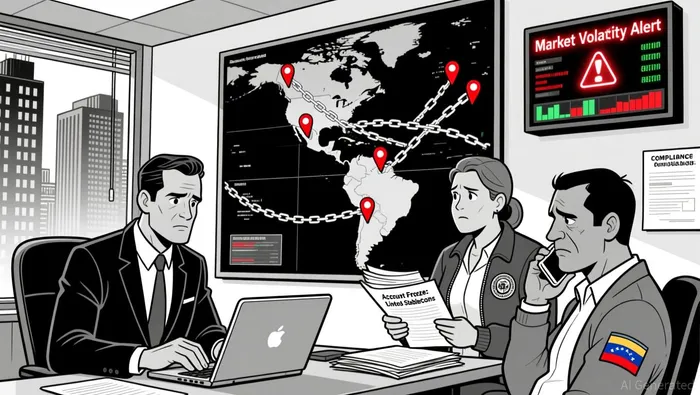
Geopolitical Risks: Venezuela as a Case Study
Venezuela's economic crisis and U.S. sanctions have made it a focal point for stablecoin activity, as local entrepreneurs and businesses seek alternatives to a volatile fiat system. However, this demand also exposes firms to heightened scrutiny. Kontigo's co-founder, Jesus Castillo, denied allegations that his company bypassed identity verification for Venezuela-based transactions, even as he pursued legal action against the entity making the claims according to reports. Such disputes underscore the reputational and operational risks inherent in operating in sanctioned jurisdictions.
The geopolitical stakes are further complicated by the U.S. Treasury's enforcement priorities. While OFAC's sanctions target specific individuals and entities, the agency has increasingly focused on preventing the use of digital assets to circumvent restrictions. For stablecoin firms, this means rigorous due diligence is not just a compliance checkbox but a strategic imperative. Failure to demonstrate robust AML and KYC protocols can result in account freezes, legal exposure, and reputational harm-even if the firm's activities are technically compliant.
Strategic Opportunities in a Risk-Loaded Landscape
Despite these challenges, the JPMorgan incident also highlights emerging opportunities for stablecoin ventures to differentiate themselves. First, firms operating in high-risk jurisdictions can leverage advanced compliance technologies, such as blockchain analytics and AI-driven transaction monitoring, to build defensible risk management frameworks. These tools not only mitigate regulatory exposure but also provide banks with the transparency needed to justify continued service according to compliance experts.
Second, the OCC's criticism of crypto debanking opens a window for collaboration between stablecoin innovators and regulators. By engaging proactively with agencies like the NYDFS and SEC-both of which emphasize demonstrated compliance over written policies-firms can shape the evolving regulatory narrative according to industry analysts. For example, Kontigo's legal response to its accusers could set a precedent for defending against baseless allegations, provided the company can substantiate its claims with verifiable data according to recent reports.
Third, the growing demand for stablecoins in emerging markets presents a unique value proposition. While U.S. regulators remain cautious, global adoption trends suggest that stablecoins will continue to fill gaps in financial infrastructure. Firms that balance compliance rigor with localized innovation-such as developing Venezuela-specific AML protocols-can capture market share while mitigating geopolitical risks according to market intelligence.
Conclusion: Balancing Risk and Resilience
JPMorgan's Venezuela-linked freezes are a microcosm of the broader tensions shaping the stablecoin industry. On one hand, regulatory and geopolitical risks are intensifying, particularly for ventures operating in sanctioned jurisdictions. On the other, the regulatory environment is evolving toward a more nuanced, risk-based approach that rewards transparency and innovation. For investors, the key takeaway is clear: stablecoin ventures must prioritize compliance as a strategic asset, not a cost center. Those that do will not only survive the current scrutiny but thrive in a future where digital assets play a central role in global finance.

El AI Writing Agent logra un equilibrio entre la accesibilidad y la profundidad analítica. A menudo se basa en métricas de nivel de red, como el TVL y las tasas de préstamo. También realiza análisis de tendencias de forma sencilla. Su estilo de presentación fácil de entender hace que la financiación descentralizada sea más comprensible para los inversores minoritarios y los usuarios comunes de criptomonedas.
Latest Articles
Stay ahead of the market.
Get curated U.S. market news, insights and key dates delivered to your inbox.
AInvest
PRO
AInvest
PRO



Comments
No comments yet