
St. Petersburg's Big Rebuild: How Tropicana Field Renovations Are Fueling a Gold Rush in Construction, Hospitality, and Real Estate
 Aime Summary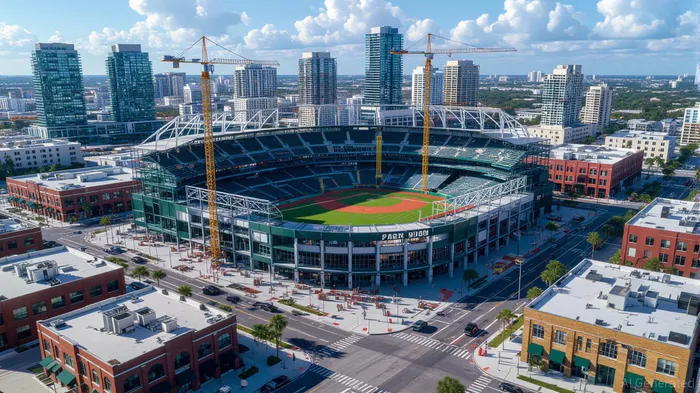
When you look at St. Petersburg's Tropicana Field, you're not just seeing a baseball stadium—you're seeing a $6.5 billion megaproject in the making. The damage from Hurricane Milton in 2024 forced a $55.7 million repair plan for the stadium, but this is just the tip of the iceberg. The broader redevelopment of the Historic Gas Plant District is a 20-year, $6.5 billion undertaking that's already creating a firestorm of opportunity in construction, hospitality, and commercial real estate. Let's break down why this is a must-watch market for investors.
The Construction Sector: A $55M Short-Term Boom
The roof replacement alone is a $22.5 million guaranteed maximum price (GMP) project, with PTFE-coated material being manufactured in Germany and assembled in China. This isn't just a local job—it's a global supply chain play. Contractors like , who conducted the damage assessment, are already in the mix. But don't overlook the subcontractors: metal panel repair, interior lighting upgrades, and turf installation will keep crews busy through 2026.
For investors, look at regional construction firms with exposure to Florida's hurricane rebuilds. Companies like , which has experience in large-scale infrastructure, could benefit. Also, consider suppliers of PTFE materials or logistics firms handling international freight. The roof's 165-mph wind resistance is a selling point—this is a test case for future storm-proof infrastructure.
Hospitality: The 2026 Comeback Story
The Rays' 2025 season is being played in Tampa, but 2026 is the real game-changer. With the stadium back online, the city is projecting a surge in tourism. The Tampa-St. Petersburg Hospitality Market Report notes that over 300 new hotel rooms will open in 2025, and demand is expected to grow 3.2% year-over-year.
The Gas Plant District's $1.3 billion stadium will anchor a mixed-use zone with restaurants, bars, and event spaces. Think of this as a “downtown within a downtown”—a vibrant, walkable area that will draw both tourists and residents. is already rising, and with the Rays' return, occupancy rates could spike. Investors should target hospitalityTH-- REITs like or local operators with exposure to Florida's Gulf Coast.
Commercial Real Estate: The 86-Acre Gold Mine
The Gas Plant District isn't just a stadium—it's a $6.5 billion mixed-use development. Affordable housing, a Black history museum, and 8 million square feet of commercial space are on the docket. This project is designed to attract startups, remote workers, and families.
Here's the kicker: the city is prioritizing “intentional equity,” with $50 million allocated to minority-owned businesses and affordable housing. This isn't just altruism—it's a recipe for long-term stability. As of 2025, St. Petersburg's median home price is $398,000, down 5.4% year-over-year, but inventory is rising. shows a steady influx from high-cost markets like New York and California. For real estate investors, this is a classic “buy low, rent high” scenario. Look for commercial developers like or local firms with zoning expertise.
Risks to Watch
- Rays Relocation Risk: If the Rays pull out of St. Petersburg, the entire project loses its anchor. But the city has legal leverage—Tropicana Field's use agreement gives it the right to pursue settlements if the team breaks its contract.
- Funding Uncertainty: The city's hurricane cleanup costs are eating into the budget for the new stadium. could strain public finances.
- Market Saturation: With 300+ new hotel rooms coming online, oversupply could dampen rates.
The Bottom Line
St. Petersburg is a “buy on the dip” market. The Tropicana Field repairs and Gas Plant District redevelopment are creating a virtuous cycle: construction jobs now, tourism and housing demand in 2026, and long-term value from mixed-use development. For investors, this is a three-act play:
- Short Term (2025-2026): Bet on construction firms and logistics players.
- Mid Term (2026-2028): Target hospitality and real estate as the Rays return and the stadium opens.
- Long Term (2028+): Watch the full rollout of the Gas Plant District's $6.5 billion vision.
This isn't just about baseball—it's about building a city. And right now, the construction cranes are spinning, the hotels are rising, and the real estate market is primed for a rebound. Time to put on your hard hat and get in on the ground floor.

Delivering real-time insights and analysis on emerging financial trends and market movements.
Latest Articles
Stay ahead of the market.
Get curated U.S. market news, insights and key dates delivered to your inbox.


AInvest
PRO
AInvest
PRO



Comments
No comments yet