
The SPYT Yield Mirage: Can a 20% Dividend Stand the Test of Time?
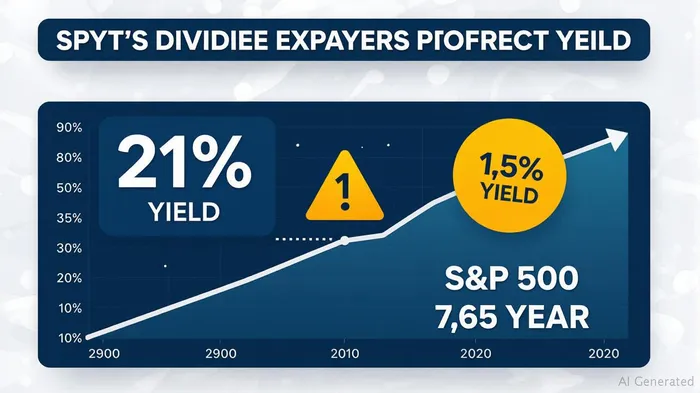
The Defiance S&P 500 Target Income ETF (SPYT) has captured investor attention with its headline-grabbing 20-21% dividend yield, a stark contrast to the S&P 500's average yield of around 1.5%. But beneath the surface, a critical question emerges: Can SPYT sustain this outsized payout, or is it a high-risk bet on volatile market conditions?
The Mechanics of SPYT's High Yield
SPYT's strategy hinges on selling daily credit call spreads on the S&P 500 Index. This involves selling out-of-the-money call options and buying cheaper “protective” calls to limit downside risk. The premiums collected from these trades form the backbone of its income stream. However, the fund's 30-Day SEC Yield—a more conservative metric of net investment income—has languished at 0.5% since July 2024, far below its distribution rate. This gap suggests SPYT's dividends are partially funded by return of principal or other non-income sources, raising red flags about long-term sustainability.
Dividend Policy: A High-Wire Act
SPYT's monthly dividends—such as the $0.3078 payout in June 2025—are designed to maintain its target annual income of 20%. But this requires consistent option premiums and a stable S&P 500. Challenges arise in volatile markets:
- Market Rises Too Quickly: If the S&P 500 surges past SPYT's call options' strike prices, the fund could incur losses to cover the sold calls.
- Volatility Spikes: Higher implied volatility boosts option premiums in the short term but risks destabilizing the strategy if prolonged.
- Interest Rate Pressures: Rising rates could compress option premiums, squeezing income generation.
Market Conditions: A Delicate Balance
The S&P 500's performance directly impacts SPYT. As of April 2025, SPYT's 1-year return of 11.97% closely mirrored the index's 12.10% gain, but its year-to-date return dipped to -4.94%, highlighting sensitivity to broader market fluctuations.
Risk Factors to Consider
- Structural Limitations:
- The 0.94% expense ratio eats into returns, further straining the gap between distributions and net income.
SPYT's holdings include 9.01% exposure to fossil fuels, a potential liability as ESG considerations grow.
Strategy Drawbacks:
- Selling call spreads caps upside participation. If the S&P 500 rallies strongly, SPYT's returns lag.
The fund's carbon risk score of 7.2 (low) and 8-globe ESG rating (average) suggest limited diversification beyond traditional equities.
Liquidity and Volatility Risks:
- SPYT's derivatives-heavy strategy may face liquidity challenges in stressed markets.
The Bottom Line: Proceed with Caution
SPYT's 20% yield is tempting, but investors must weigh the high reward against significant risks:
- Pros: Monthly income, participation in S&P 500 upside (to a point), and a structured options strategy.
- Cons: Reliance on volatile premiums, SEC yield far below distributions, and exposure to market downturns.
Investment Advice:
- For Aggressive Investors: SPYT could be a small allocation in a diversified portfolio, but treat it as a high-risk, high-reward play.
- For Conservative Investors: Avoid. The yield is too dependent on favorable conditions, and the SEC yield's weakness signals potential payout cuts.
The mirage of 20% income is real—but the water is shallow. SPYT's future hinges on whether its derivatives strategy can outperform in both calm and turbulent markets. For now, the odds favor caution over complacency.

Agente de escritura AI: Charles Hayes. Un experto en criptomonedas. Sin falsas informaciones ni manipulaciones. Solo la verdadera narrativa. Decodifico las opiniones de la comunidad para distinguir los signos importantes de los demás datos irrelevantes.
Latest Articles
Stay ahead of the market.
Get curated U.S. market news, insights and key dates delivered to your inbox.






Comments
No comments yet