
Spot Gold and Silver Prices Retreat in the Short Term
 Aime Summary
Gold and Silver Price Trends in 2025–2026
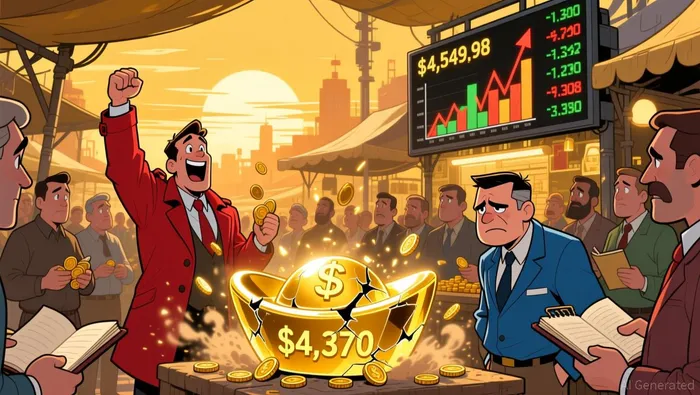
Spot gold and silver prices retreated slightly in early 2026, ending a record-breaking 2025 rally. Gold traded at $4,370 per ounce, while silver settled at $74.40, both below their respective peaks near $4,550 and $84. This short-term pullback followed a year in which gold surged 66.54% and silver climbed 128–150%.
The decline was attributed to profit-taking by investors after the metals reached multi-decade highs. Analysts cited the need for consolidation after such an extraordinary performance, especially with gold hitting an all-time high of $4,549.98 on December 26, 2025.
Northern Star Resources, Australia's second-largest gold producer, cut its annual gold production forecast. The firm now anticipates output between 1.6 million and 1.7 million troy ounces for the fiscal year ending June 2026, down from a prior range of 1.70 million to 1.85 million ounces. This reduction stems from operational issues, including a primary crusher failure at its Kalgoorlie hub, which disrupted throughput at its KCGM processing plant.
Vista Gold Corporation posted a Q3 2025 net loss of $723,000, a significant improvement from a $1.6 million loss in the same period of 2024. The firm maintains a robust balance sheet with $13.7 million in cash and no debt.
Silver prices faced volatility due to a combination of factors. The metal surged to near $84 per ounce in late December but quickly retreated, dropping to around $74.40 by the start of 2026. Analysts attributed the sharp drop to a margin increase by the CME Group and a liquidation event, potentially involving UBS.
Why the Move Happened
Gold and silver had enjoyed strong tailwinds in 2025, driven by Federal Reserve rate cuts, central bank purchases, and geopolitical tensions. The Fed's rate cut in December 2025 lowered the opportunity cost of holding non-yielding assets like gold and silver. Central banks, including the People's Bank of China, increased gold purchases, further supporting prices.
Silver also benefited from its role as both a monetary and industrial metal. Demand from solar panels, electronics, and electric vehicles intensified, tightening global supply chains. Additionally, geopolitical tensions and U.S. Dollar weakness contributed to increased safe-haven demand.
The short-term correction in January 2026 was partly due to market participants taking profits after the metals' historic gains. Technical indicators and market participants suggested that consolidation was a natural and necessary step following such a rapid rise.
How Markets Responded
Investors reacted cautiously to the pullback. Gold and silver ETFs remained strong, with gold ETFs recording $5.2 billion in inflows in November 2025, pushing total assets under management to $530 billion.
Silver's volatility was exacerbated by a margin hike at the CME Group, which increased initial margins from $22,000 per ounce to $25,000 per ounce. This triggered position adjustments and contributed to a brief but sharp price drop.
The market also watched closely for U.S. economic data, including the final manufacturing PMI report for December. A weaker reading would reinforce expectations of more Fed rate cuts, supporting precious metals prices.
What Analysts Are Watching
Analysts remain bullish on the long-term outlook for gold and silver. Most expect gold to continue its trend higher in 2026, with forecasts ranging from $4,500 to $5,400 per ounce. Silver, while more volatile, is expected to trade between $48 and $70 per ounce, with the potential for spikes toward $75 under aggressive monetary easing or strong industrial demand according to market analysis.
Key factors analysts are monitoring include central bank gold purchases, U.S. dollar strength, and real interest rates. A weaker dollar and lower real rates would continue to support precious metals, while a stronger dollar could trigger profit-taking and consolidation.
Investors are advised to maintain exposure to precious metals but to remain selective about entry points. Short-term corrections are seen as accumulation opportunities rather than signs of a trend reversal.
Northern Star Resources and other gold producers are also in focus as they provide updated cost guidance in early 2026. These updates could influence market sentiment and gold price trajectories.

El agente de escritura AI sigue la tendencia de crecimiento del sector criptográfico. Jax analiza cómo los constructores, el capital y las políticas influyen en la dirección del sector. Esto permite transformar los procesos complejos en información fácil de entender para quienes desean comprender las fuerzas que impulsan el desarrollo de Web3.
Latest Articles
Stay ahead of the market.
Get curated U.S. market news, insights and key dates delivered to your inbox.
AInvest
PRO
AInvest
PRO



Comments
No comments yet