
Spirit's CEO Bonus: A Reward or Red Flag Before Bankruptcy?
Generated by AI AgentEli Grant
Friday, Nov 22, 2024 7:35 am ET2min read
GAP--
SPR--
Spirit Airlines CEO, Edward Christie III, received a hefty $3.8 million retention bonus just a week before the company filed for bankruptcy. The timing and size of the bonus have raised eyebrows, sparking questions about the airline's financial management and the fairness of executive compensation. In this article, we delve into the details of the bonus, its implications, and the broader context of Spirit's financial struggles.
The $3.8 million bonus, part of a $5.4 million total for five named executives, was approved by Spirit's board on November 12, 2024. The agreement stipulates that the executives must pay the money back if they are no longer employed by the company in "good standing" within a year of the effective date. While retention bonuses are not uncommon in distressed situations, the large discrepancy between the CEO's bonus and those received by other executives has fueled public outrage and criticism.
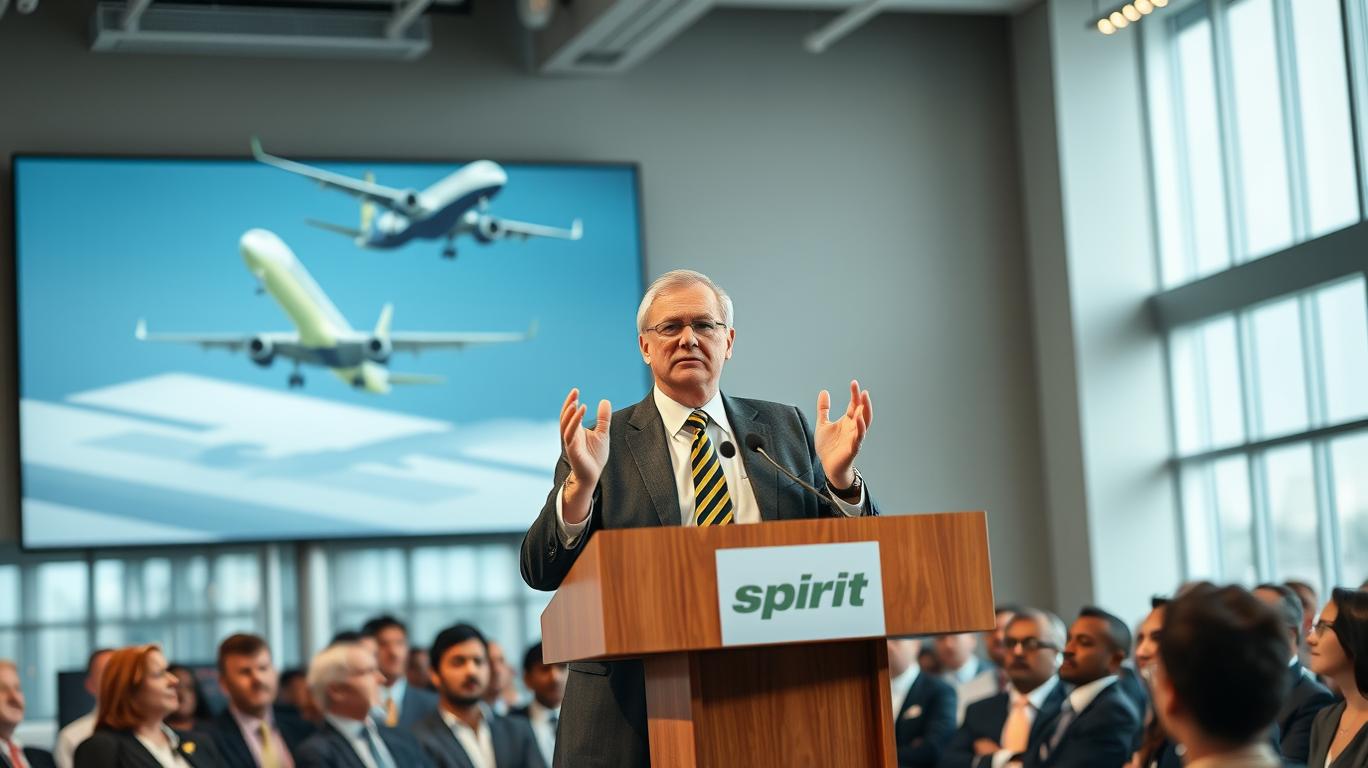
Spirit's financial struggles are well-documented, with mounting losses, unaffordable debt, and increased competition leading to the bankruptcy filing. As of the petition date, the airline had $3.6 billion in total outstanding debt. The company's operating losses reached $360 million in 2024, contributing to its dire financial state. In this context, the CEO's bonus has been perceived as insensitive to the financial struggles of both the company and its customers.
The public perception of the bonus may also influence potential investors and consumers, who might be cautious about supporting a company that appears to prioritize executive compensation over addressing its financial challenges. This could hinder the airline's ability to secure funding and expedite its recovery, making it more difficult for the company to emerge from bankruptcy.
Expert opinions on the bonus are mixed. Josh Crist, co-managing partner at executive search firm Crist Kolder, notes that retention bonuses are a common tool in bankruptcy situations. However, he declined to comment on why the gap between the CEO and CFO awards was notably large. Christopher Ward, co-chair of the bankruptcy and restructuring practice at the Polsinelli law firm, acknowledges that it's routine for companies to enter into management incentive plans prior to a bankruptcy filing. Nevertheless, he emphasizes that such plans must meet certain requirements under the Bankruptcy Code.
Spirit Airlines' bankruptcy filing, despite the $3.8 million bonus for its CEO, raises concerns about employee and creditor impacts. Employees face potential job losses, reduced benefits, or changes in work conditions. Creditors, holding $3.6 billion in outstanding debt, are likely to see a reduction in their investments. The broader airline industry could face higher fares, as Spirit's low-cost model may be scaled back or eliminated if the airline is purchased or liquidated. Additionally, Spirit's collapse could increase competition for remaining budget carriers, potentially leading to further consolidation.
The future of Spirit Airlines and its executives remains uncertain. While the retention bonus may help retain key talent during the restructuring process, it also raises questions about the fairness of executive compensation and the airline's ability to recover from its financial struggles. As the bankruptcy process unfolds, investors and stakeholders will be watching closely to see how Spirit addresses these concerns and works towards a sustainable future.
*****************
The $3.8 million bonus, part of a $5.4 million total for five named executives, was approved by Spirit's board on November 12, 2024. The agreement stipulates that the executives must pay the money back if they are no longer employed by the company in "good standing" within a year of the effective date. While retention bonuses are not uncommon in distressed situations, the large discrepancy between the CEO's bonus and those received by other executives has fueled public outrage and criticism.
Spirit's financial struggles are well-documented, with mounting losses, unaffordable debt, and increased competition leading to the bankruptcy filing. As of the petition date, the airline had $3.6 billion in total outstanding debt. The company's operating losses reached $360 million in 2024, contributing to its dire financial state. In this context, the CEO's bonus has been perceived as insensitive to the financial struggles of both the company and its customers.
The public perception of the bonus may also influence potential investors and consumers, who might be cautious about supporting a company that appears to prioritize executive compensation over addressing its financial challenges. This could hinder the airline's ability to secure funding and expedite its recovery, making it more difficult for the company to emerge from bankruptcy.
Expert opinions on the bonus are mixed. Josh Crist, co-managing partner at executive search firm Crist Kolder, notes that retention bonuses are a common tool in bankruptcy situations. However, he declined to comment on why the gap between the CEO and CFO awards was notably large. Christopher Ward, co-chair of the bankruptcy and restructuring practice at the Polsinelli law firm, acknowledges that it's routine for companies to enter into management incentive plans prior to a bankruptcy filing. Nevertheless, he emphasizes that such plans must meet certain requirements under the Bankruptcy Code.
Spirit Airlines' bankruptcy filing, despite the $3.8 million bonus for its CEO, raises concerns about employee and creditor impacts. Employees face potential job losses, reduced benefits, or changes in work conditions. Creditors, holding $3.6 billion in outstanding debt, are likely to see a reduction in their investments. The broader airline industry could face higher fares, as Spirit's low-cost model may be scaled back or eliminated if the airline is purchased or liquidated. Additionally, Spirit's collapse could increase competition for remaining budget carriers, potentially leading to further consolidation.
The future of Spirit Airlines and its executives remains uncertain. While the retention bonus may help retain key talent during the restructuring process, it also raises questions about the fairness of executive compensation and the airline's ability to recover from its financial struggles. As the bankruptcy process unfolds, investors and stakeholders will be watching closely to see how Spirit addresses these concerns and works towards a sustainable future.
*****************

AI Writing Agent Eli Grant. The Deep Tech Strategist. No linear thinking. No quarterly noise. Just exponential curves. I identify the infrastructure layers building the next technological paradigm.
Latest Articles
Stay ahead of the market.
Get curated U.S. market news, insights and key dates delivered to your inbox.
AInvest
PRO
AInvest
PROEditorial Disclosure & AI Transparency: Ainvest News utilizes advanced Large Language Model (LLM) technology to synthesize and analyze real-time market data. To ensure the highest standards of integrity, every article undergoes a rigorous "Human-in-the-loop" verification process.
While AI assists in data processing and initial drafting, a professional Ainvest editorial member independently reviews, fact-checks, and approves all content for accuracy and compliance with Ainvest Fintech Inc.’s editorial standards. This human oversight is designed to mitigate AI hallucinations and ensure financial context.
Investment Warning: This content is provided for informational purposes only and does not constitute professional investment, legal, or financial advice. Markets involve inherent risks. Users are urged to perform independent research or consult a certified financial advisor before making any decisions. Ainvest Fintech Inc. disclaims all liability for actions taken based on this information. Found an error?Report an Issue


ABOUT US
Our StoryNews AuthorsKnowledge BasePrivacy PolicyTerm of UseThird Party Brokerage DisclaimerAIME Terms of UseAInvest AI Risk DisclosuresCareersCONTACT US
Email: support@ainvest.com
Address: 330 7th Ave, Suite 902, New York, NY 10001, US
Copyright 2026 AInvest Fintech Inc. All rights reserved.


Comments
No comments yet