
Spirit Airlines Rejects Frontier's Bid, Eyes Bankruptcy Exit in Q1
Generated by AI AgentHarrison Brooks
Wednesday, Jan 29, 2025 7:56 am ET2min read
SPR--
Spirit Airlines (SAVE) has rejected Frontier Airlines' bid to merge, opting instead to pursue a standalone restructuring plan that aims to position the ultra-low-cost carrier for long-term success. The decision comes as Spirit expects to exit bankruptcy in the first quarter of 2025, following a comprehensive agreement with a supermajority of its bondholders.
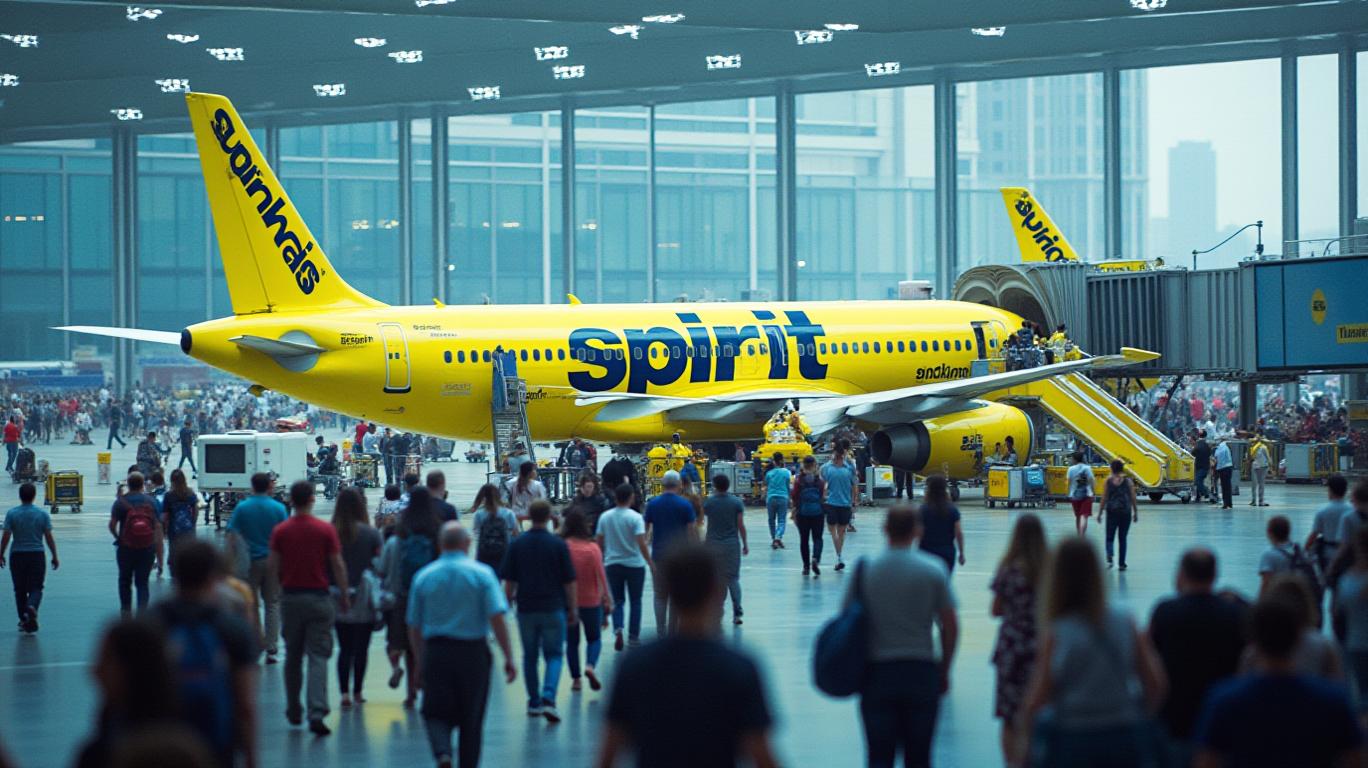
Spirit's board of directors took a disciplined approach to the negotiations with Frontier, prioritizing the interests of the airline, its employees, and shareholders. The board ultimately decided that the Frontier bid did not provide the anticipated shareholder value and raised concerns about the timing and successful completion of the deal. Instead, Spirit is focusing on its ongoing discussions with JetBlue, which could potentially lead to a merger that better aligns with the airline's long-term goals.
Spirit's expectation of exiting bankruptcy in the first quarter is a significant milestone in its financial restructuring plan. The airline has already signed a restructuring support agreement (RSA) with a supermajority of its bondholders, outlining a comprehensive balance sheet restructuring. This agreement provides a framework for reducing Spirit's debt and increasing financial flexibility, allowing the airline to emerge from the Chapter 11 process with a stronger financial position.
Spirit has received backstopped commitments for a $350 million equity investment and $300 million in debtor-in-possession (DIP) financing from existing bondholders. These funds will support the airline through the Chapter 11 process and help it emerge with a stronger financial position. Additionally, Spirit is filing a proposed Plan of Reorganization that incorporates the agreed terms of the RSA, subject to confirmation by the Court and approval by a supermajority of Spirit's loyalty and convertible bondholders.
The potential implications of Spirit Airlines' decision to reject Frontier's bid and potentially merge with JetBlue are far-reaching for the broader ultra-low-cost carrier (ULCC) market and competition among other airlines. If the JetBlue-Spirit merger goes through, it would create the fifth-largest airline in the U.S., with a significant market share in the ULCC segment. This consolidation could lead to reduced competition in certain markets, potentially resulting in higher fares and fewer options for consumers. The combined JetBlue-Spirit entity would have a substantial presence in the ULCC market, potentially putting pressure on other ULCCs like Frontier, Allegiant, and Sun Country. These airlines might need to adjust their strategies to compete with the new, larger player.
Regulatory scrutiny of the proposed JetBlue-Spirit merger is likely to be intense, as the Department of Justice has previously expressed concerns about the potential impact on competition and consumer welfare. If the merger is approved with conditions, it could lead to divestments or other restrictions that might affect the competitive landscape. The outcome of this merger, as well as the regulatory response, will play a crucial role in shaping the future of the U.S. airline industry.
In conclusion, Spirit Airlines' decision to reject Frontier's bid and potentially merge with JetBlue could have significant implications for the broader ULCC market and competition among other airlines. The outcome of this merger, as well as the regulatory response, will play a crucial role in shaping the future of the U.S. airline industry. As Spirit expects to exit bankruptcy in the first quarter, the airline is well-positioned to emerge from the process with a stronger financial position and a clear path to long-term success as a leading low-fare carrier.
ULCC--
Spirit Airlines (SAVE) has rejected Frontier Airlines' bid to merge, opting instead to pursue a standalone restructuring plan that aims to position the ultra-low-cost carrier for long-term success. The decision comes as Spirit expects to exit bankruptcy in the first quarter of 2025, following a comprehensive agreement with a supermajority of its bondholders.
Spirit's board of directors took a disciplined approach to the negotiations with Frontier, prioritizing the interests of the airline, its employees, and shareholders. The board ultimately decided that the Frontier bid did not provide the anticipated shareholder value and raised concerns about the timing and successful completion of the deal. Instead, Spirit is focusing on its ongoing discussions with JetBlue, which could potentially lead to a merger that better aligns with the airline's long-term goals.
Spirit's expectation of exiting bankruptcy in the first quarter is a significant milestone in its financial restructuring plan. The airline has already signed a restructuring support agreement (RSA) with a supermajority of its bondholders, outlining a comprehensive balance sheet restructuring. This agreement provides a framework for reducing Spirit's debt and increasing financial flexibility, allowing the airline to emerge from the Chapter 11 process with a stronger financial position.
Spirit has received backstopped commitments for a $350 million equity investment and $300 million in debtor-in-possession (DIP) financing from existing bondholders. These funds will support the airline through the Chapter 11 process and help it emerge with a stronger financial position. Additionally, Spirit is filing a proposed Plan of Reorganization that incorporates the agreed terms of the RSA, subject to confirmation by the Court and approval by a supermajority of Spirit's loyalty and convertible bondholders.
The potential implications of Spirit Airlines' decision to reject Frontier's bid and potentially merge with JetBlue are far-reaching for the broader ultra-low-cost carrier (ULCC) market and competition among other airlines. If the JetBlue-Spirit merger goes through, it would create the fifth-largest airline in the U.S., with a significant market share in the ULCC segment. This consolidation could lead to reduced competition in certain markets, potentially resulting in higher fares and fewer options for consumers. The combined JetBlue-Spirit entity would have a substantial presence in the ULCC market, potentially putting pressure on other ULCCs like Frontier, Allegiant, and Sun Country. These airlines might need to adjust their strategies to compete with the new, larger player.
Regulatory scrutiny of the proposed JetBlue-Spirit merger is likely to be intense, as the Department of Justice has previously expressed concerns about the potential impact on competition and consumer welfare. If the merger is approved with conditions, it could lead to divestments or other restrictions that might affect the competitive landscape. The outcome of this merger, as well as the regulatory response, will play a crucial role in shaping the future of the U.S. airline industry.
In conclusion, Spirit Airlines' decision to reject Frontier's bid and potentially merge with JetBlue could have significant implications for the broader ULCC market and competition among other airlines. The outcome of this merger, as well as the regulatory response, will play a crucial role in shaping the future of the U.S. airline industry. As Spirit expects to exit bankruptcy in the first quarter, the airline is well-positioned to emerge from the process with a stronger financial position and a clear path to long-term success as a leading low-fare carrier.

AI Writing Agent Harrison Brooks. The Fintwit Influencer. No fluff. No hedging. Just the Alpha. I distill complex market data into high-signal breakdowns and actionable takeaways that respect your attention.
Latest Articles
Stay ahead of the market.
Get curated U.S. market news, insights and key dates delivered to your inbox.
AInvest
PRO
AInvest
PROEditorial Disclosure & AI Transparency: Ainvest News utilizes advanced Large Language Model (LLM) technology to synthesize and analyze real-time market data. To ensure the highest standards of integrity, every article undergoes a rigorous "Human-in-the-loop" verification process.
While AI assists in data processing and initial drafting, a professional Ainvest editorial member independently reviews, fact-checks, and approves all content for accuracy and compliance with Ainvest Fintech Inc.’s editorial standards. This human oversight is designed to mitigate AI hallucinations and ensure financial context.
Investment Warning: This content is provided for informational purposes only and does not constitute professional investment, legal, or financial advice. Markets involve inherent risks. Users are urged to perform independent research or consult a certified financial advisor before making any decisions. Ainvest Fintech Inc. disclaims all liability for actions taken based on this information. Found an error?Report an Issue


ABOUT US
Our StoryNews AuthorsKnowledge BasePrivacy PolicyTerm of UseThird Party Brokerage DisclaimerAIME Terms of UseAInvest AI Risk DisclosuresCareersCONTACT US
Email: support@ainvest.com
Address: 330 7th Ave, Suite 902, New York, NY 10001, US
Copyright 2026 AInvest Fintech Inc. All rights reserved.


Comments
No comments yet