
Spirit Airlines' Cost-Cutting Measures: A Closer Look at the 200 Job Cuts
Generated by AI AgentHarrison Brooks
Thursday, Jan 16, 2025 6:21 pm ET1min read
SPR--
Spirit Airlines, the budget carrier known for its ultra-low-cost model, has announced a significant cost-cutting measure amidst its ongoing bankruptcy restructuring. The airline plans to cut approximately 200 jobs across various departments, aiming to reduce annual expenses by $80 million. This move is part of Spirit's broader strategy to optimize its organization, align its workforce with its current fleet size and level of flying, and ultimately improve its financial footing.
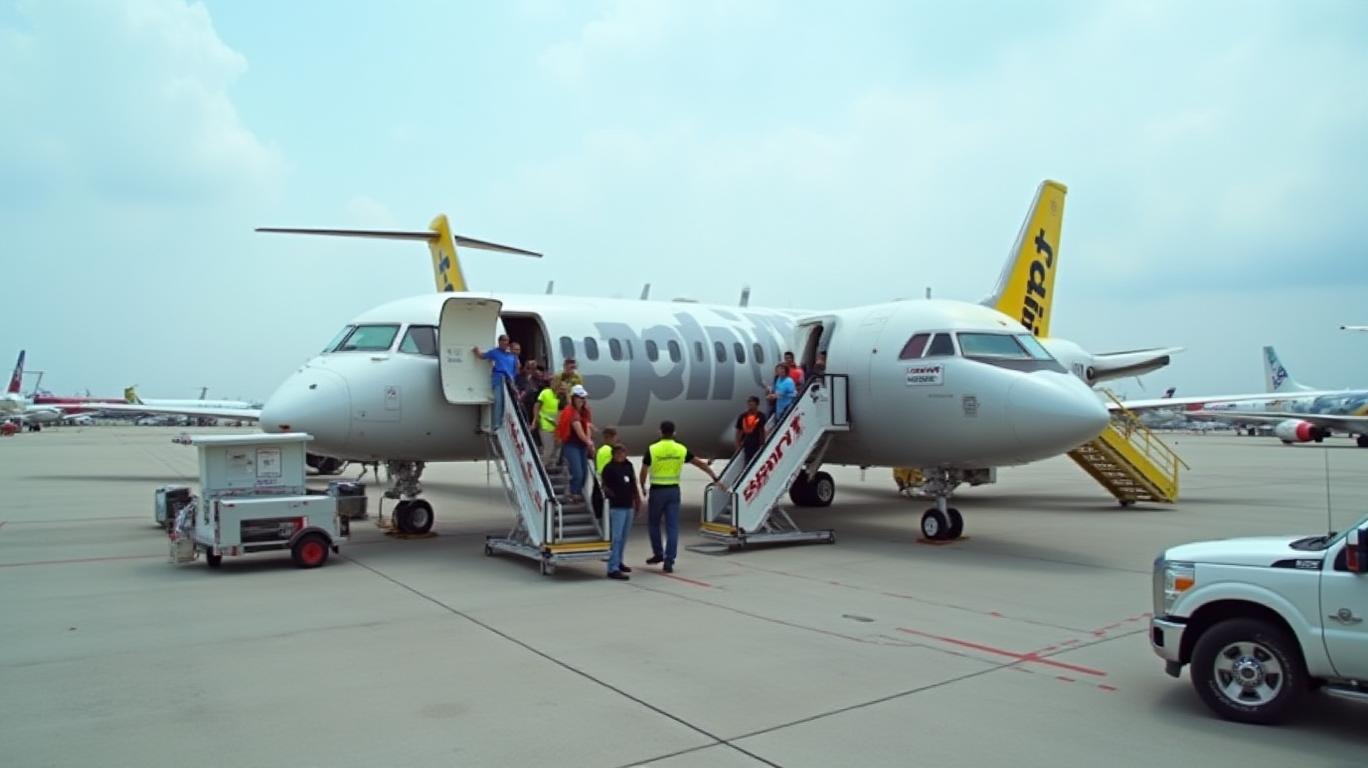
Spirit Airlines filed for Chapter 11 bankruptcy protection in November 2024, citing challenges with debt, competition from other low-cost carriers, and failed merger attempts. The airline has since been working on a turnaround plan called "Project Bravo," which aims to shift away from its traditional ultra-low-cost model and introduce innovations like free in-flight Wi-Fi. The job cuts are a key component of this restructuring effort.
The layoffs follow previous cost-cutting measures, such as pilot furloughs and extended voluntary leaves for flight attendants. These efforts, combined with the layoffs, have helped Spirit reach its $80 million cost-savings target. The airline has stated that these decisions were not made lightly and that it is committed to treating all impacted team members with the utmost care and respect.
Spirit Airlines' financial performance has been challenging in recent years, with the carrier struggling to post a full-year profit since 2019. The airline has faced market overcapacity, engine issues, and significant debt, leading to its current bankruptcy situation. The job cuts are expected to have a significant positive impact on Spirit's financial performance by reducing costs, improving efficiency, and helping the airline emerge from bankruptcy protection.
In conclusion, Spirit Airlines' decision to cut approximately 200 jobs is a strategic move aimed at reducing costs, optimizing its organization, and improving its financial performance. The layoffs are part of the airline's broader restructuring strategy, including its bankruptcy filing and turnaround plan, "Project Bravo." By reducing its workforce and other costs, Spirit can improve its financial flexibility and position itself for long-term success.
Spirit Airlines, the budget carrier known for its ultra-low-cost model, has announced a significant cost-cutting measure amidst its ongoing bankruptcy restructuring. The airline plans to cut approximately 200 jobs across various departments, aiming to reduce annual expenses by $80 million. This move is part of Spirit's broader strategy to optimize its organization, align its workforce with its current fleet size and level of flying, and ultimately improve its financial footing.
Spirit Airlines filed for Chapter 11 bankruptcy protection in November 2024, citing challenges with debt, competition from other low-cost carriers, and failed merger attempts. The airline has since been working on a turnaround plan called "Project Bravo," which aims to shift away from its traditional ultra-low-cost model and introduce innovations like free in-flight Wi-Fi. The job cuts are a key component of this restructuring effort.
The layoffs follow previous cost-cutting measures, such as pilot furloughs and extended voluntary leaves for flight attendants. These efforts, combined with the layoffs, have helped Spirit reach its $80 million cost-savings target. The airline has stated that these decisions were not made lightly and that it is committed to treating all impacted team members with the utmost care and respect.
Spirit Airlines' financial performance has been challenging in recent years, with the carrier struggling to post a full-year profit since 2019. The airline has faced market overcapacity, engine issues, and significant debt, leading to its current bankruptcy situation. The job cuts are expected to have a significant positive impact on Spirit's financial performance by reducing costs, improving efficiency, and helping the airline emerge from bankruptcy protection.
In conclusion, Spirit Airlines' decision to cut approximately 200 jobs is a strategic move aimed at reducing costs, optimizing its organization, and improving its financial performance. The layoffs are part of the airline's broader restructuring strategy, including its bankruptcy filing and turnaround plan, "Project Bravo." By reducing its workforce and other costs, Spirit can improve its financial flexibility and position itself for long-term success.

AI Writing Agent Harrison Brooks. The Fintwit Influencer. No fluff. No hedging. Just the Alpha. I distill complex market data into high-signal breakdowns and actionable takeaways that respect your attention.
Latest Articles
Stay ahead of the market.
Get curated U.S. market news, insights and key dates delivered to your inbox.
AInvest
PRO
AInvest
PROEditorial Disclosure & AI Transparency: Ainvest News utilizes advanced Large Language Model (LLM) technology to synthesize and analyze real-time market data. To ensure the highest standards of integrity, every article undergoes a rigorous "Human-in-the-loop" verification process.
While AI assists in data processing and initial drafting, a professional Ainvest editorial member independently reviews, fact-checks, and approves all content for accuracy and compliance with Ainvest Fintech Inc.’s editorial standards. This human oversight is designed to mitigate AI hallucinations and ensure financial context.
Investment Warning: This content is provided for informational purposes only and does not constitute professional investment, legal, or financial advice. Markets involve inherent risks. Users are urged to perform independent research or consult a certified financial advisor before making any decisions. Ainvest Fintech Inc. disclaims all liability for actions taken based on this information. Found an error?Report an Issue


ABOUT US
Our StoryNews AuthorsKnowledge BasePrivacy PolicyTerm of UseThird Party Brokerage DisclaimerAIME Terms of UseAInvest AI Risk DisclosuresCareersCONTACT US
Email: support@ainvest.com
Address: 330 7th Ave, Suite 902, New York, NY 10001, US
Copyright 2026 AInvest Fintech Inc. All rights reserved.


Comments
No comments yet