
Sphere Entertainment Expands Immersive Model: Maryland Venue Could Reshape Regional Tourism
 Aime Summary
Sphere Entertainment plans to build a 6,000-seat Sphere at National Harbor in Maryland, modeled after its Las Vegas venue.
- The project involves public and private incentives totaling about $200 million and is expected to generate more than $1 billion in annual economic impact.
- The Maryland SphereSPHR-- will feature immersive technologies including a 16K x 16K interior display, haptic seating, and 4D effects.
- The development is contingent on final agreements and approvals and is part of Sphere's strategy to scale its immersive entertainment model to key cities.
- Sphere's Las Vegas venue recently topped Billboard's 2025 list of top-grossing venues.
The entertainment industry is undergoing a dramatic transformation, and Sphere Entertainment is taking a bold step toward redefining how audiences experience live performances and immersive content. Earlier this month, the company announced plans to build a second Sphere venue in National Harbor, Maryland—a move that signals both ambition and a growing demand for high-tech, experiential entertainment. The venue is modeled after the groundbreaking Las Vegas Sphere but designed for a smaller audience and tailored to the local market. This announcement comes at a time when the entertainment sector is exploring new formats to attract visitors, especially in a post-pandemic world where novelty and tech-forward experiences are in high demand.
Why Is Sphere Building a Smaller "Sphere" in Maryland?
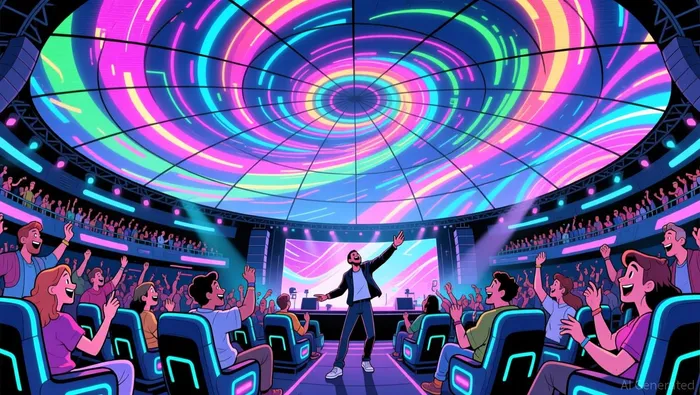
Sphere Entertainment has made it clear that the Maryland venue is not just a satellite of its Las Vegas location—it's a strategic step to expand its immersive model to other key markets. The National Harbor site will feature a 6,000-seat capacity, which is significantly smaller than the Las Vegas venue's 18,000-seat capacity. This reduction reflects a deliberate move to test how the immersive entertainment model can be adapted to different scales and demographics. The Maryland Sphere will include the company's signature technologies, including the Exosphere LED display, 16K x 16K interior screens, and advanced 4D environmental effects.
From an investor perspective, this approach is both bold and calculated. By scaling down the venue, Sphere is not only reducing upfront costs but also experimenting with a new business model that could be replicated in other mid-sized cities. This could mean lower capital expenditures, faster returns, and a better fit for urban environments where land and zoning are major challenges. For now, the Maryland project is being developed in collaboration with state and local governments, who are providing incentives and support to bring the vision to life. That kind of partnership is a strong indicator that the project is seen as a major economic driver and not just a niche entertainment venture.
What Does This Mean for the Las Vegas Sphere's Long-Term Outlook?
While the Maryland project is still in the planning and approval stages, its announcement could have a ripple effect on Sphere's stock and broader market perception of its business model. The Las Vegas Sphere has already proven its appeal, notching the top spot on Billboard's list of top-grossing venues in 2025. The success of that venue has provided Sphere with the proof of concept it needed to justify expansion. By rolling out a smaller version in Maryland, the company is effectively testing a new revenue stream that could eventually be replicated in other U.S. cities and globally.
For investors, the Maryland project is more than a one-off event. It's a potential template for how Sphere will grow in the coming years. If the model works—and generates the kind of economic impact the company is projecting (over $1 billion annually in Maryland)—then the stock could benefit from a broader rollout. This is especially relevant as the company has also hinted at similar plans in other regions, including a proposed venue in Abu Dhabi. What this means is that Sphere is no longer just building venues—it's building an ecosystem of immersive entertainment that could change how people consume live content.
How Could the Maryland Sphere Impact the Broader Entertainment Industry?
The entertainment industry is always looking for the next big thing, and immersive experiences are fast becoming a major player in that space. The Maryland Sphere, while smaller in scale, brings the same level of technological sophistication as its Las Vegas counterpart. That means it could set a new standard for what audiences expect from live events, especially in the realm of concerts, brand activations, and large-scale storytelling. The venue's advanced features—like 4D environmental effects and haptic seating—position it not just as a concert venue but as a full-scale entertainment experience.
For local governments and developers, the Sphere represents a major economic opportunity. Maryland's leaders have already voiced strong support for the project, emphasizing its potential to create thousands of jobs and boost tourism. The state is investing heavily in this project, which underscores its belief in the long-term viability of the Sphere concept. That kind of political and economic backing is a powerful signal to investors, suggesting that the project is not just a business venture but a broader development strategy.
What to Watch Next: Key Milestones for Investors
While the Maryland Sphere is still in the early stages, there are a few key milestones that investors should keep an eye on. First, the finalization of agreements and approvals from local and state authorities. These deals are crucial for securing the necessary incentives and ensuring the project moves forward as planned. Second, the timing of construction and the eventual opening date. While no official timeline has been released, delays in either of these areas could affect investor sentiment.
Beyond the Maryland project, Sphere is also expected to continue expanding its global footprint. The company has already teased plans for a third venue in Abu Dhabi, which could further validate its business model and open new revenue streams. For now, the Maryland Sphere is a key experiment in how immersive entertainment can be adapted to different markets. If it succeeds, it could pave the way for a new era of entertainment venues that blend technology, storytelling, and audience engagement in ways we've never seen before.
In the coming months, the success or failure of this project could shape how investors view Sphere Entertainment and the broader immersive entertainment sector. For now, the company is betting big on a vision that could redefine live entertainment for years to come.

Stay ahead of the market.
Get curated U.S. market news, insights and key dates delivered to your inbox.
AInvest
PRO
AInvest
PRO



Comments
No comments yet