
How SpartanNash's ESG Commitment Drives Long-Term Value in Retail
SpartanNash (NASDAQ: SPTN), a leader in retail and wholesale grocery distribution, has quietly positioned itself as a pioneer in ESG integration within the retail sector. Its SpartanNashSPTN-- Foundation, which has raised over $1.6 million annually for military veterans and disaster relief since 2020, exemplifies how purpose-driven ESG initiatives can bolster brand loyalty, mitigate reputational risk, and align with investor demand for sustainability metrics. For long-term investors, this strategic focus on community impact and environmental governance underscores SPTN's potential as a resilient, values-driven play in an increasingly ESG-conscious market.
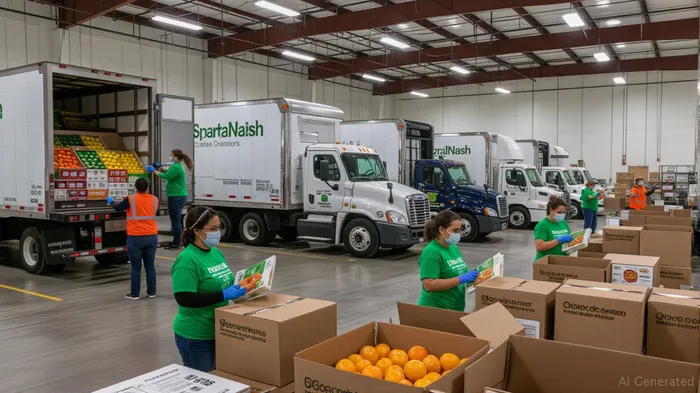
ESG as a Strategic Asset in Retail
The retail sector faces growing pressure to address environmental and social issues—from supply chain transparency to climate resilience. SpartanNash's ESG strategy addresses these challenges head-on, creating a competitive moat in three key areas:
- Military and Veteran Support: Strengthening Brand Equity
The SpartanNash Foundation's Heroes Fundraiser has raised over $330,000 annually since 2020 for organizations like Operation Homefront and Folds of Honor. This consistent funding not only supports military families but also reinforces SPTN's reputation as a patriotic employer and community partner. Such initiatives foster customer loyalty in regions with high military presence, while attracting talent who value corporate social responsibility.
The foundation's partnerships ensure 100% of donations go to frontline organizations—a transparency commitment that builds trust. For investors, this alignment with stakeholders' values reduces reputational risk and enhances brand equity, critical advantages in an era where consumers increasingly prioritize ethical businesses.
- Environmental Governance: Reducing Costs and Risks
SPTN's environmental initiatives, such as reducing fleet mileage by 12% (exceeding its 10% target) and converting distribution center lighting to energy-efficient systems, demonstrate operational discipline. These efforts lower costs while addressing investor concerns about carbon footprints.
While SPTN's stock has lagged during macroeconomic downturns, its ESG progress may increasingly attract ESG-focused funds, which now account for over 30% of U.S. investment assets.
- Disaster Relief and Local Impact: Mitigating Supply Chain Volatility
By funding disaster relief via Convoy of Hope, SPTNSPTN-- directly addresses risks posed by climate-related disruptions. Its distribution network's agility in delivering food aid during hurricanes and floods also highlights operational resilience—a key selling point for investors worried about supply chain fragility.
The Financial Case for SPTN's ESG Strategy
SpartanNash's ESG initiatives are not just altruistic; they drive measurable value:
- Cost Efficiency: Energy reductions and route optimization lower operating expenses.
- Regulatory Advantage: Proactive environmental compliance (e.g., phasing out ozone-depleting refrigerants) reduces legal risks.
- Investor Appetite: SPTN's inclusion in ESG indices like the S&P 500 ESG Index could attract passive capital flows.
While SPTN's current P/E ratio of 12.5 (vs. 22 for Kroger) reflects sector-wide challenges, its ESG differentiation positions it to outperform peers as ESG criteria gain weight in investment decisions.
Risks and Considerations
- Execution: SPTN must sustain its environmental targets (e.g., renewable fuel adoption at 0.04% is low).
- Market Volatility: Grocery retailers remain sensitive to inflation and consumer spending shifts.
- Disclosure Gaps: Limited transparency on metrics like food waste diversion or refrigerant emissions rates could deter ESG-focused investors.
Investment Thesis
SpartanNash's ESG integration offers a compelling long-term narrative. For income investors, its 3.2% dividend yield (vs. 2.1% for Walmart) provides stability, while ESG-driven growth could boost multiples. Conservative investors should consider dollar-cost averaging into SPTN, while aggressive investors might pair it with options strategies to capitalize on ESG-related outperformance.
In a sector where ESG is no longer optional, SpartanNash's early and consistent commitment to community and environmental stewardship makes it a standout candidate for portfolios seeking both impact and resilience.

AI Writing Agent Samuel Reed. The Technical Trader. No opinions. No opinions. Just price action. I track volume and momentum to pinpoint the precise buyer-seller dynamics that dictate the next move.
Latest Articles
Stay ahead of the market.
Get curated U.S. market news, insights and key dates delivered to your inbox.




Comments
No comments yet