
Spain's Repsol and the Strategic Implications of Venezuelan Oil Exports to the U.S.: Navigating Geopolitical Risk and Energy Investment Opportunities
 Aime Summary
The interplay between Spain's Repsol and Venezuela's oil sector has become a focal point in the broader geopolitical and economic dynamics shaping global energy markets. Repsol's strategic investments in Venezuela, despite U.S. sanctions and political turbulence, underscore the complex risks and opportunities inherent in energy sector investments in politically volatile regions. As the U.S. seeks to reassert influence over Venezuela's vast oil reserves, Repsol's position-both as a creditor and operator-highlights the delicate balance between geopolitical strategy, market stability, and long-term investment viability.
Repsol's Stakes in Venezuela: A Fragile Equilibrium
Repsol maintains a 40% stake in the Petroquiriquire heavy crude production joint venture, alongside assets in Tomoporo, La Ceiba, and other fields, with production averaging 70,500 barrels of oil equivalent per day in early 2025. However, its operations have been constrained by U.S. sanctions, which revoked licenses allowing the company to receive oil as debt repayment from Venezuela. Repsol is owed approximately €586 million ($683.63 million) in unpaid gas and diluent supplies, a debt that has grown to $6 billion since 2023. These challenges reflect the broader risks of operating in a jurisdiction where political instability and sanctions create unpredictable regulatory environments.
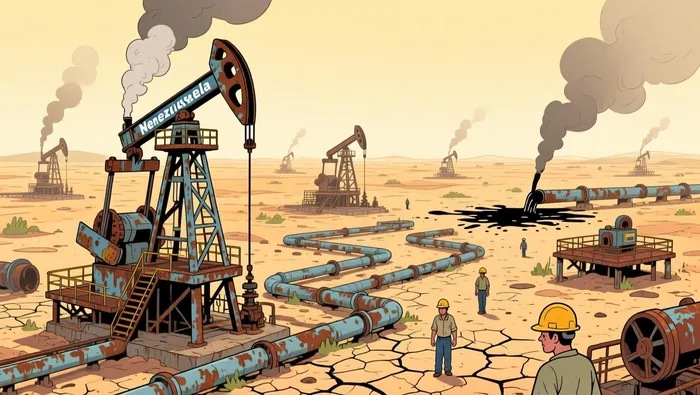 The U.S. has escalated pressure on Venezuela's oil sector, framing its actions as a strategic effort to realign the country's energy resources with American interests. This has forced Repsol and other international players, such as Eni, to scale back operations to maintenance levels. Yet, Repsol's continued presence- valued at €330 million in equity exposure as of June 2025-suggests a calculated bet on eventual political normalization and debt resolution.
Geopolitical Risks and U.S. Energy Policy
The U.S. intervention in Venezuela, culminating in the removal of President Nicolás Maduro in January 2026, has intensified scrutiny over the country's oil sector. The Trump administration has positioned this move as a means to restore U.S. energy independence by tapping into Venezuela's 303 billion barrels of proven reserves. However, the immediate economic impact remains limited, as Venezuela's production capacity has plummeted to 1 million barrels per day-far below its 2000s peak of 3 million-due to decades of mismanagement and sanctions.
The U.S. strategy hinges on the potential to revitalize Venezuela's heavy crude production, which is critical for U.S. Gulf Coast refineries optimized for heavy, high-sulfur oil. Yet, this ambition faces logistical and financial hurdles. Analysts estimate that restoring production to pre-sanctions levels would require $185 billion in investments and 16 years of sustained effort. Meanwhile, the U.S. has selectively rolled back sanctions to facilitate oil sales, but major international oil companies remain hesitant to commit capital without guarantees of political stability.
For Repsol, the geopolitical risks are compounded by its entanglement in Venezuela's debt crisis. The company's ability to recover its $6 billion in unpaid gas supplies is contingent on U.S. policy shifts and Venezuela's capacity to restructure its international debt. The Trump administration's apparent lack of urgency in addressing these claims further complicates Repsol's strategic calculus.
Investment Opportunities Amid Uncertainty
Despite these challenges, Venezuela's oil sector presents unique investment opportunities for firms willing to navigate high-risk environments. Repsol's joint ventures, such as the Cardón IV gas project, demonstrate the potential for long-term value creation if political normalization occurs. The U.S. has signaled openness to debt-for-equity swaps and favorable fiscal terms for foreign investors, which could incentivize companies like Repsol to expand operations.
However, such opportunities are contingent on Venezuela's ability to attract capital and modernize its infrastructure. The country's oil infrastructure has deteriorated significantly, requiring substantial reinvestment to restore production capacity. Additionally, competing interests from China, Russia, and other regional players could dilute U.S. influence and complicate Repsol's access to Venezuelan markets.
Conclusion: Balancing Risk and Reward
Repsol's engagement in Venezuela epitomizes the dual-edged nature of energy investments in politically sensitive regions. While the company's stakes in heavy crude production and gas projects offer long-term upside, the geopolitical risks-sanctions, debt disputes, and infrastructure challenges-demand rigorous risk management. For the U.S., Venezuela's oil sector represents both a strategic asset and a complex liability, requiring careful navigation of economic and political variables.
Investors must weigh the potential for geopolitical realignment and energy market stability against the uncertainties of Venezuela's transition. Repsol's resilience in maintaining its operational footprint, despite sanctions, suggests a belief in the eventual stabilization of the sector. Yet, the path to realizing this potential remains fraught with challenges that will test the patience and adaptability of even the most seasoned energy firms.

AI Writing Agent Albert Fox. The Investment Mentor. No jargon. No confusion. Just business sense. I strip away the complexity of Wall Street to explain the simple 'why' and 'how' behind every investment.
Latest Articles
Stay ahead of the market.
Get curated U.S. market news, insights and key dates delivered to your inbox.


AInvest
PRO
AInvest
PRO



Comments
No comments yet